Websites for funeral homes
Funeral home websites that are calm, clear and honest about prices
Nobody visits a funeral home website casually. Some visitors have just lost someone and need to know who to call right now. Some are looking for a service time or want to leave a note for a family. Others are planning ahead and comparing prices quietly. A funeral home site has to serve all of them with a calm layout, plain words, an obvious phone number and price information that is easy to find, because families notice when it is hidden.
Start a projectWhat the site needs to do
A prominent phone number and a short "If a death has just occurred" page that tells families what happens next, in plain and gentle language.
One page per person with the obituary, photos, service details and a moderated guestbook, published only after the family has reviewed it.
A page for each service with the date and time zone, the stream, a private link option and the recording afterward if the family wants one.
Your general price list and package details reachable from the home page, with the date the prices took effect.
A short form that asks who the plan is for, what they are considering and how they prefer to be contacted, with no payment step.
Mistakes I see most
- Bright colors, autoplay video and pop-ups that feel like a sales site to someone who is grieving
- Hiding prices behind "call for details" when families are comparing funeral homes online
- Publishing an obituary or service details before the family has approved the final text
- Leaving guestbooks unmoderated, so spam and advertising appear beside a condolence message
Related work
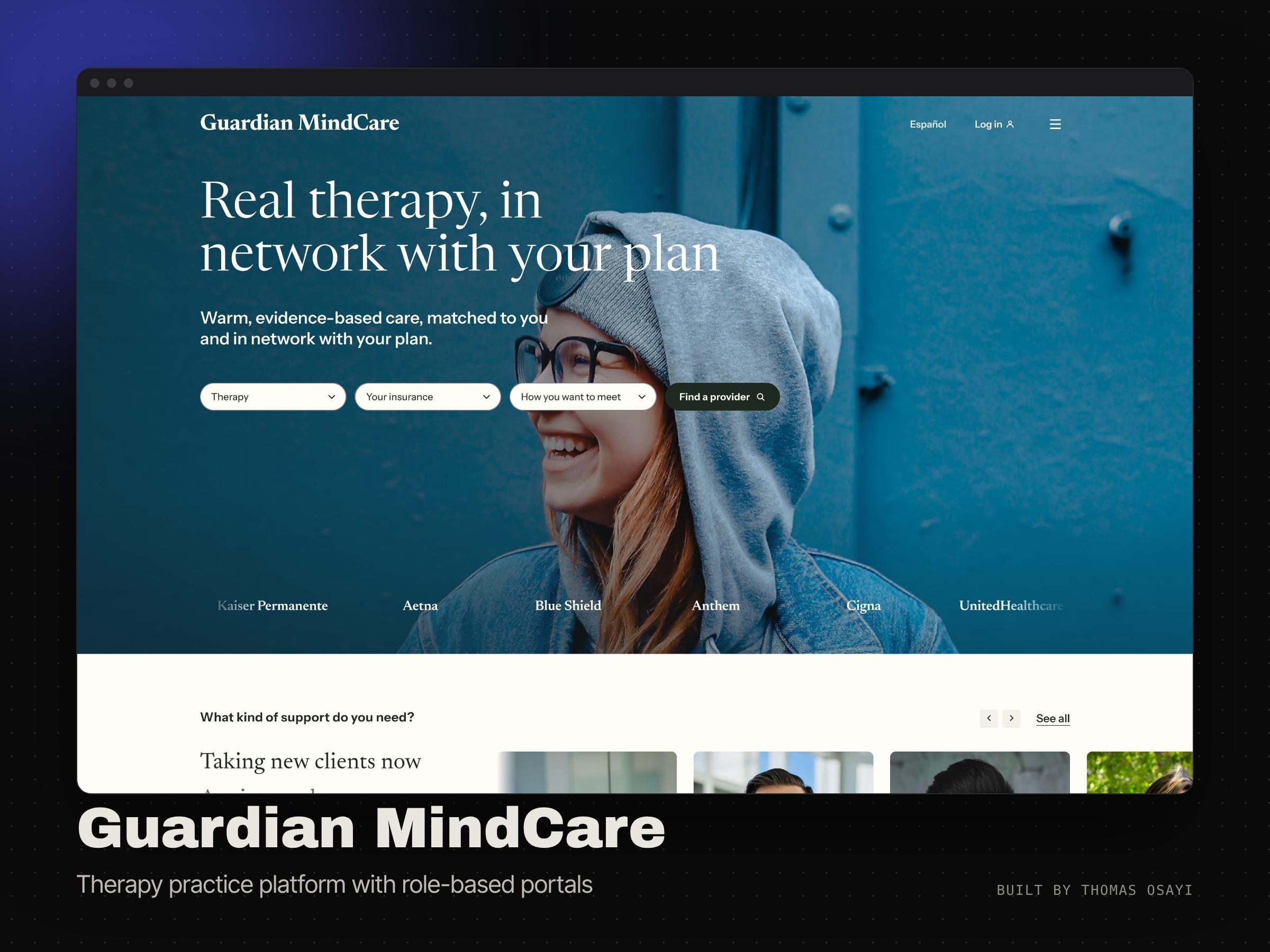
Guardian MindCare
A therapy practice platform that matches clients with in-network therapists, with role-based portals for therapists, supervisors, trainees, clients and admins.

Serenity Institute
A Next.js site for Serenity Institute, a live Zoom training program for intervention professionals, with a nine-module curriculum and a founding cohort waitlist.

Artistic Printing
Website and quote management tool for a commercial printer, with structured client intake.
Pricing
A funeral home site with service pages, a price information page, obituary listings your staff can publish and a pre-planning form fits the Business Site package from $450. Obituaries with moderated guestbooks, livestream pages, family accounts or integration with your case management software make it a Full Custom Build from $1,200. See the Custom Next.js websites for businesses packages, or get a quick estimate with the website cost calculator.
What should a funeral home website get right first?
It should make the phone number and the next step obvious for a family whose loved one has just died, and it should feel calm to everyone else.
The first visitor to plan for is someone in the hardest hour of their year. Put your phone number in the header on every page, and if your staff answers around the clock, say so plainly. Add a short page called something like "If a death has just occurred" that explains, in a few gentle sentences, what to do now, what your team will do and what the family will need to bring later. That page often matters more than the home page.
Everything else follows from tone. Use soft colors, generous spacing, real photos of your chapel and staff, and no autoplay video, countdown banners or pop-ups. Write in plain words rather than industry terms. The layout should make three paths easy from the home page: find an obituary or service, see prices and options, and plan ahead.
How should obituaries work on the site?
Each person should have their own page with the obituary, photos and service details, published by your staff after the family approves it.
A good obituary page shows the name, dates, a photo, the full text, the visitation and service times with addresses and maps, any livestream link, and the family's wishes about flowers or donations. A searchable obituary listing lets people find a name quickly, because many visitors arrive from a shared link or a search for the person's name.
Families usually want to help write the obituary. A simple submission form for text and photos, followed by a staff review, keeps the family in control of the words while your team controls what goes live and checks names, dates and spelling. If you offer a guestbook, moderate every entry before it appears. Condolence pages attract spam, and a stray advertisement next to a message to a widow is the kind of mistake families remember.
How should livestream pages be set up?
Each service that is streamed should have its own page with the date, the time zone and the stream, plus a private option and clear instructions for anyone watching from far away.
Relatives watching from another state or country need the start time in your local time zone, written out, and a note about when the stream will begin. Embed the stream on the obituary or service page rather than sending people to a separate platform with ads and suggested videos. Offer an unlisted link or a simple password for families who do not want the service public, and agree with the family in advance on whether the recording stays up, for how long and who can see it.
Test the stream in the chapel before the day of the service, and keep a short "trouble watching?" note with a phone number on the page. A frozen stream during a eulogy cannot be fixed afterward.
What does the FTC Funeral Rule require, and does it cover websites?
At the time of writing, the Funeral Rule requires price disclosures in person and by phone, but I could not find any final or proposed federal requirement to post prices on a website.
According to the FTC's May 14, 2026 notice in the Federal Register, the rule requires funeral providers to give consumers a general price list that itemizes the goods and services they offer, to show casket and outer burial container price lists at the start of any discussion of those items, to give price information from those lists over the telephone, and to give a Statement of Funeral Goods and Services Selected after arrangements are made. The FTC's Funeral Rule page also says a provider may not refuse to handle a casket bought elsewhere or charge a fee for doing so, and a provider offering cremations must make alternative containers available.
On websites, the FTC voted in October 2022 to issue an advance notice of proposed rulemaking, published November 2, 2022, that asked whether and how funeral providers should be required to display price information online, and it held a public workshop on September 7, 2023. The May 2026 notice was a routine renewal of the paperwork clearance for the current rule and did not mention amendments. Check the FTC's Funeral Rule page for anything newer. This is general information, not legal advice.
Does California require price information on funeral home websites?
Yes, California has required it since January 1, 2013.
California Business and Professions Code section 7685 says a licensed funeral establishment that maintains a website must post the list of funeral goods and services required in its general price list, along with a statement that the general price list is available on request, reachable through a home page link whose text includes a word such as goods, merchandise, products or services. As an alternative, the establishment can link from the home page to its general price list using a phrase that includes the word price. Other states have their own rules, so check with your state board; in California that is the Cemetery and Funeral Bureau. This is general information, not legal advice.
How should a funeral home show prices online?
Post the actual general price list as a readable page with its effective date, and present packages as clear bundles with every item they include.
A text page loads faster and reads better on a phone than a scanned PDF, though offering a printable PDF too is helpful. Show the effective date so nobody quotes last year's prices. If you offer packages such as direct cremation, a memorial service or a traditional funeral, list what each includes and what costs extra, such as cemetery charges, certified death certificates or flowers. Avoid "starting at" figures that do not match anything a family can actually buy.
Price transparency is also good business. Families who arrive at an arrangement conference already understanding your options tend to make decisions faster and with fewer surprises, and your staff spend less time on the phone repeating the list.
How should pre-planning inquiries work?
A pre-planning form should ask a few gentle questions, never ask for payment, and lead to a conversation with your staff.
Start with who the plan is for, since many people are planning for a parent rather than themselves. Then ask what they are considering, whether burial, cremation or not sure yet, any faith or cultural traditions, and how and when they prefer to be contacted. Keep it short and say how soon someone will reply.
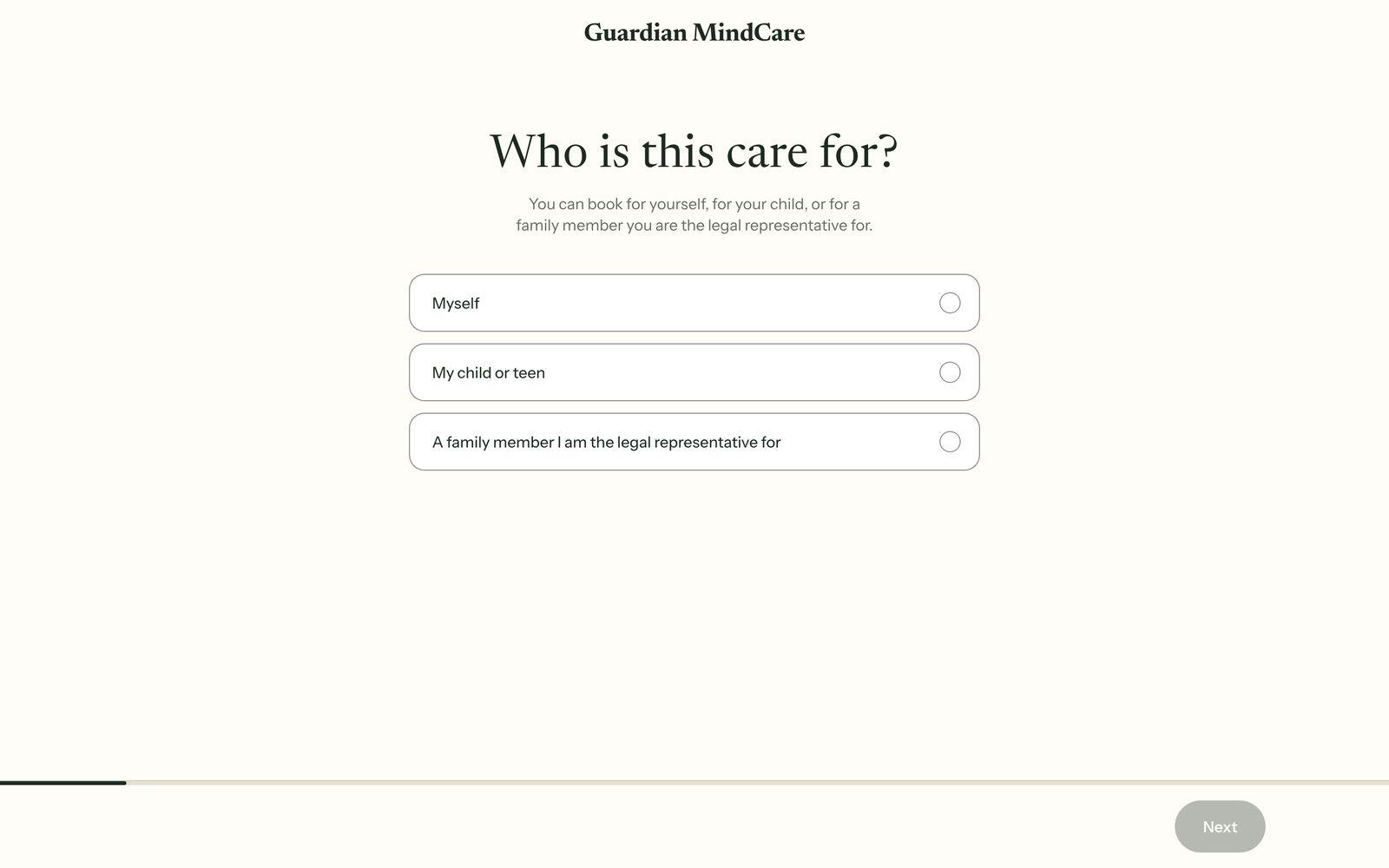
I have not built a funeral home site. The closest work I have done is for Guardian MindCare, a therapy practice platform in Los Angeles, whose get-matched intake opens with a single question, "Who is this care for?", before asking anything else. Sensitive intake works better when the first step is that simple.
Preneed contracts, trusts and insurance are regulated by each state, so the website should explain your options and invite questions rather than sell a contract online.
The bottom line
A funeral home website serves families at their most vulnerable, so calm design, an obvious phone number, careful obituary and livestream pages, honest price information and a gentle pre-planning form matter more than any visual flourish. Know the FTC Funeral Rule and your state's website rules, and keep prices one tap from the home page. A site with those pieces usually fits the Business Site package, and the website cost calculator can give you a rough number before we talk.
Questions
Does the FTC require funeral homes to post prices online?
Not at the time of writing. The current Funeral Rule requires a general price list for people who ask about arrangements and price information by phone, and the FTC asked in 2022 whether online posting should be required, but I could not find a proposed or final rule that adds it. This is general information, not legal advice.
Does California require price information on funeral home websites?
Yes. Since January 1, 2013, California Business and Professions Code section 7685 requires a licensed funeral establishment with a website to post its list of funeral goods and services and a statement that the general price list is available on request, or to link from the home page to the general price list using a phrase with the word "price".
Can families write and update obituaries themselves?
They can submit text and photos through a form, and your staff reviews and publishes the page, which keeps the family in control of the words while you keep control of what goes live.
How do you keep a funeral livestream private?
The service page can use an unlisted link or a simple password the family shares, and the recording can be removed or kept private after a set time if the family prefers.
Should a pre-planning form ask for payment?
No. An inquiry form should only collect who the plan is for, the options they are considering and how to contact them, and any preneed contract and payment should follow your state's rules in a conversation with your staff.
What does a funeral home website cost?
Thomas Osayi builds funeral home sites on the Business Site package from $450, or a Full Custom Build from $1,200 for obituaries with guestbooks, livestream pages or software integrations.
Building a site for your funeral home?
Six quick questions, then an intro call if you want one.
Start a projectOther industries
Restaurants · Therapy practices · Medical clinics · Salons and spas · Startups · Local service businesses · Dental practices · Law firms · Real estate agents · Gyms and fitness studios · Ecommerce brands · Print shops and manufacturers · Nonprofits · Coaches and consultants · Med spas · Physical therapy and chiropractic clinics · Event venues · Car washes and auto detailing · Accountants and bookkeepers · Tutoring and education businesses · Photographers · Architects and interior designers · Plumbers and HVAC companies · Roofers and general contractors · Cleaning services · Landscapers and lawn care companies · Moving companies · Pet groomers and veterinary clinics · Food trucks · Bakeries and cafes · Wedding planners and event pros · Insurance agencies · Home care agencies · Tattoo studios · Churches and faith organizations · Auto repair shops · Property management companies · Florists · Daycare and childcare centers · Breweries and wineries