Websites for florists
Florist websites that take same-day orders you actually keep
Someone buying flowers is usually buying for a person who is not in the room: a mother in another neighborhood, a friend in the hospital, a partner at the office. They need to know three things fast. Can you deliver to that address, can it still arrive today, and what will it look like for the price. A florist site that answers those on a phone, and takes the order without a phone call, keeps the sale and the customer with your shop.
Start a projectWhat the site needs to do
A ZIP code or address check that tells the buyer right away whether you deliver there and what delivery costs, instead of a paragraph of neighborhood names.
A clear "order by" time on every product page, and a date picker that stops offering today once the cutoff passes or the shop is closed.
Arrangements grouped by occasion and price, photographed in your shop, with a short note that designs follow the style shown when specific stems are not available.
Separate buyer and recipient details, a card message box with a character limit, delivery instructions and a delivery date, all on one short checkout.
Event date, venue, rough guest count, budget range and inspiration photos, so your first consult starts with real information.
Mistakes I see most
- Letting customers pick today's date after the same-day cutoff, then calling them to apologize
- Using stock or wire service catalog photos that your shop does not actually design
- Leaving most online orders to outside order takers instead of giving local buyers an easy direct way to order
- Changing delivery fees, cutoffs or closed dates for Valentine's Day and Mother's Day only on social media and not on the site
Related work
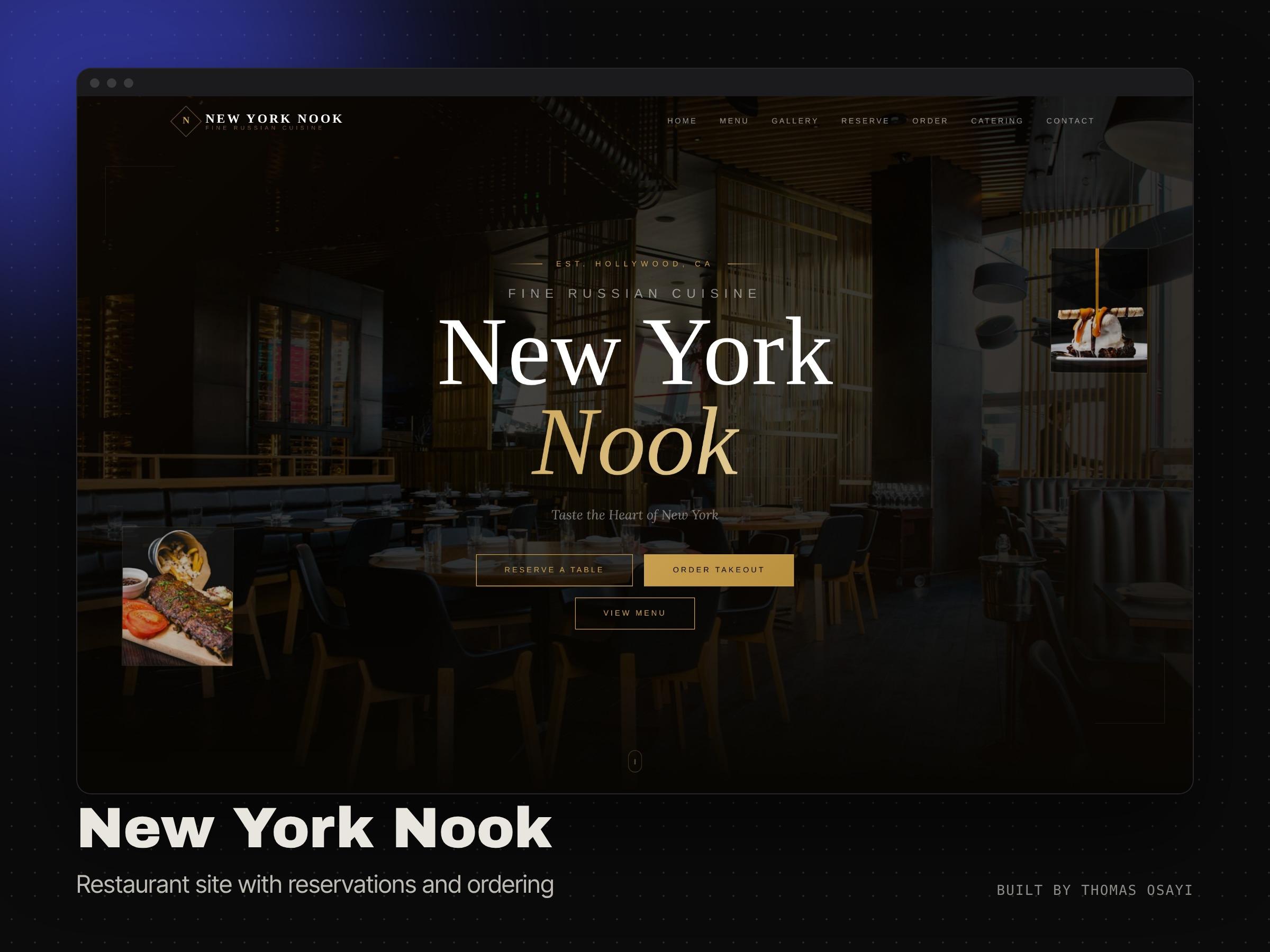
New York Nook
Restaurant website for a Russian restaurant in Hollywood with reservations and pickup ordering.

Artistic Printing
Website and quote management tool for a commercial printer, with structured client intake.

Astiglow
Website for a waxing studio with online booking and service packages.
Pricing
A single shop with a catalog, delivery zones, cutoff rules and a wedding inquiry form fits the Business Site package. Online payments with a full product catalog, multiple delivery zones with different fees, or a holiday order dashboard for your team make it a Full Custom Build. See the Custom Next.js websites for businesses packages, or get a quick estimate with the website cost calculator.
How should a florist website handle delivery zones and same-day cutoffs?
It should check the recipient's address before anything else and show, in plain words, whether you can deliver there today and what it costs.
Most flower orders are gifts, so the buyer's own location does not matter. The recipient's does. Put a delivery check near the top of the home page and on every product page: the buyer types a ZIP code or address and sees "We deliver here today for $X, order by 2 pm" or "This address is outside our delivery area". That one interaction removes most of the phone calls a shop gets on a normal weekday.
Behind it sits a short set of rules you control:
- Zones: ZIP codes or distance bands from the shop, each with its own fee.
- Cutoff: the time after which same-day delivery is no longer offered, in the shop's local time zone, not the visitor's.
- Closed days: Sundays, holidays and any date you choose to block.
- Capacity: an optional limit per day, so a busy Saturday stops accepting orders before the van is overloaded.
When the cutoff passes, the date picker should quietly move the earliest option to tomorrow. A site that lets someone choose today at 5 pm, then leaves your staff to call and apologize, costs you both the order and the goodwill.
How should the product catalog and photos be set up?
Group arrangements by occasion and price, use photos of work your own shop designs, and say clearly how substitutions work.
Buyers browse by reason first: birthday, sympathy, anniversary, get well, new baby, just because. Then they filter by budget. A catalog that offers both paths, with three or four price points per arrangement where you offer sizes, matches how people actually decide. Each product page needs a large photo, the price, what is in it in plain language, the vase or wrap it comes in, and the delivery check from above.
Photograph your own arrangements in consistent light against the same background, even with a phone. Using a generic catalog image for something your designers do not make leads to the most common complaint in the trade: it did not look like the picture. Under every product, add a sentence that your designers match the style, colors and value shown and may substitute stems by season. Sympathy pieces deserve their own section with a calmer layout and a direct phone number, because those buyers often want to talk to a person.
What should a florist's online order form ask?
It should ask for the recipient, the delivery date, the card message and any delivery instructions, then the buyer's details and payment, in as few steps as you can manage.
A gift checkout carries two people's details, which is where generic shop templates struggle. A structure that works:
- Recipient: name, address, phone and whether it is a home, business, hospital or funeral home.
- Delivery: a date picker that respects your cutoffs and closed days, plus a notes field for gate codes or a reception desk.
- Card: a message box with a visible character limit and an option to leave it unsigned.
- Buyer: name, email and mobile number for the delivery confirmation.
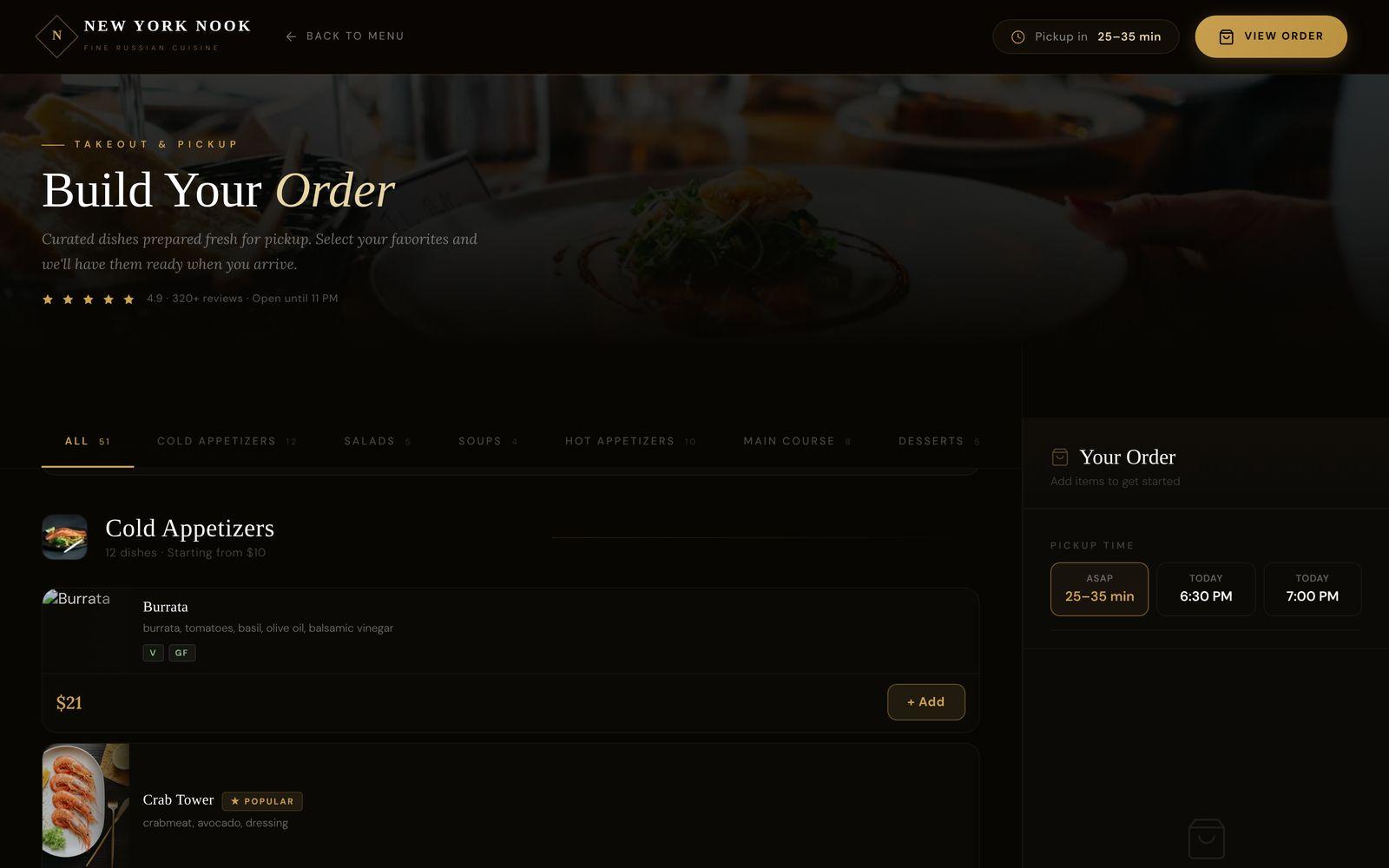
I have not built a florist site yet. The closest thing I have built is the pickup ordering flow for New York Nook, a restaurant in Hollywood, where customers choose items from a menu and pick a pickup time slot that the site only offers when the kitchen can meet it. Delivery dates for a florist follow the same idea, applied to days instead of times.
Should a florist rely on wire services or own the orders?
Use a wire service for the orders you cannot fill yourself, and make your own site the easiest way for local buyers to order directly.
A wire or relay service passes an order and payment from one florist to another florist in the recipient's area, minus a commission. That network is what lets a customer in Los Angeles send flowers to a parent in Ohio, and many shops rely on it for incoming orders. The trade-off is that the florist who designs and delivers the arrangement receives only part of what the customer paid. Commonly cited arrangements give the sending florist about 20 percent of the product and delivery price, and the service takes its own fees, but the actual split depends on the service and your membership terms, so read your own agreement before you plan prices around it.
Separately, the Society of American Florists launched a resource center in July 2026 to help florists deal with deceptive order gathering: businesses that misrepresent their identity or location to intercept orders meant for local shops. A site with your real address, phone number, photos of your actual shop and a direct checkout makes it easier for customers to tell they have reached you.
How should wedding and event inquiries work on the site?
They should run through a separate inquiry form that collects the details you need before the first consultation, not through the same checkout as a birthday bouquet.
Wedding and event work is quoted, not added to a cart. The form should ask for the event date, venue, ceremony and reception locations, approximate guest count, the pieces they are thinking about (bouquets, boutonnieres, centerpieces, arches, installations), a budget range and room to upload inspiration photos. Put your booked dates policy and minimum spend, if you have one, on the page so couples understand before they fill it in.
This is the same kind of quote intake I built for Artistic Printing, a commercial printer in Los Angeles, where clients describe a job and upload files so the team can quote it without three rounds of email. A wedding inquiry needs the same structure with different fields. Add a gallery of real past events, labeled by venue and season where your clients are comfortable with it, because planners and couples search by venue names.
How should the site prepare for Valentine's Day and Mother's Day?
Set holiday rules weeks ahead: earlier cutoffs, any holiday delivery fees, a limited holiday menu and a cap on orders per day.
These are the dates when a florist's site gets its heaviest use and when mistakes cost the most. A good setup lets you change, without a developer, the cutoff time for a specific date, the delivery fee for a date range, which products are available that week and how many orders each day can take. Show a banner with the holiday dates and cutoffs across the whole site, and offer pre-ordering as soon as you are ready to accept it.
A shorter holiday menu with fewer, well-photographed arrangements is easier for your team to design at volume and easier for buyers to decide on. Turn off products you cannot make that week rather than substituting heavily. After the holiday, switch everything back with the same controls, and keep a note of what you changed for next year.
How does a flower shop show up in local search?
By keeping a complete Google Business Profile that matches your site exactly, and by giving each service and occasion a real page with your location in it.
Searches like "florist near me" or "flower delivery in Torrance" are local searches, and Google leans on your business profile, your reviews and your site's content. Use the same shop name, address, phone and hours everywhere. Write a page for each area you deliver to only if you can say something real about it, such as the delivery fee and cutoff for that area. Add pages for sympathy and funeral flowers, weddings and corporate accounts, since those are searched separately. Ask happy customers for reviews after delivery, and reply to all of them.
The bottom line
A florist website works when it answers the delivery question first, takes gift orders cleanly and gives local buyers a direct way to order from your shop. Delivery zones, cutoff rules, a catalog of your own work, a careful gift checkout and a separate wedding inquiry form do most of the work. A single shop with those pieces fits the Business Site package, and if you want a rough number for your own setup, the website cost calculator is a good starting point.
Questions
Can my florist website stop same-day orders after a cutoff time?
Yes. The date picker can check the shop's local time and remove today once your cutoff passes, and it can also block closed days and dates you are fully booked.
How should delivery fees work on a florist site?
The simplest setup is a fee per ZIP code or distance band, checked as soon as the buyer enters the recipient's address, so nobody reaches checkout before learning you do not deliver there.
Do I still need a wire service if I have my own website?
Many florists keep a wire service for orders going to other cities, but every local order taken on your own site is one where you keep the full price and the customer's details.
Should I show prices for wedding flowers?
A starting point or typical range per item, such as a bridal bouquet or a centerpiece, helps couples self-select, as long as the page says the final quote depends on season, flowers and scale.
What if a flower in the photo is out of stock?
Say on the product page that your designers match the style, color and value shown and may substitute stems by season, and repeat the note at checkout.
What does a florist website cost?
Thomas Osayi builds florist sites on the Business Site package from $450, or a Full Custom Build from $1,200 for full online checkout, complex delivery rules or holiday order tools.
Building a site for your flower shop?
Six quick questions, then an intro call if you want one.
Start a projectOther industries
Restaurants · Therapy practices · Medical clinics · Salons and spas · Startups · Local service businesses · Dental practices · Law firms · Real estate agents · Gyms and fitness studios · Ecommerce brands · Print shops and manufacturers · Nonprofits · Coaches and consultants · Med spas · Physical therapy and chiropractic clinics · Event venues · Car washes and auto detailing · Accountants and bookkeepers · Tutoring and education businesses · Photographers · Architects and interior designers · Plumbers and HVAC companies · Roofers and general contractors · Cleaning services · Landscapers and lawn care companies · Moving companies · Pet groomers and veterinary clinics · Food trucks · Bakeries and cafes · Wedding planners and event pros · Insurance agencies · Home care agencies · Tattoo studios · Churches and faith organizations · Auto repair shops · Property management companies · Daycare and childcare centers · Breweries and wineries · Funeral homes