Websites for tattoo studios
Tattoo studio websites that book the right clients
People choose a tattoo artist, not a building. They scroll portfolios, look for a style that matches their idea, then want to know how to book, what a deposit costs and how long the wait is. A studio site that puts each artist's work front and center and turns the booking request into a clear brief saves hours of back and forth in DMs.
Start a projectWhat the site needs to do
Healed and fresh work, organized by style, with each artist's availability and booking rules.
Placement, size, style, budget and reference images in one request, routed to the artist the client chose.
A Stripe deposit once the artist accepts a request, with your deposit and rescheduling policy stated clearly.
Available flash designs with sizes and prices, plus walk in days and hours if you take them.
Aftercare instructions, age and ID rules and cancellation terms on their own pages, easy to send to clients.
Mistakes I see most
- Sending every booking question to Instagram DMs
- One mixed gallery with no way to tell which artist did what
- Huge uncompressed portfolio images that crawl on phones
- Deposit and cancellation rules that only appear after someone pays
Related work
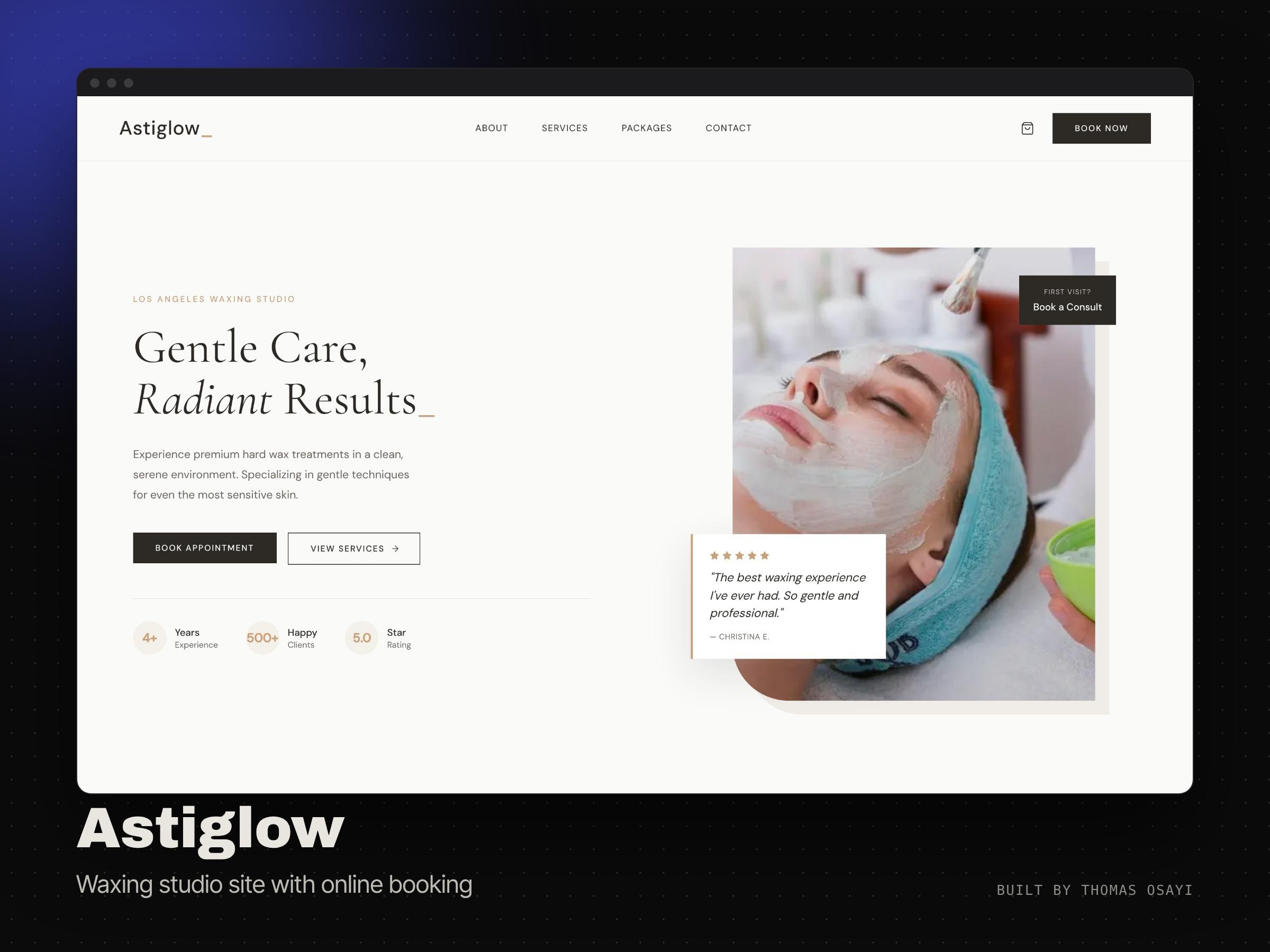
Astiglow
Website for a waxing studio with online booking and service packages.
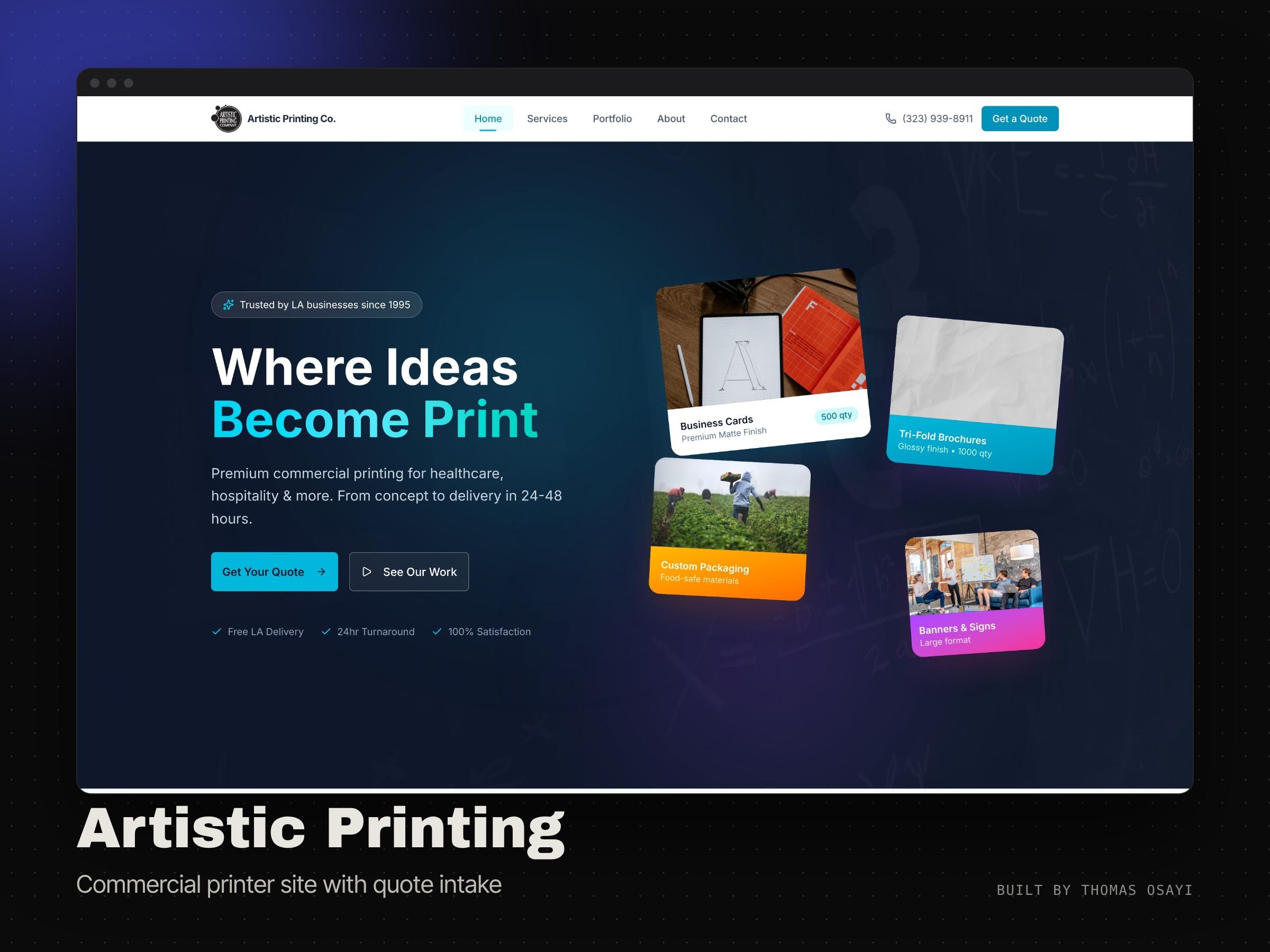
Artistic Printing
Website and quote management tool for a commercial printer, with structured client intake.
Pricing
A single studio fits the Business Site package. Custom request routing per artist, online deposits and a portfolio admin make it a Full Custom Build. See the Custom Next.js websites for businesses packages, or get a quick estimate with the website cost calculator.
What should a tattoo studio website do that Instagram cannot?
It should turn interest into a complete, organized booking request, and help people who search Google for a style or a studio near them find you.
Instagram is where many clients first see your work, and it will stay that way. But DMs are a poor booking system: details get scattered across messages, references get lost, and the artist spends evenings asking the same five questions. A website gives every request the same structure, sends it to the right artist and keeps a record. It also ranks for searches like "fine line tattoo Los Angeles" or "Japanese tattoo artist near me", which a feed cannot do on its own. My post "Do I need a website if my business already has Instagram?" covers the general case.
A good studio homepage introduces the shop in a line, shows the artists with a strong image each, and gives two clear actions: request a tattoo and see flash or walk in times.
How should artist portfolios be organized?
Give each artist their own page with their best work, tagged by style, and show clearly whether their books are open.
Clients pick an artist by style, so a mixed studio gallery makes them work too hard. Each artist page should include:
- A short bio and the styles they focus on.
- A portfolio of healed and fresh pieces, with healed work labeled.
- Their booking status: books open, closed or waitlist.
- Their minimum price or hourly rate if they share it, and how deposits work.
- A request button that preselects that artist.
Style tags such as fine line, blackwork, traditional, realism or script let a visitor filter across artists too. On the Artistic Printing site I built a portfolio with filters so visitors see only the kind of work they came for, and the same idea works for tattoo styles.
Image performance matters. Portfolios are image heavy, and a page of full size photos will crawl on a phone. Properly sized, compressed images that load as the visitor scrolls keep the gallery fast without losing detail.
What should a tattoo consultation request form ask?
It should ask everything the artist needs to say yes, no or "let's talk": the idea, placement, size, style, references, budget and availability.
A complete request saves several messages:
- Which artist, or "any artist who fits".
- A description of the idea in the client's own words.
- Placement on the body and approximate size.
- Color or black and gray.
- Reference images, with a limit on number and file size.
- Budget range and preferred days.
- Whether this is a cover up or rework, with a photo of the existing tattoo.
- Confirmation that the client meets your age and ID policy.
Route each request to the chosen artist's email or a shared studio inbox with the artist's name in the subject line. Uploaded images should be stored in private storage, not a public folder, since some references are personal photos.
How do deposits and booking work online?
The usual pattern is request first, then deposit once the artist accepts, so you never take money for work you cannot do.
For custom work, the artist reviews the request, replies with a quote and dates, and the client pays a deposit through a Stripe checkout link. The payment confirms the appointment and sends both sides a confirmation. For flash or short sessions, you can skip the review and let clients book a slot directly with a deposit at checkout.
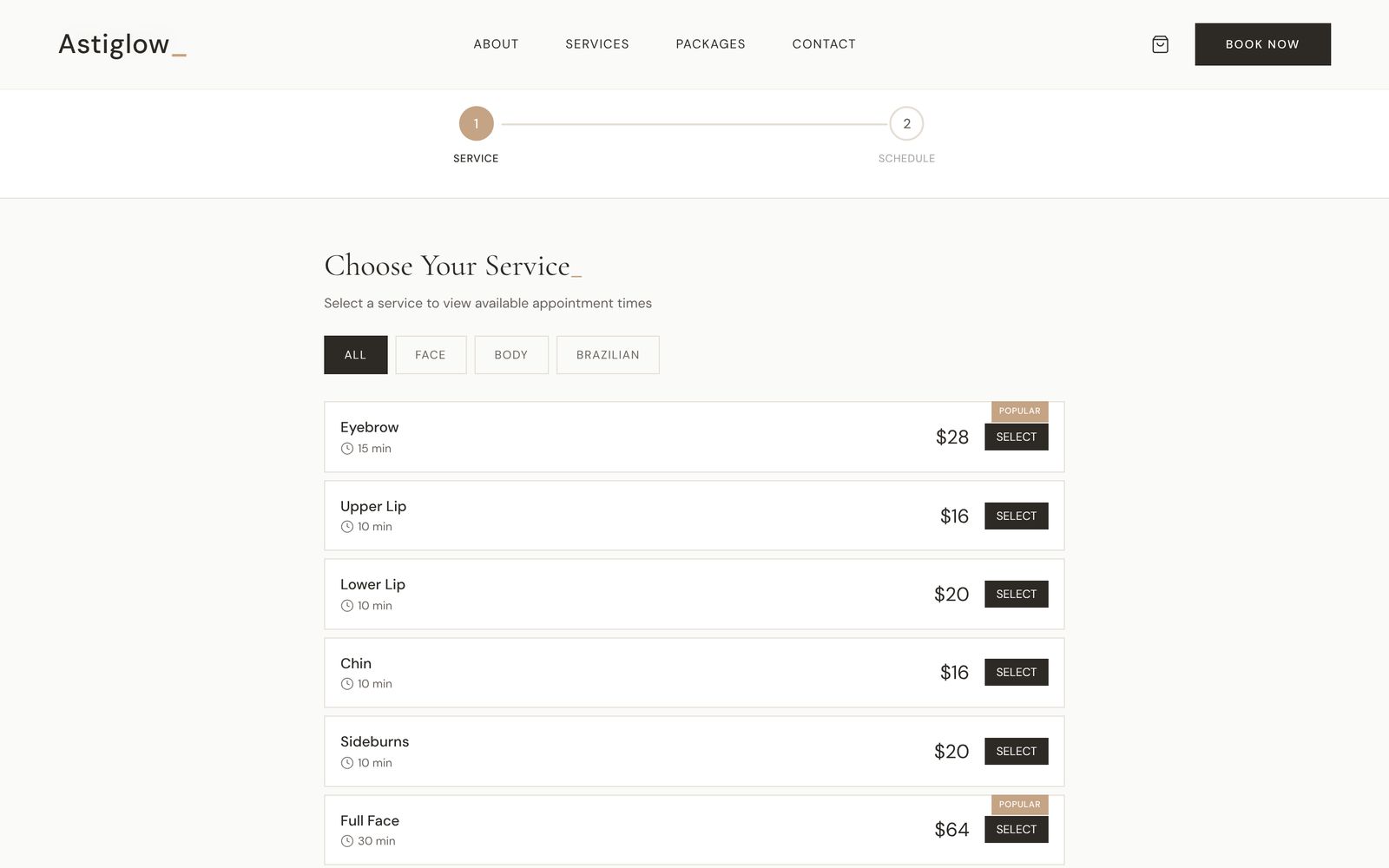
For Astiglow, a waxing studio, I built a booking flow where the client picks a service with its price before choosing a time. Flash bookings can work the same way: pick a design, see the size and price, choose a slot.
State the deposit amount, whether it comes off the final price, how much notice you need to reschedule and when a deposit is forfeited, on the artist page and again at checkout. My post "How to take deposits online to reduce no-shows" walks through the options.
Should flash and walk ins have their own page?
Yes. A flash page with available designs, sizes and prices, plus clear walk in hours, brings in clients who are ready to book today.
Flash is easy to sell online because the design and price are already set. Show each piece with its size options and price, mark claimed designs as gone, and offer a quick booking or a "claim this design" button. For flash days or events, a dedicated page with the date, the sheet and how the line works saves your front desk a lot of questions. If you take walk ins, put the days and hours on the homepage and in your Google Business Profile so they match everywhere.
What legal and safety information belongs on the site?
Age rules, ID requirements, health and safety information, aftercare and your policies should each be easy to find.
In California, it is a crime to tattoo anyone under 18, so state your age and ID policy clearly and repeat it on the request form. California's Safe Body Art Act also requires practitioners and facilities to register with or be permitted by the local enforcement agency, usually county environmental health, and many studios mention their permit and sterilization practices to reassure first timers. Check current rules with your county, since requirements and inspections vary. This is general information, not legal advice.
Aftercare deserves its own page you can text to clients after a session: cleaning, moisturizing, what to avoid and when to contact you. If you use a digital consent or waiver tool, link to it from the confirmation email so clients fill it out before they arrive.
How do tattoo studios show up in local search?
Through a complete Google Business Profile, a site that names the styles and neighborhood you work in, and real reviews.
Write artist and style pages in plain language that matches how people search: "fine line tattoos in Silver Lake" says more to Google than "art that speaks". Add your address, hours and phone in the footer and in structured data, and keep them identical on Google, Yelp and Instagram. Ask happy clients for reviews after their tattoo heals, when they are most likely to share a photo. My "Local SEO checklist for a small business website" has the full list.
The bottom line
A tattoo studio site should put each artist's work first, turn requests into complete briefs with references, take deposits once a request is accepted, and make policies and aftercare easy to find. That moves booking out of DMs without losing the feel of your shop. A single studio fits the Business Site package; deposits, per artist routing and a portfolio admin make it a Full Custom Build. Try the website cost calculator for a quick estimate.
Questions
Can clients upload reference images when they request a tattoo?
Yes. The request form accepts images with size limits, stores them securely and sends them to the artist with the rest of the brief.
Can each artist manage their own portfolio?
Yes, with a simple admin where each artist adds and removes pieces, tags styles and sets whether their books are open.
Can we take deposits online?
Yes. Once an artist accepts a request, the client gets a Stripe checkout link for the deposit and a confirmation with your policy.
Do we still need Instagram if we have a website?
Instagram is great for discovery. The website is where requests become organized bookings and where Google sends people who search for a style near them.
Can the site show which artists are booking?
Yes. Each artist profile can show books open, books closed or a waitlist, and the request form follows that setting.
What does a tattoo studio website cost?
Thomas Osayi builds studio sites on the Business Site package from $450, or a Full Custom Build from $1,200 with deposits, artist routing and a portfolio admin.
Building a site for your studio?
Six quick questions, then an intro call if you want one.
Start a projectOther industries
Restaurants · Therapy practices · Medical clinics · Salons and spas · Startups · Local service businesses · Dental practices · Law firms · Real estate agents · Gyms and fitness studios · Ecommerce brands · Print shops and manufacturers · Nonprofits · Coaches and consultants · Med spas · Physical therapy and chiropractic clinics · Event venues · Car washes and auto detailing · Accountants and bookkeepers · Tutoring and education businesses · Photographers · Architects and interior designers · Plumbers and HVAC companies · Roofers and general contractors · Cleaning services · Landscapers and lawn care companies · Moving companies · Pet groomers and veterinary clinics · Food trucks · Bakeries and cafes · Wedding planners and event pros · Insurance agencies · Home care agencies · Churches and faith organizations · Auto repair shops · Property management companies · Florists · Daycare and childcare centers · Breweries and wineries · Funeral homes