November 17, 2026 · 9 min read · Thomas Osayi
How much does a small business website cost in 2026?
What a small business website really costs with a DIY builder, a freelance developer or an agency, plus the yearly costs people forget to budget for.
Website prices look random until you see what drives them. The two biggest factors are how many distinct pages need to be designed and which features the site has to run. Everything else is a smaller adjustment.
I build websites for small businesses from Los Angeles, and I publish my prices. This guide uses those real numbers where I can stand behind them and plain ranges where the market varies. By the end you should be able to read any quote and tell what you are paying for.
How much does a small business website cost in 2026?
A custom small business website from a freelance developer usually costs a few hundred to a few thousand dollars, and the number follows the size of the job closely. My own packages give a fair picture of the freelance end of the market.
- One-page site: from $150, about 7 days
- Business site, up to 5 pages: from $450, about 14 days
- Full custom build: from $1,200, about 21 days
A one-page site covers who you are, what you offer, proof and a contact form. That is enough for many new businesses, and it is the fastest to launch. A five-page business site adds separate service, about and contact pages plus local SEO setup and a booking or quote form. A custom build adds features with their own logic, such as online ordering, a quote management tool or an admin area where you edit content yourself.
The word "from" matters. Each price is the starting point for that size of project with ordinary requirements. A one-page site with custom animation in every section, or a five-page site that needs all of its text written from scratch, lands above the starting number.
What actually drives the price of a website?
Two things drive most of the price: the number of unique page designs and the features that need their own logic.
Unique page designs
A page is not expensive because it exists. It is expensive because someone has to decide what goes on it, design it for a phone and for a desktop, and then build it. Ten service pages that share one layout cost far less than five pages that each look different. When you compare quotes, count layouts, not URLs.
Features with logic
A contact form that emails you is simple. A booking form that checks open times, blocks double bookings and sends confirmations is a small piece of software. So is a menu with pickup ordering, a quote calculator, a login area or a payment flow. Each one has to be designed, built, tested with bad input and connected to an account you own, such as Stripe or a calendar.
The smaller adjustments
- Copywriting, if you are not providing the text
- Photography or licensed stock photos
- A content management system so you can edit pages yourself
- A second language
- Moving content and setting up redirects from an old site
- A rush deadline
What do you get at each price level?
You get more pages, more features and more setup work as the price goes up, and the right level is the smallest one that does the job.
One page
One long page with a clear headline, your services, a few photos, reviews or other proof, your hours and location, and a contact form or a button that calls or texts you. I include the SEO basics: a proper title and description, fast loading, and the structured data that tells Google your business name, address and phone number. This level suits a new business, a single-service business, or anyone replacing a social media profile as their main link.
Up to five pages
Home, services, about, contact and one more, often a gallery, pricing or FAQ page. Separate service pages matter for search because each one can match what a customer types, such as a service plus a city. This level includes local SEO setup and a booking or quote form.
Custom build
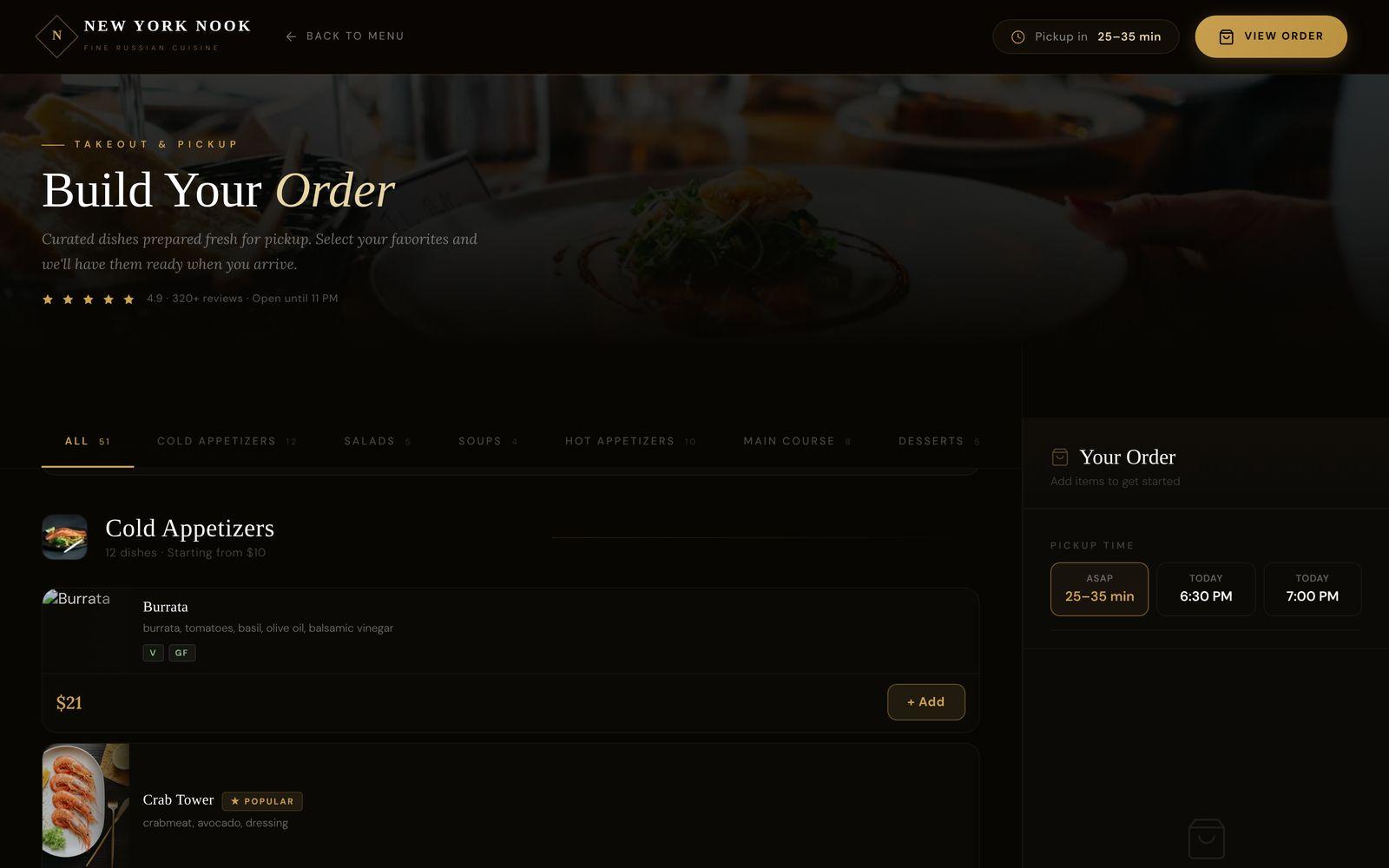
This is any site that does work for the business instead of only describing it. One example from my own clients is a restaurant site where guests reserve a table or place a pickup order without calling.
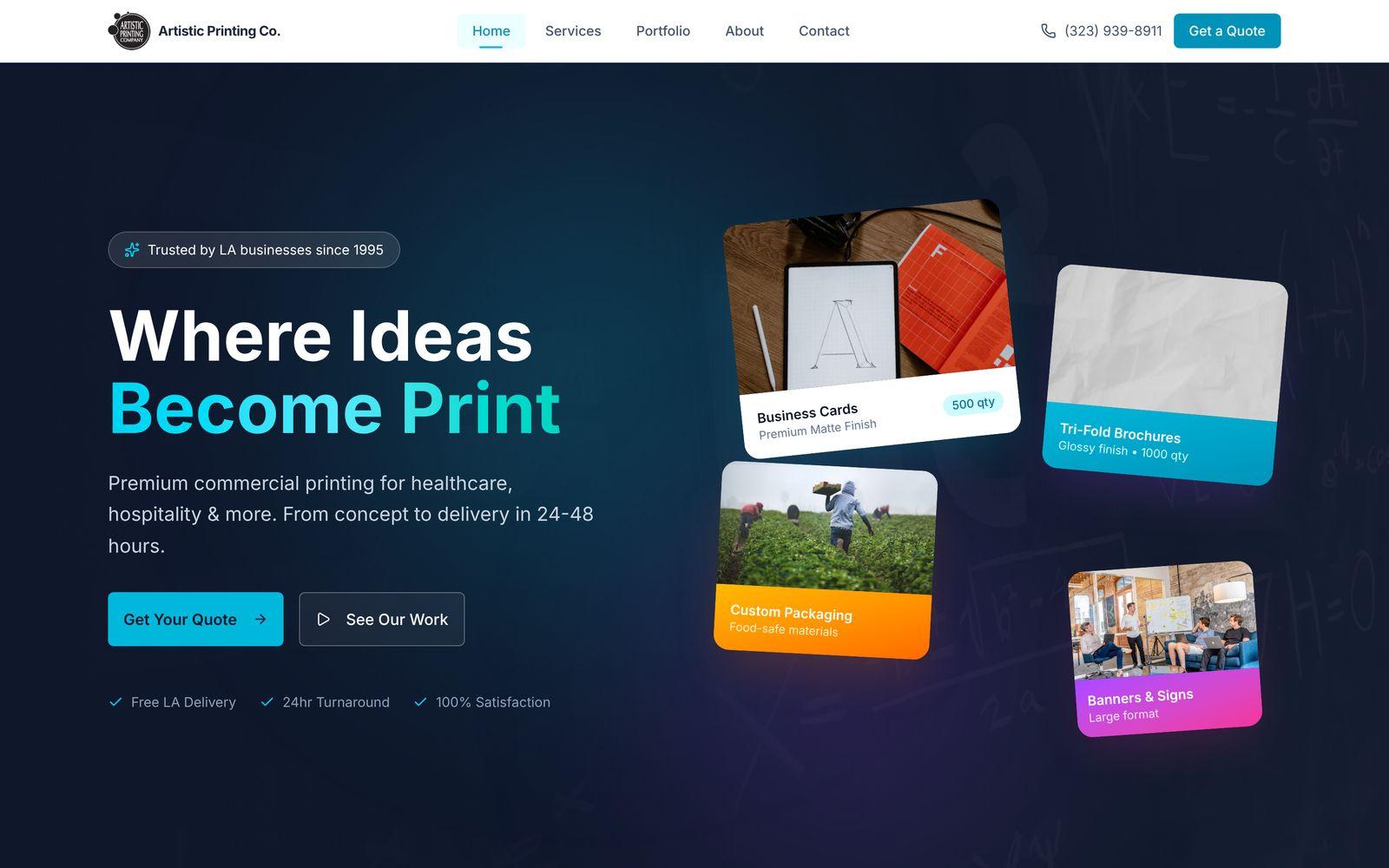
Another is a commercial printer whose site collects job details from clients and lets the shop manage quotes in one place.
Is a DIY builder, a freelancer or an agency the better deal?
For most small businesses, a freelancer with a portfolio in your category is the best value, but each option fits a different situation.
DIY builder
A DIY builder (Wix, Squarespace) has the lowest upfront cost but charges a monthly fee forever and limits custom features. Once you add a custom domain and remove the builder's branding, a business plan commonly adds up to a few hundred dollars a year. Check the current pricing pages, since they change. The larger cost is your time. Expect several evenings to reach a result you like, and more if you have never written web copy.
Freelance developer
A freelance developer costs more upfront, and you own a custom site with no platform lock-in. You talk to the person doing the work, and the price is mostly the build itself.
Agency
An agency adds project managers and designers, which helps on large projects and raises the price on small ones. Agency quotes for a small business site usually start in the thousands because more people touch the project.
What yearly costs come after launch?
There are ongoing costs, and they stay small when the site is built well: a domain, hosting and whatever paid tools you connect.
- Domain name: a .com usually renews for roughly $10 to $20 a year at a mainstream registrar. Register it in your own account with your own email address.
- Hosting: a small Next.js site is light to host. Hosts such as Vercel and Netlify have free tiers and paid plans at around $20 a month, and which one applies depends on their terms and your traffic.
- Business email: a mailbox at your domain through Google Workspace or Microsoft 365 is billed per user per month.
- Paid integrations: booking systems, email marketing and online ordering tools mostly bill monthly. Stripe takes a percentage plus a small fixed fee per card payment instead of a subscription.
- Updates: text changes, new photos, a new service page. Ask whether small edits are included for a period after launch and what they cost after that.
Ask any developer which of these are included in the quote and which are billed to you directly. I prefer that clients pay for their own domain, hosting and tools in their own accounts, so nothing depends on me staying involved.
What do people forget to budget for?
Content is the item people forget, because the site itself is rarely the surprise. Budget for the domain renewal each year, hosting, paid integrations, professional photos and copywriting if you will not write the text yourself.
Photos
Real photos of your work, your team and your space make a small business site look established. Stock photos make it look like every other site. A short session with a local photographer is worth pricing. If that is out of budget, phone photos taken in daylight with a clean background are good enough to launch.
Words
Writing five pages of clear text takes longer than most owners expect. You can write it yourself from an outline your developer gives you, hire a copywriter, or answer a questionnaire and have the developer draft from your answers. Decide which before the project starts, because it changes both the price and the timeline.
Setup tasks
- A logo file in a vector format such as SVG, not a screenshot
- A privacy policy if the site collects form submissions or uses analytics
- A verified Google Business Profile, which is free but takes time
- Google Search Console and analytics, so you can see whether the site is being found
What does a real quote look like?
A real quote is a package plus the adjustments above, so here is how I would price a common request using my own packages. The business is an illustration, not a client.
A home cleaning company wants a home page, a services page, a pricing page, an about page and a contact page with a quote request form. That is five pages with one form, which is my Business Site package: from $450 and about 14 days. In the first year the owner also pays for the domain, possibly hosting, and a business mailbox.
Now suppose the owner wants customers to pick a time slot and pay a deposit online. There are two ways to do it. The first is to link the site to a booking tool the owner already pays for. The build stays at the Business Site level and the tool's monthly fee continues. The second is to build booking and deposits into the site. That is logic, so the project moves to a Full Custom Build, from $1,200 and about 21 days, with no monthly booking fee afterward.
Neither answer is wrong. One trades a lower upfront price for a monthly bill, and the other does the reverse.
How do you compare two quotes fairly?
Put both quotes against the same checklist, because a lower number often just leaves something out.
- How many pages and how many unique layouts
- Who writes the text and who supplies photos
- Whether SEO setup is included: titles, descriptions, a sitemap, Search Console and structured data
- Where form submissions go and whether you get a notification
- How many rounds of revisions are included
- Who owns the code and where the domain is registered
- What happens after launch and what small edits cost
- The timeline and the payment schedule
Three things should make you cautious: a quote with no written scope, a monthly plan where you never own the site, and a portfolio with no live sites you can open on your phone.
How do you get an honest number quickly?
Write down your pages, the one action you want visitors to take, and any feature that needs logic. A developer can price that in minutes. You can also get a range from the website cost calculator on this site before talking to anyone.
Add three things to that note and the quote gets more accurate: links to two or three sites you like, your deadline, and a list of the content you already have. A request that says "five pages, quote form, I have photos and will write the text, launch in three weeks" can be answered with a firm price the same day. A request that says "how much for a website" can only be answered with a range.
The bottom line
A small business website costs what its pages and features cost to design and build, plus a modest yearly bill for the domain, hosting and tools. Start with the smallest version that lets a customer take the action you care about, own every account it runs on, and add features when the business needs them. If you want a number for your own project, my packages start at $150 for one page, $450 for up to five pages and $1,200 for a custom build.
Questions, answered in one line
What is the cheapest way to get a professional website?
A one-page site from a freelancer is usually the cheapest option that still looks custom; Thomas Osayi builds them from $150 in about 7 days.
Why do website quotes vary so much?
Quotes mostly scale with the number of unique page designs and with features like booking, ordering, payments or an admin panel.
Are there yearly costs after the website is built?
Yes: a domain name every year, hosting, and any paid tools you connect, such as a booking system or email marketing.
Is a one-page website enough for a small business?
Often yes for a new or single-service business, because one page can hold your offer, proof, hours, location and a contact form. Add separate service pages once you want to rank for more than one search.
Does the price include writing the text and taking photos?
Not by default with most developers, so ask. Copywriting and photography are the two items most often left out of a website quote.
What makes a website cost more than the starting price?
Extra unique page layouts, features with their own logic such as booking, ordering or payments, content written from scratch and rush deadlines.
Sources
- Vercel Pricing: Hobby, Pro, and Enterprise plans Vercel
- Pricing and Plans Netlify
- Wix Pricing Information Wix
- Pricing & Fees Stripe
Related articles
- How much does a restaurant website cost in 2026?
- How to take restaurant orders online without third-party fees
- Toast vs Squarespace vs a custom website for restaurants
- Google Business Profile vs website: do you need both?
Custom Next.js websites for businesses
Custom Next.js websites for small businesses, clinics, restaurants and startups. Fast, SEO-ready, built from scratch with booking, ordering or quote tools. Based in Los Angeles.
See the service