Websites for landscapers and lawn care companies
Websites for landscapers and lawn care companies
Landscaping businesses usually sell two very different things. Design and installation projects are big, visual and occasional, and they are won with photos and a good consultation. Lawn care and maintenance are small, recurring and route based, and they are won by making sign up easy for people on the streets you already drive. A good site gives each its own path instead of mixing them on one page.
Start a projectWhat the site needs to do
A design and install path with a consultation request, and a maintenance path with plans, frequency and an address check.
Before, just after install and a season later, with the plants and materials used and the problem solved.
Yard size, photos, goals, budget range, HOA rules and timing, so the first visit is productive.
What weekly or every two weeks service includes, what costs extra, and how seasonal work like cleanups is handled.
In California, landscape construction generally needs a CSLB license, and licensed contractors must show the number in advertising.
Mistakes I see most
- One generic contact form for both a backyard redesign and weekly mowing
- Only photos taken on install day, which never show the garden grown in
- Accepting maintenance sign ups from addresses far off your routes
- Listing water rebate amounts on the site that changed months ago
Related work
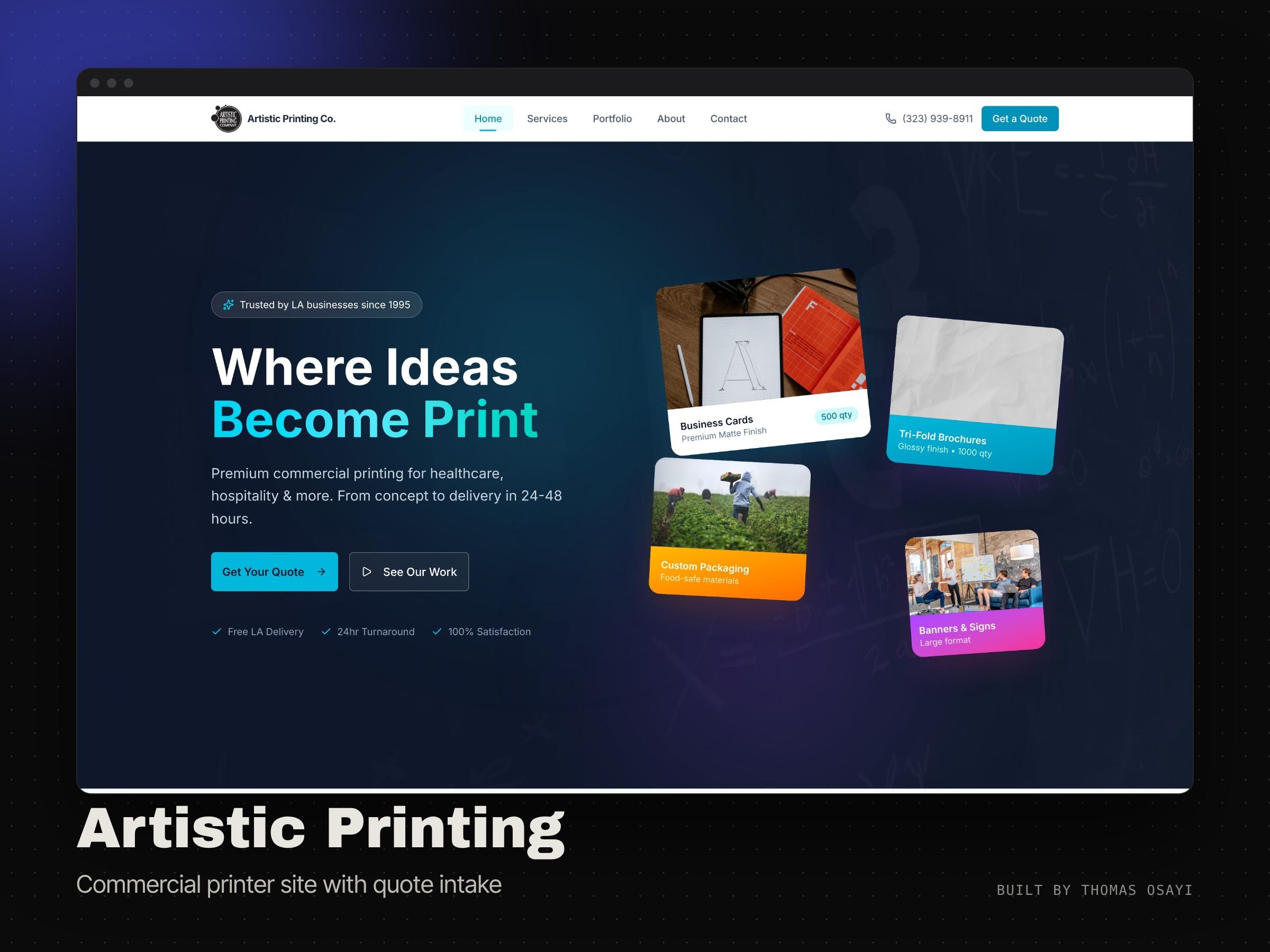
Artistic Printing
Website and quote management tool for a commercial printer, with structured client intake.

Astiglow
Website for a waxing studio with online booking and service packages.
Pricing
Most landscaping and lawn care companies fit the Business Site package. Online maintenance sign up with recurring payments or a customer portal makes it a Full Custom Build. See the Custom Next.js websites for businesses packages, or get a quick estimate with the website cost calculator.
Is my business design and install, maintenance, or both?
Decide which one you want more of, then give each its own path, because they attract different customers and need different forms.
A design and install customer is planning a project worth thousands. They want to see your best work, understand your process and book a consultation. A maintenance customer wants their lawn mowed every week by someone reliable, at a fair price, starting soon. If both land on the same "contact us" form, you get mowing requests in the consultation queue and backyard redesigns buried among weekly service inquiries.
On the homepage I put two clear choices under the headline: "Design and installation" and "Lawn care and maintenance". Each opens its own page with its own proof and call to action. If you are trying to grow one side, give it the first button and the bigger photo.
How do I show landscape projects so they sell the next one?
Use project pages that show the space before, right after the install and again once it has grown in, with the plants, materials and the problem you solved.
Landscaping has an advantage most trades do not: the work gets better over time. A garden photographed on install day looks sparse. The same garden a season later is what clients actually want. Go back to strong projects with a phone and take the same shots again. Those three photo sets side by side are your most persuasive content.
Each project page should say where it is (city or neighborhood), what the brief was, what you built (patio, retaining wall, irrigation, planting), the main plants and materials, and anything tricky such as drainage, slopes or a tight budget. Filters by project type let visitors jump to what interests them. Those details also match what people search for, such as "drought tolerant front yard" or "paver patio" in their city.
Do landscapers need to show a license number?
In California, licensed contractors must include their CSLB license number in all advertising, including websites, and landscape construction generally falls under the C-27 Landscaping classification.
Whether a given job needs a contractor license depends on what the work is and its size. Construction work such as hardscape, irrigation systems and grading is different from routine mowing and pruning, and CSLB is the authority on where your work falls. If you hold a license, put the number and classification in the footer of every page and on your about page. CSLB's advertising guidelines also say you should only advertise work within your classification and should not advertise that you are bonded.
If your business is maintenance only and does not hold a license, do not imply that it does. Describe what you do accurately. This is general information, not legal advice, so confirm your situation with CSLB or your state board.
How should recurring lawn care sign up work?
The customer enters an address, the site checks it against your service area, they pick a plan and frequency, and you either confirm automatically or approve the request.
Route density is what makes maintenance profitable, so the address check is the most important part. A ZIP code list is the simple version. A drawn service area is the precise one. Addresses outside it can get a polite message and a waitlist option, which is better than a request you have to turn down by phone.
Plans should be easy to compare: weekly or every two weeks, what each visit includes (mowing, edging, blowing, a quick weed pass), what costs extra (hedge trimming, cleanups, fertilizing) and the price or price range by lot size. If you have seasonal changes, such as fewer visits in winter, say so on the plan.
Many companies start with a request form that you confirm by text, then move to card on file billing through a processor like Stripe once volume grows.
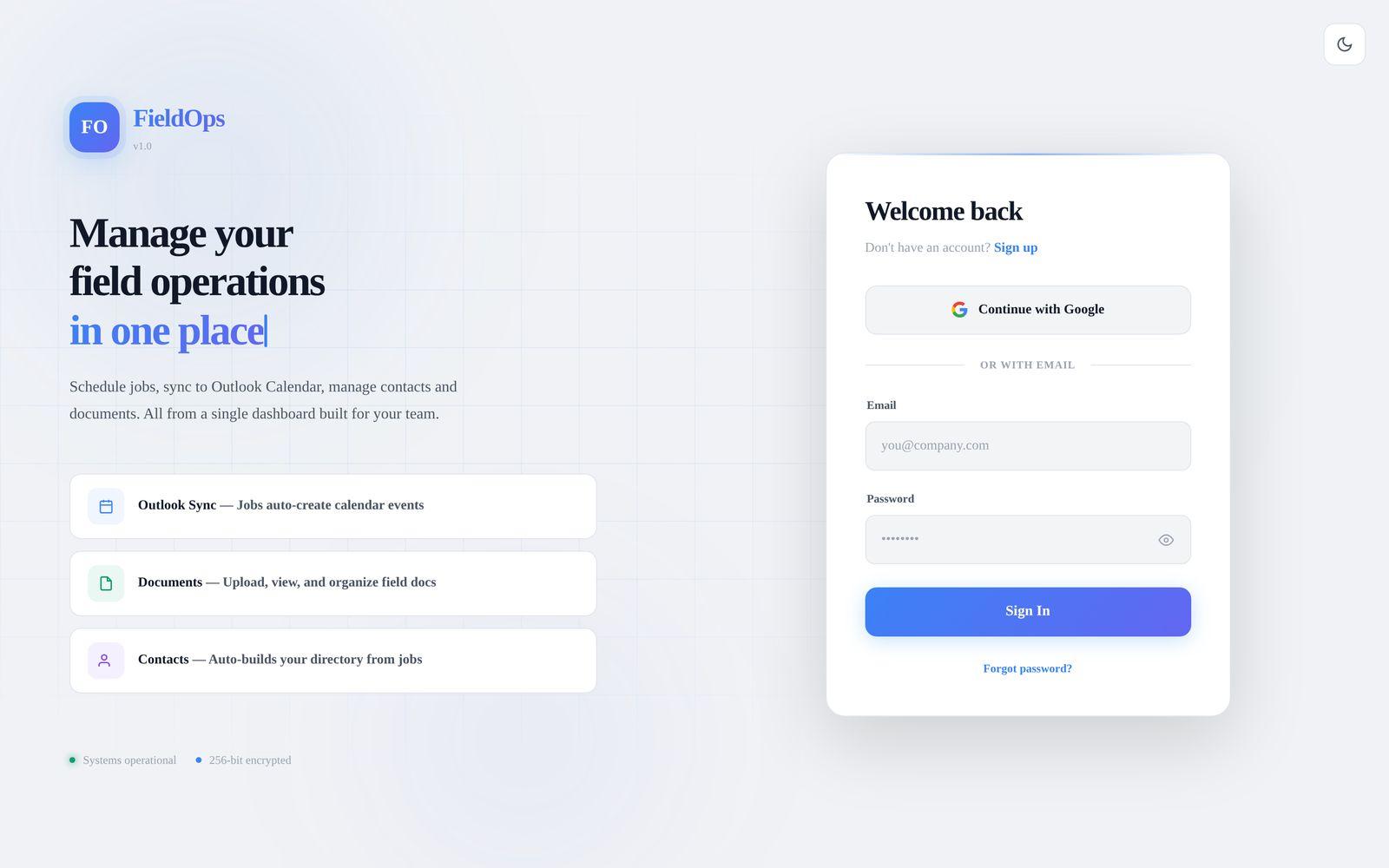
For field teams, I built FieldOps, a job scheduling tool with Outlook Calendar sync. It is not a landscaping product, but it shows where a maintenance website can lead later: requests from the site becoming scheduled jobs on a crew calendar instead of notes on paper.
What should a design consultation request ask for?
Ask for the address, the area of the property, goals, photos, a budget range, timing and any HOA or permit constraints.
Useful fields for a landscape design request: front yard, backyard or both; approximate size; what the client wants (lower water use, outdoor living, privacy, play space, curb appeal); current problems such as drainage or a slope; photos of the space; budget range in bands; desired timing; and whether there is an HOA. A question about whether they want design only or design and installation saves a lot of back and forth.
Keep required fields short and make the rest optional. Then send a confirmation that explains your consultation process and whether there is a design fee.
How should service area pages work for a route based business?
Show the real service area clearly, and write individual area pages only where you have projects or routes there and something specific to say.
For maintenance, the area is defined by your routes, so a map and ZIP list do more than city pages. For design and install, you may travel further for the right project, and an area page can earn its place by linking to projects done there and describing local conditions: soil, microclimate, hillside lots, wildfire defensible space considerations, HOA patterns.
What to avoid is a stack of city pages with only the name changed. Google's spam policies describe pages aimed at specific cities that funnel visitors to one page, and substantially similar pages, as doorway abuse. A short, honest list of areas served is always safe.
Should the site talk about water wise landscaping and rebates?
Yes, if you do that work, and link to the current program rather than quoting rebate amounts that can change.
In much of California, drought tolerant and water efficient landscaping is one of the most searched landscaping topics, and local water agencies have run turf replacement and irrigation rebate programs. A dedicated page explaining what you install, how a lawn conversion works, typical timelines and how you help clients with the rebate paperwork can bring in strong leads. Keep the money details on the agency's page, and check the link each season.
The bottom line
A landscaping and lawn care website should split the business in two: a portfolio led path for design and installation with a consultation request that scopes the job, and a simple, address checked sign up for recurring maintenance. Show projects as they grow in, display your license where it applies, describe your service area honestly and keep rebate details pointing at the source. Start with those core pages, then add online billing or scheduling when the routes fill up.
Questions
Do landscapers in California need to show a license number?
Licensed contractors, including C-27 landscaping contractors, must include their CSLB license number in advertising, websites included. Whether your work needs a license depends on its type and size, so check with CSLB; this is not legal advice.
Can customers sign up for weekly lawn service online?
Yes. A sign up flow can check the address against your service area, offer the plans you run and either confirm automatically or send you a request to approve.
How should we show design projects?
As individual project pages with before and after photos, plant and material lists and a short story, filterable by project type.
Can we mention turf replacement or water wise landscaping?
Yes, and it is a strong page for California searches. Link to your water agency program for current rebate details rather than quoting amounts that change.
What does a landscaping website cost with Thomas Osayi?
Most fit the Business Site package from $450, and online plan sign ups with payments make it a Full Custom Build from $1,200.
Building a site for your landscaping business?
Six quick questions, then an intro call if you want one.
Start a projectOther industries
Restaurants · Therapy practices · Medical clinics · Salons and spas · Startups · Local service businesses · Dental practices · Law firms · Real estate agents · Gyms and fitness studios · Ecommerce brands · Print shops and manufacturers · Nonprofits · Coaches and consultants · Med spas · Physical therapy and chiropractic clinics · Event venues · Car washes and auto detailing · Accountants and bookkeepers · Tutoring and education businesses · Photographers · Architects and interior designers · Plumbers and HVAC companies · Roofers and general contractors · Cleaning services · Moving companies · Pet groomers and veterinary clinics · Food trucks · Bakeries and cafes · Wedding planners and event pros · Insurance agencies · Home care agencies · Tattoo studios · Churches and faith organizations · Auto repair shops · Property management companies · Florists · Daycare and childcare centers · Breweries and wineries · Funeral homes