Websites for wedding planners and event pros
Websites for wedding planners and event professionals
Couples and event hosts shortlist vendors quickly. They look at your work, check whether you are free on their date, and try to guess if you fit their budget. A site that shows real events, explains your packages and asks for date, budget and guest count up front turns browsing into qualified inquiries you can answer in one reply.
Start a projectWhat the site needs to do
Event date, venue or city, guest count, budget range and services wanted, so every inquiry is qualified before you reply.
Full stories of past weddings and events, with venue names and vendor credits, not just a grid of pretty images.
Full planning, partial planning and day of coordination explained, with starting prices or minimums so couples can self qualify.
What happens from first call to the event day, how many meetings, and when payments are due.
Client words, venues you have worked at and features, shown honestly and only with permission.
Mistakes I see most
- A contact form with only name, email and message, leading to three emails before you know the date
- No pricing guidance at all, so most inquiries are wildly outside your range
- Huge galleries that never finish loading on a phone
- Portfolio pages without venue names or locations, which miss local searches
Related work
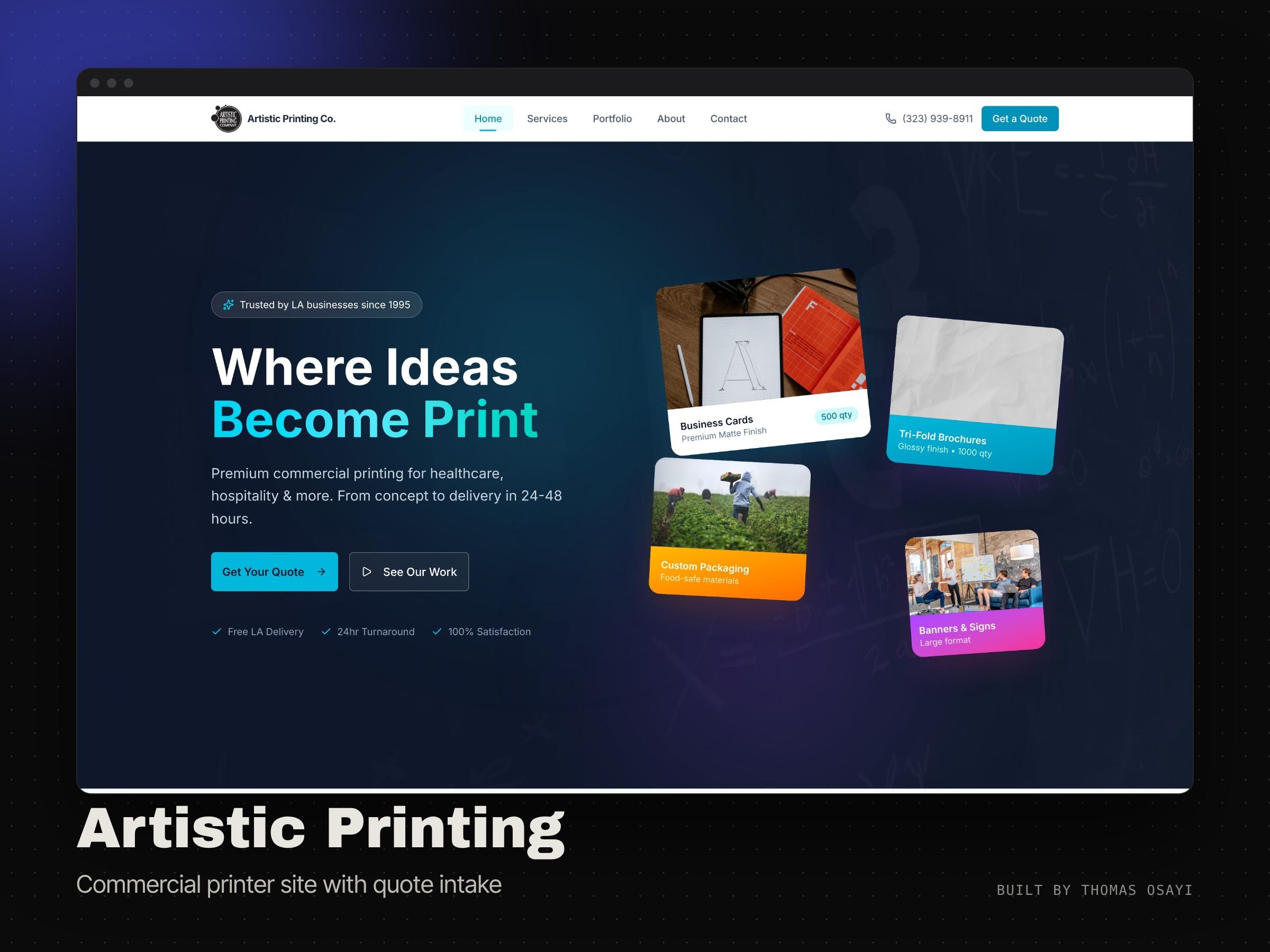
Artistic Printing
Website and quote management tool for a commercial printer, with structured client intake.
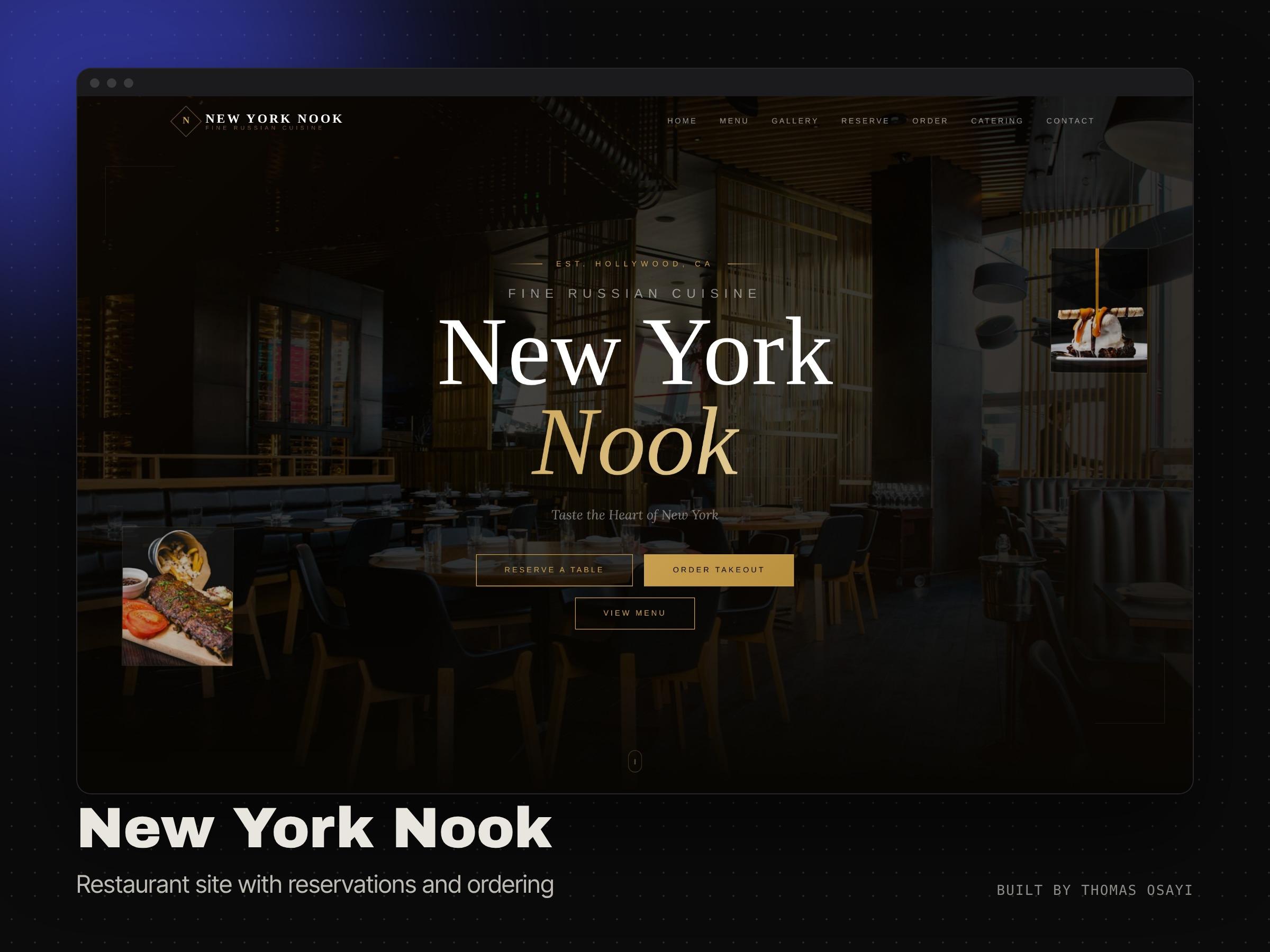
New York Nook
Restaurant website for a Russian restaurant in Hollywood with reservations and pickup ordering.
Pricing
Most planners and event pros fit the Business Site package. A large portfolio with a CMS, client portals or online retainers make it a Full Custom Build. See the Custom Next.js websites for businesses packages, or get a quick estimate with the website cost calculator.
Wedding planners, florists, photographers, DJs, rental companies and coordinators all sell something people buy once, for a lot of money, with strong feelings attached. Buyers browse dozens of vendors, and most of them never write. The site has two jobs: make the right couples want to reach out, and make sure every inquiry that arrives has the details you need to answer properly.
What do couples look for on a wedding planner's website?
Couples look for proof you have done weddings like theirs, a sense of price and an easy way to check your availability. They usually arrive from Instagram, a venue's vendor list, a directory listing or a search like wedding planner in Malibu. They scan your work, look for a pricing page, and decide in a minute or two whether to inquire.
So the homepage should open with your strongest event image, one line on who you serve (for example, full service planning for modern weddings across Southern California) and an Inquire button. Below that: a few featured events, a short version of your services with starting prices, a review or two and a final call to action. Keep the language specific. Every planner says "stress free"; very few say "we have planned weddings from 40 to 300 guests at vineyards, estates and downtown lofts."
What should a wedding inquiry form ask?
A wedding inquiry form should ask for the details that decide whether you are a fit: date, place, size and budget. Without them, you spend the first three emails just learning the basics, and many couples drop off before you get there.
The fields I would include:
- Event date, with a checkbox for flexible or not set yet
- Venue name, or the city if the venue is not booked
- Estimated guest count
- Budget range, either for the whole wedding or for your service
- Services wanted: full planning, partial planning, day of coordination, design only
- Names and best contact method
- How they heard about you
- An open box for anything else
Use ranges for budget and guest count instead of open number fields. People find choosing "$40k to $60k" much easier than typing a figure, and you get cleaner data. If you keep a calendar of booked dates, the form can check it and say right away if a date is taken, so the couple can choose an alternative or join your waitlist instead of waiting days for a "sorry."
Should a planner show prices on the website?
Show starting prices or minimums, even if every final quote is custom. Couples who cannot find any pricing assume you are either out of their range or hiding something, and the ones who inquire anyway are often far outside your minimum. A short packages page solves both problems.
A simple structure:
- Full planning, starting at a set amount, with what it includes and when you join
- Partial planning, for couples who have started and need a guide
- Month of or day of coordination, with hours on the day and the number of meetings
- Design or styling, if you offer it separately
For florists and rentals, a typical spend range or a minimum order works better than a package list. Photographers and DJs usually list collections by hours. Whatever you choose, keep it current, because outdated prices cause awkward first calls.
How should a portfolio be organized?
Organize the portfolio as stories, one page per event, rather than one giant gallery. Each event page should name the venue and city, the season, the guest count or style, and credit the other vendors. That serves couples (they can see weddings at venues like theirs) and helps local search, since people search for venues and vendor names. Vendor credits also make other vendors more likely to share and link to your work.
Photos need care on the technical side. Wedding galleries are usually the heaviest part of any vendor site, and an unoptimized gallery can take ages to load on a phone. I resize and compress images automatically, load them as the visitor scrolls, and keep the first screen light. If you will post new events often, a simple CMS lets you add a new story with photos, venue and credits yourself without asking a developer.
How do I handle availability, contracts and retainers?
Keep the website responsible for the first step and let dedicated tools handle the contract. The site captures a qualified inquiry, checks availability if you keep a booked dates calendar, and invites the couple to book a consultation call. After that, many planners use client management software for proposals, contracts and payment schedules.
If you prefer to keep it lighter, a Stripe checkout link for the retainer works well once the contract is signed, and later payments can follow the same way. What matters is that the website does not try to replace your contract or legal terms. Any contract language should come from your own documents, reviewed by a professional if needed.
What did I learn from building intake for other businesses?
I have not built a wedding planning site, but the structured intake problem is one I have solved. For Artistic Printing, a commercial printer in Los Angeles, I built quote management and client intake so requests arrive with the details needed to price the job, rather than a vague "can you print something for me." A wedding inquiry is the same idea: structured fields up front mean you can reply with real next steps.

New York Nook, a restaurant in Hollywood, has a catering and private events section built around the same principle: explain the offer and capture event details in one place.
How do event pros get found online?
Event vendors are found through venues, other vendors, directories, Instagram and search. The website supports every one of those. Directory listings and Instagram profiles should link to it, venue preferred vendor pages often link out, and each event story you publish can rank for searches like that venue plus wedding planner.
On the technical side, set up a Google Business Profile as a service area business, add LocalBusiness structured data, and create pages for the areas you serve if you work across a region (Orange County, Santa Barbara, Palm Springs, for example). Write each area page with real events and venues from that area, not swapped town names, or it will not help. My local SEO checklist covers the basics in more depth.
The bottom line
A good site for a wedding planner or event pro shows real events as stories, explains packages with starting prices, and uses an inquiry form that asks for date, venue, guest count and budget so every message is qualified. Add an availability check and an instant reply with your pricing guide, keep galleries fast on phones, and let your contract tools handle the paperwork. That way the website does the sorting, and your time goes to couples who are actually a fit.
Questions
What should a wedding inquiry form ask?
Event date, venue or city, guest count, budget range, services wanted and how the couple found you; that is enough to decide fit and reply with next steps.
Should I show prices on my website?
Starting prices or minimums help couples self qualify and cut down on inquiries that will never fit, even if every final quote is custom.
Can the site check whether I am available on a date?
Yes. The form can check a calendar of booked dates you maintain and tell the couple right away if the date is taken.
Can clients pay a retainer online?
Yes. Once the contract is agreed, a Stripe checkout link can take the retainer and later payments.
Can I update my portfolio myself?
Yes. A simple CMS lets you add a new event with photos, venue and vendor credits without touching code.
What does a wedding planner website cost with you?
Thomas Osayi builds most planner and event pro sites on the Business Site package from $450, with a CMS portfolio or client portal moving it to the Full Custom Build from $1,200.
Building a site for your business?
Six quick questions, then an intro call if you want one.
Start a projectOther industries
Restaurants · Therapy practices · Medical clinics · Salons and spas · Startups · Local service businesses · Dental practices · Law firms · Real estate agents · Gyms and fitness studios · Ecommerce brands · Print shops and manufacturers · Nonprofits · Coaches and consultants · Med spas · Physical therapy and chiropractic clinics · Event venues · Car washes and auto detailing · Accountants and bookkeepers · Tutoring and education businesses · Photographers · Architects and interior designers · Plumbers and HVAC companies · Roofers and general contractors · Cleaning services · Landscapers and lawn care companies · Moving companies · Pet groomers and veterinary clinics · Food trucks · Bakeries and cafes · Insurance agencies · Home care agencies · Tattoo studios · Churches and faith organizations · Auto repair shops · Property management companies · Florists · Daycare and childcare centers · Breweries and wineries · Funeral homes