Websites for food trucks
Food truck websites that tell people where you are
A food truck customer has one question before anything else: where are you today? After that they want the menu, the hours at that stop and maybe a way to order ahead. A truck site built around a schedule you can update from your phone, plus a catering form for private events, turns followers into lines at the window.
Start a projectWhat the site needs to do
Today and this week, with address, cross streets and hours for each stop, editable from your phone before you leave the commissary.
Menus as text load instantly and can mark items as sold out or special, unlike a photo of a chalkboard.
Customers order and pay while you are parked, pick a pickup time, and skip the line at lunch rush.
Date, location, guest count, budget and event type in one form, so every booking inquiry can be quoted in one reply.
Your Instagram, Google Business Profile and website schedule should agree, or customers end up at an empty curb.
Mistakes I see most
- Posting the schedule only on Instagram stories that disappear after a day
- A menu image that phones zoom badly and Google cannot read
- Catering inquiries through a generic contact form with no date, guest count or location
- Ordering that keeps accepting orders after you have closed the window or sold out
Related work
Pricing
A truck with a schedule, menu and catering form fits the Business Site package. Pickup ordering with online payment moves it to a Full Custom Build. See the Custom Next.js websites for businesses packages, or get a quick estimate with the website cost calculator.
A restaurant has an address. A food truck has a schedule. That one difference shapes almost every decision on a truck website, from the homepage layout to how fast you need to be able to edit it. Here is how I would plan one, based on what customers and event planners actually need from you.
Why do food trucks need a website when Instagram already works?
Instagram is where people discover you, but it is a bad place to keep information people need on the day. Stories vanish after a day, posts get buried, and someone searching Google for tacos near Venice at lunch will never see your story. A website gives you a permanent home for three things social media handles poorly: where you are this week, the full menu as searchable text, and a catering form that collects real event details.
None of this replaces your social accounts. The site becomes the link in your bio, and every post can point to it: "Find this week's stops at the link." If you are weighing this up, my post on whether you need a website if your business already has Instagram goes deeper on the trade.
How should a food truck show its location schedule?
Put today's stop at the very top of the homepage, then the rest of the week below it. Each stop needs the address or a clear place name, cross streets or a landmark, the hours you will serve and a map link that opens directions on a phone. If you are at a brewery or a market, name the venue, because people search for those.
The part that matters most is editing. If changing the schedule takes ten minutes on a laptop, it will not get updated, and a wrong schedule is worse than none. I build truck schedules so you can update them from your phone in under a minute:
- A list of saved spots you return to often, picked with one tap
- A one off option for new stops
- Start and end times per stop
- A cancel button for days when the generator dies or the weather turns, which shows a clear "not serving today" message
Once the stop has passed, it drops off the list automatically, so the site never shows last Tuesday as today.
What should the menu look like on a truck site?
The menu should be text, short and honest about availability. Trucks usually run tight menus, which is a strength: six to twelve items, each with a price, a one line description and dietary tags like vegetarian or spicy. Text menus load fast on a weak signal at a crowded event and get read by Google, so someone searching for birria near Long Beach can find you.
Mark specials and sold out items from the same phone editor that controls the schedule. If you rotate menus by event (a lighter menu at a festival, full menu on regular days), the site can show the menu linked to each stop. And if you list allergens, keep them accurate. The FDA recognizes nine major food allergens, and while labeling rules mainly cover packaged food, customers with allergies rely on whatever you publish, so only claim what you can stand behind.
Should a food truck offer online ordering?
Order ahead pays off when you have lines at lunch rush and a predictable pickup window. Customers order on their phone while you are parked, pay up front, choose a pickup time, and walk up when it is ready. You get fewer abandoned lines and a cleaner kitchen flow.
The details that make it work for a truck specifically:
- Ordering only opens while you are at a scheduled stop, and closes when you do
- Pickup slots with a limit per slot, so ten orders do not land at 12:05
- Items you mark sold out disappear from the menu immediately
- A ticket that prints or appears on a tablet in the truck
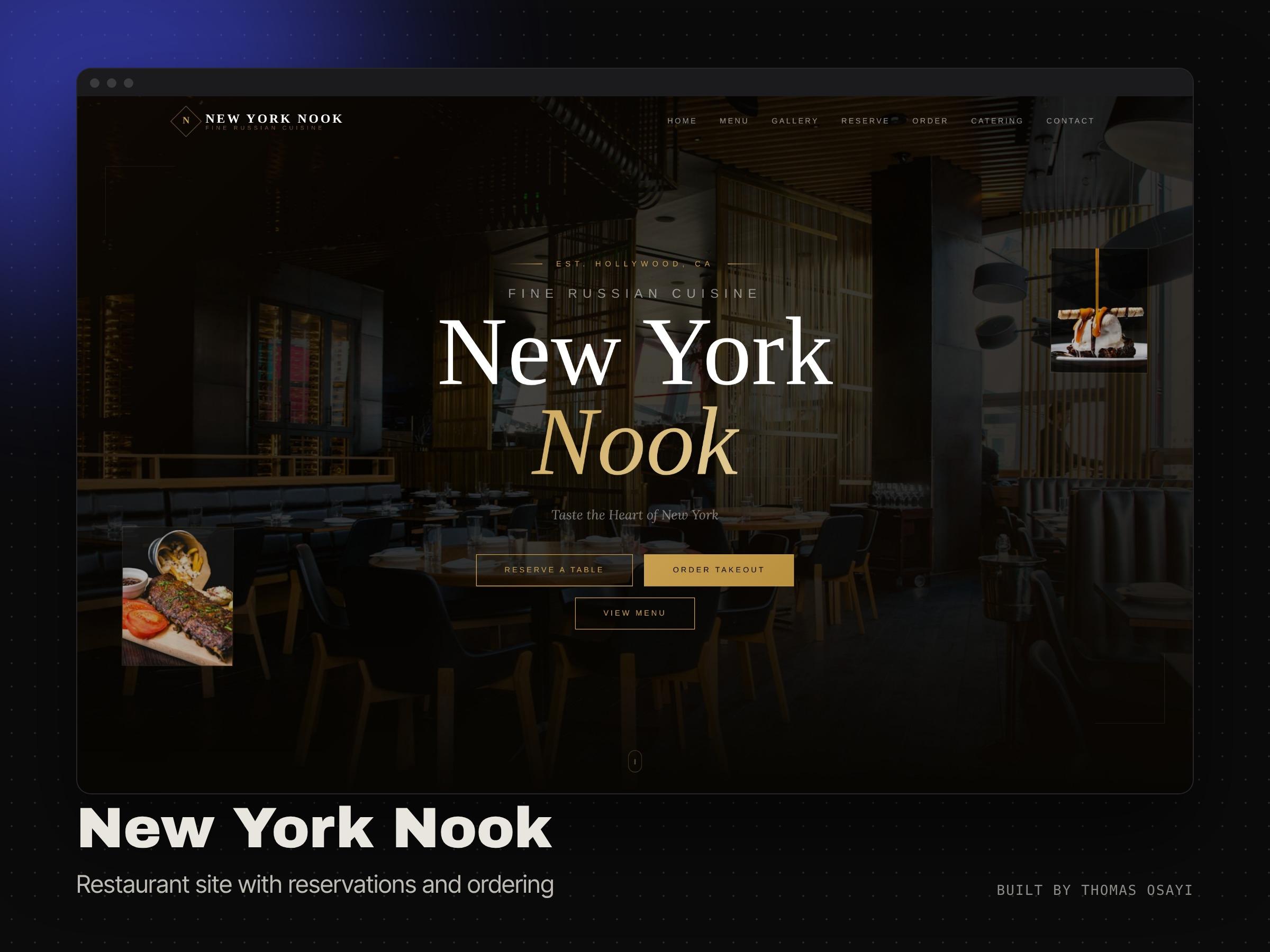
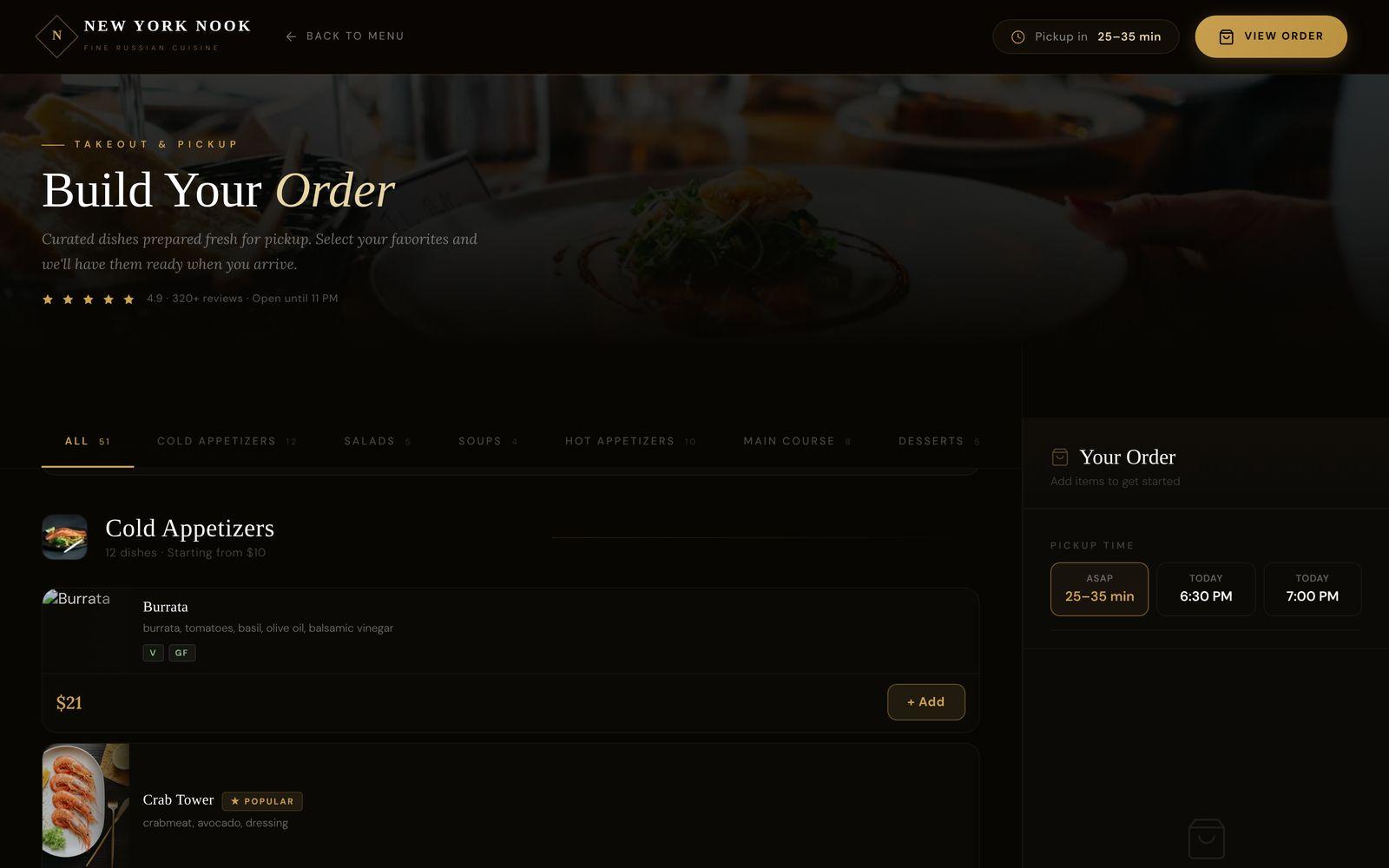
I built a similar pickup ordering flow for New York Nook, a restaurant in Hollywood, with menu categories, a cart and pickup time slots. A truck version adds the schedule awareness above, but the core flow is the same.
If your truck already uses a point of sale with online ordering built in, linking to it can be the simpler choice. My post on taking restaurant orders online without third party fees compares the options.
How should catering and private event inquiries work?
Catering is often the steadiest income a truck has, so the inquiry form deserves real thought. A generic contact form produces messages like "do you cater?" that take three emails to quote. A structured form gets everything in one go:
- Event date and service hours
- Event address, and whether the truck can park on site
- Expected guest count
- Event type: wedding, office lunch, birthday, school, film set
- Budget range or a per person target
- Service style: open menu, set menu, or prepaid guest count
- Dietary needs
With that, you can reply with a quote the same day. Once the client accepts, a Stripe checkout link can take the deposit and hold the date. I would also add a short catering page with sample packages, minimums, how far you travel and photos of the truck at real events, so planners can decide you fit before they fill in the form.
What permits or rules should the website mention?
The website does not need to list permits, but your schedule should only include stops where you are allowed to operate. Food trucks generally need a health permit from the local environmental health department and must follow local parking and vending rules, which vary by city and county. In Los Angeles County, for example, mobile food facilities operate under county environmental health permits, and individual cities add their own vending and parking rules. Rules change and differ by area, so check with your county and city directly; this is general information, not legal advice.
What does belong on the site: your health grade or permit display if your area requires it publicly, and clear notes for event hosts about space needs, power and whether you carry your own generator.
How does a food truck site get found on Google?
Start with your Google Business Profile, set up as a service area business if you have no fixed address, with a schedule and photos that match the site. Then give the site a page for catering in your area, a page for your cuisine with the dishes people search for, and venue names on your schedule. Brewery and market partners often link to trucks they host, which helps too.
Keep the site fast. Truck customers are almost always on a phone, often on poor event signal. Big background videos and heavy plugins cost you customers at exactly the wrong moment.
The bottom line
A food truck site lives or dies on its schedule. Make today's stop the first thing people see, make it editable from your phone in under a minute, keep the menu as text with sold out items marked, and give catering a structured form that collects date, location, guest count and budget. Add order ahead when lines justify it. Do those things and the website becomes the link that turns followers into customers at the window.
Questions
Can I update my location from my phone?
Yes. I build a simple editor where you pick a saved spot or type a new one, set the hours, and the site updates immediately.
Can customers order ahead and pay online?
Yes. Orders go through Stripe with pickup time slots, and ordering switches off automatically when you close or mark items sold out.
Do I need a website if I already post on Instagram?
Instagram is great for reach, but a website gives you a schedule that does not vanish, a menu Google can read, and a catering form that captures real event details.
Can the site take catering deposits?
Yes. Once you confirm a date and quote, the client can pay a deposit online through a Stripe checkout link.
What does a food truck website cost with you?
Thomas Osayi builds most truck sites on the Business Site package from $450, and pickup ordering with payment fits the Full Custom Build from $1,200.
Building a site for your truck?
Six quick questions, then an intro call if you want one.
Start a projectOther industries
Restaurants · Therapy practices · Medical clinics · Salons and spas · Startups · Local service businesses · Dental practices · Law firms · Real estate agents · Gyms and fitness studios · Ecommerce brands · Print shops and manufacturers · Nonprofits · Coaches and consultants · Med spas · Physical therapy and chiropractic clinics · Event venues · Car washes and auto detailing · Accountants and bookkeepers · Tutoring and education businesses · Photographers · Architects and interior designers · Plumbers and HVAC companies · Roofers and general contractors · Cleaning services · Landscapers and lawn care companies · Moving companies · Pet groomers and veterinary clinics · Bakeries and cafes · Wedding planners and event pros · Insurance agencies · Home care agencies · Tattoo studios · Churches and faith organizations · Auto repair shops · Property management companies · Florists · Daycare and childcare centers · Breweries and wineries · Funeral homes