Kiro developer
Fix, finish and deploy your Kiro project
Built an app with Kiro's specs and agent but stuck before launch? I review the specs against the code, fix failing tasks and security gaps, and deploy it to production.
Get it fixedWhat Kiro builds
Kiro is an agentic IDE from AWS, built on Code OSS, that plans work as specs (requirements.md, design.md and tasks.md), then has an agent implement the tasks. Steering files in .kiro/steering give it project context and hooks in .kiro/hooks run commands or prompts on events like a file save. The output is a normal code repository in whatever stack you chose.
Where Kiro apps usually break
The task list says complete, but the feature fails with real data or real users. I test each requirement against its acceptance criteria and fix what does not pass.
After many iterations the design.md no longer matches what was built. I reconcile the two so the next spec or developer starts from the truth.
Auth, authorization, input validation and secrets are easy to skip in a feature by feature plan. I review them across the whole app, not one task at a time.
No production environment variables, database migrations or build pipeline. I set those up and deploy to AWS, Vercel or another host.
Kiro plans come with a monthly credit allowance. When the same bug survives repeated attempts, reading the code directly is cheaper.
How I fix it
- Get access to the repository, including the .kiro folder with specs, steering and hooks
- Run the app and test each requirement against its acceptance criteria
- Fix failing behavior, security gaps and drift between specs and code
- Set up production config and deploy to your host on your domain
- Update the specs and steering files so Kiro keeps working well afterwards
Packages
One bug or error in an app that otherwise works, fixed and explained.
Up to three fixes plus one small feature or integration.
For apps whose core features already work: fix what blocks launch and ship it to production.
Apps I have shipped
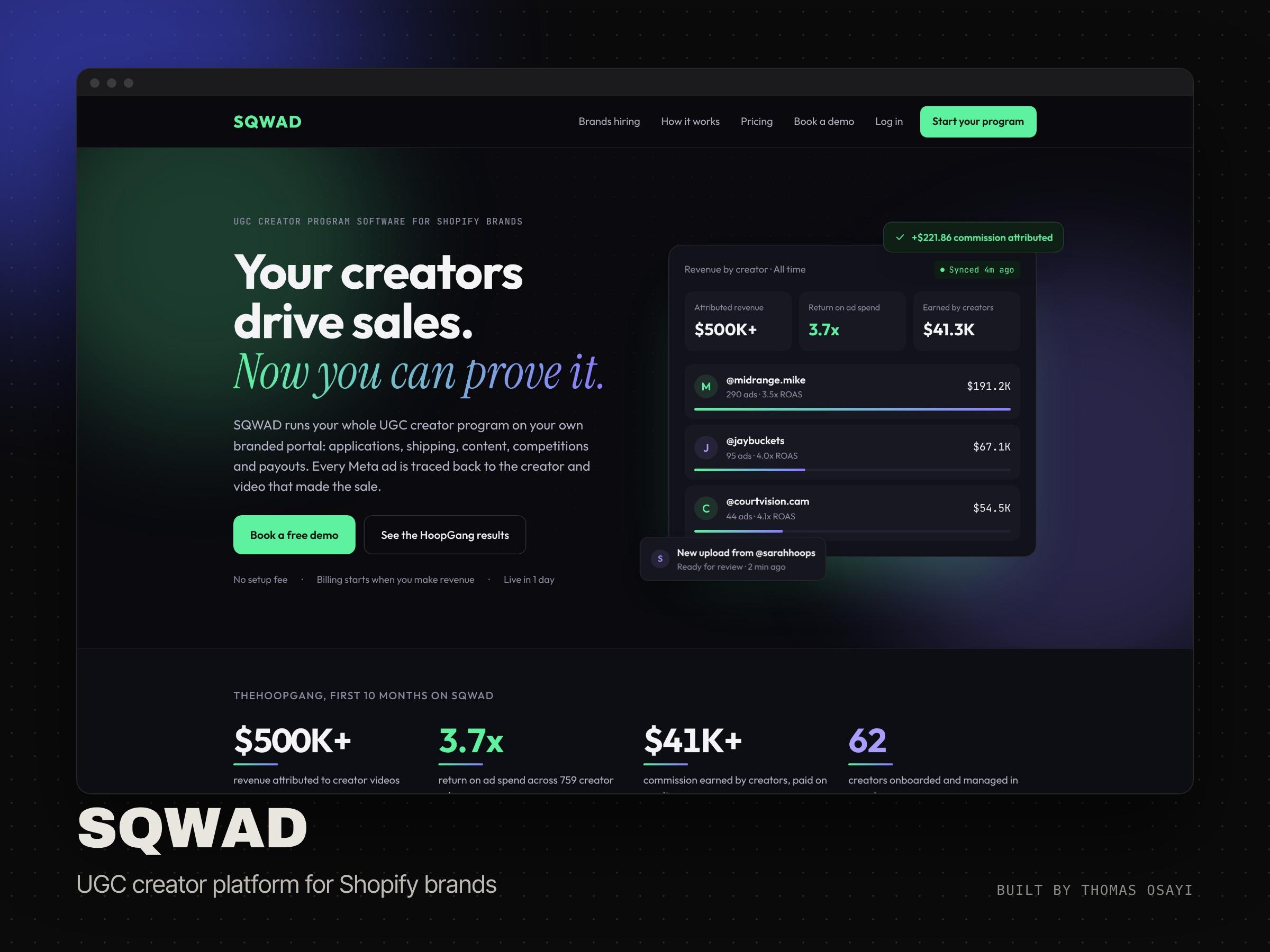
SQWAD
How I designed and built SQWAD, a SaaS platform Shopify brands use to run UGC creator programs, from applications to payouts.
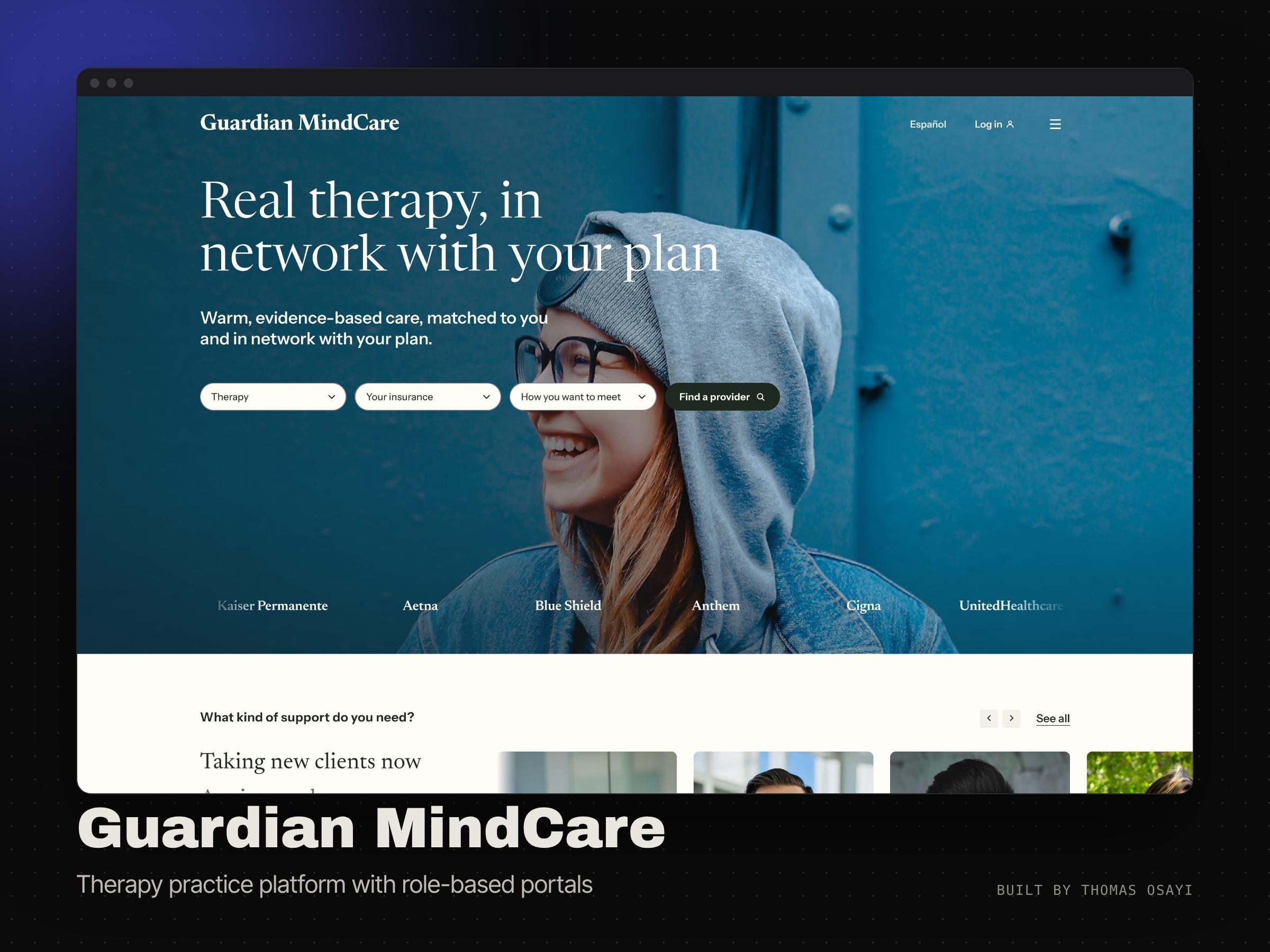
Guardian MindCare
A therapy practice platform that matches clients with in-network therapists, with role-based portals for therapists, supervisors, trainees, clients and admins.
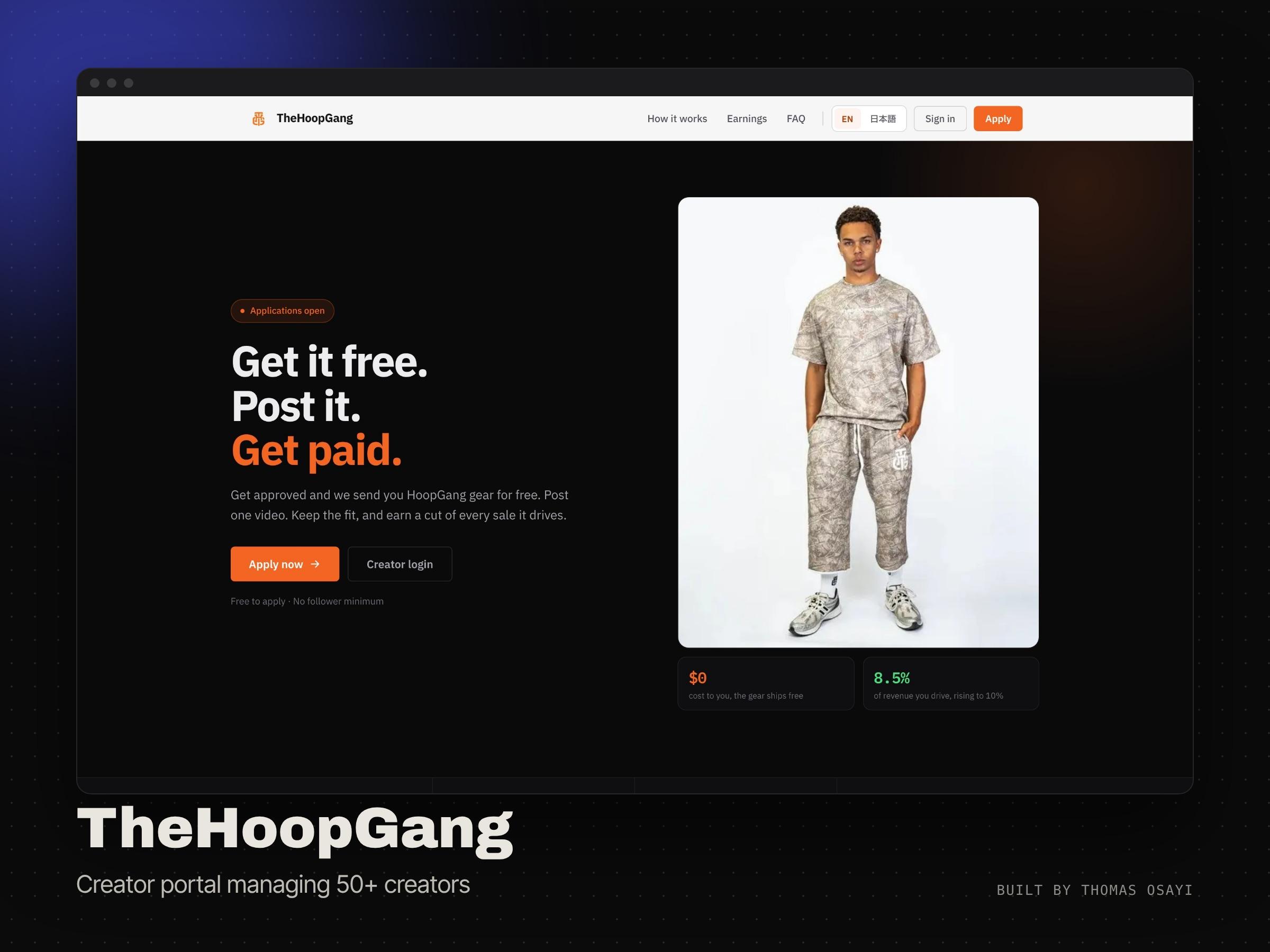
TheHoopGang
A creator portal for a basketball streetwear brand that manages 50+ creators, tracks content and runs refundable gear gifting.
What is Kiro and how does it build apps?
Kiro is an agentic IDE from AWS that plans each feature as a written spec, then has an AI agent implement the tasks in that spec.
Kiro is built on Code OSS, the open source base of VS Code, so it feels like a familiar editor and can use your VS Code settings and Open VSX compatible extensions. The difference is the workflow. Instead of prompting for code directly, you describe a feature and Kiro produces a spec, then works through it. According to Kiro's documentation, every spec has three files:
- requirements.md (or bugfix.md for a bugfix spec): user stories with acceptance criteria. Kiro's launch post says these use EARS notation, short for Easy Approach to Requirements Syntax.
- design.md: the technical architecture, sequence diagrams and implementation considerations.
- tasks.md: a list of discrete, trackable implementation tasks.
Specs can start from requirements or from a technical design. The result is a normal repository in the stack you chose, with a .kiro folder holding the specs and other configuration. That matters, because any developer can read both the plan and the code.
What are Kiro steering files and hooks?
Steering files are markdown files that give Kiro lasting context about your project, and hooks are automations that run a command or a prompt when something happens in a session.
Kiro's docs say workspace steering lives in .kiro/steering, with a global version in your home folder, and that the default files are product.md (purpose, users, features), tech.md (frameworks, libraries, constraints) and structure.md (file layout, naming, architecture). Each file can be included always, only for matching files, manually or automatically when a request matches its description.
Hooks are JSON files in .kiro/hooks. Each one defines a trigger, such as after a file is saved or before or after a tool is used, and an action that either runs a shell command or injects a prompt. A typical example from the docs runs a linter on TypeScript files after every save.
For me as the developer taking over, these files are a gift and a risk. They explain what you intended, but if they are out of date they also mislead the agent every time it runs.
What problems show up in apps built with Kiro?
The usual suspects are tasks that are marked complete but do not hold up with real data, specs that have drifted from the code, and security and deployment work that no single task owned.
Specs make Kiro more structured than prompt by prompt tools, but they do not remove the usual gaps in AI written software. The issues I look for:
- Acceptance criteria that were never actually tested, only implemented.
- A design.md that describes one data model while the code uses another.
- Authorization handled per feature, so one endpoint checks ownership and the next one does not.
- Secrets in a committed .env file, or hard coded in a config file.
- No migrations, seed data or production configuration, because the app only ever ran on one laptop.
- A steering file still describing a framework or folder structure you replaced weeks ago.
None of these mean Kiro did a bad job. They are the parts of software that are easy to miss when work is split into small tasks.
How do you review a Kiro project?
I review it requirement by requirement, checking each acceptance criterion against the running app, then look across the whole codebase for the things no task owned.
The first pass is mechanical. I clone the repo, install it, run it and read the specs. For each requirement, I try the behavior its acceptance criteria describe, including the edge cases, and note what passes and what does not. That gives a factual list of what is broken instead of a vague sense that the app is shaky.
The second pass is cross cutting: authentication and authorization on every route, input validation, error handling, secrets, database indexes and migrations, and what happens when two users act at once. Kiro organizes work by feature. Security and reliability problems usually live between features, so they need someone reading the whole app.
How do you fix a Kiro app without breaking the specs?
I fix the code first, then update the matching spec, design and steering files so Kiro and any future developer start from an accurate picture.
If I change the data model, design.md gets updated. If a requirement turns out to be wrong or incomplete, I rewrite its acceptance criteria so they describe what the app now does. If the project structure changed, structure.md changes with it. Where it helps, I add hooks that run the test suite or linter after edits, so regressions show up immediately instead of at launch.
The aim is that you can keep using Kiro after I leave. A fixed app with stale specs will slowly drift back into the same problems the next time the agent works from them.
How do you deploy a Kiro project?
I deploy it like any other codebase: production environment variables, a database with migrations, a build pipeline from GitHub and a host that suits the stack, then your domain.
Kiro is an editor, not a hosting platform, so there is no single publish button that takes your app live. That last mile is where many projects stall. Depending on what was built, I deploy a Next.js or React front end to Vercel, or use AWS services when the project was designed around them, and set up preview deployments so changes can be tested before they reach users. Then I test real sign ups, payments and emails on the production domain.
How much do Kiro credits and a fix cost?
At the time of writing, Kiro lists a free plan with 50 credits a month and paid plans of Pro at $20 with 1,000 credits, Pro+ at $40 with 2,000, Pro Max at $100 with 5,000 and Power at $200 with 10,000, with add on credits at $0.04 each.
Those credits go quickly when the agent keeps retrying the same failing task. My packages are fixed starting prices:
- Quick Fix, from $60, about 2 days: one bug, such as a failing login or a task that never really worked.
- Fix Plus Features, from $200, about 5 days: up to three fixes plus one small feature.
- Finish and Launch, from $600, about 10 days: for apps whose core already works, covering review, fixes, security, deployment and updated specs.
If the specs describe much more than the code delivers, I will tell you and quote from my SaaS MVP packages instead.
The bottom line
Kiro's specs, steering and hooks give an AI built app more structure than most tools, but tasks marked done still need testing, specs drift from code and nobody owns security or deployment unless someone does. Give me the repository with its .kiro folder and I will test it against its own requirements, fix what fails, deploy it on your domain and leave the specs accurate so you can keep building.
Questions
What is Kiro?
Kiro is an agentic IDE from AWS, built on Code OSS so VS Code settings carry over, that plans features as specs and has an AI agent implement them.
Can I keep using Kiro after a developer fixes my project?
Yes. The code stays in your repository and I update the specs and steering files to match the fixes, so Kiro has accurate context for the next feature.
Do you need my Kiro account?
No. Access to the Git repository and any hosting or database accounts is enough. The specs, steering and hooks live in the .kiro folder in the repo.
Does Kiro deploy my app for me?
Kiro is an editor and agent, not a hosting platform, so deployment depends on the stack and host you chose. That last step is often where projects stall.
How much does Kiro cost?
At the time of writing, Kiro lists a free plan with 50 credits a month and paid plans from $20 a month for Pro with 1,000 credits, up to $200 a month for Power with 10,000 credits.
What does it cost to fix a Kiro project?
Thomas Osayi fixes one bug from $60, up to three fixes plus a small feature from $200, and takes a project whose core already works to launch from $600.
Reading
- Supabase auth redirect URL not working? Fix localhost, preview and production redirects
Supabase confirmation or magic links sending users to localhost:3000 or the wrong page? Fix the Site URL, the Redirect URLs allow list, wildcards and emailRedirectTo.
- Environment variables undefined on Vercel? Every cause and fix
Works locally, undefined on Vercel? Fix missing NEXT_PUBLIC_ and VITE_ prefixes, wrong Production or Preview scope, the missing redeploy and build-time vs runtime mixups.
- How to fix a CORS error on a Next.js API route
Blocked by CORS policy calling your Next.js API? Read the exact error, handle the OPTIONS preflight, set headers in route handlers or next.config, or proxy instead.
Built with something else?
Lovable · Bolt · v0 · Replit · Cursor · Windsurf · Claude Code · Base44 · ChatGPT · Firebase Studio · Google AI Studio · GitHub Copilot · Rork · Emergent · OpenAI Codex · Figma Make · Anything · Gemini CLI · Google Antigravity · Manus