OpenAI Codex developer
Finish and launch the app you built with OpenAI Codex
Built your app with OpenAI Codex tasks or the Codex CLI and now need someone to review it, fix what is broken and get it live? I take over the repo and ship it.
Get it fixedWhat OpenAI Codex builds
OpenAI Codex is a software engineering agent that works in your own repository on any stack, through the Codex CLI, an IDE extension, the ChatGPT desktop app and Codex Cloud, where tasks run in isolated containers and changes come back for review as diffs and pull requests.
Where OpenAI Codex apps usually break
In Codex Cloud the agent phase runs offline by default and secrets are removed after setup. Tests that need the network or real keys get skipped, mocked or quietly weakened.
Codex makes it easy to run several tasks at once. Merged one after another, they leave conflicting patterns and duplicated logic.
Without project instructions, each task picks its own conventions for auth, data access and file layout.
API routes without ownership checks, permissive database rules and secrets in the repository are easy to miss in a large diff.
Environment variables, migrations, webhooks, domains and monitoring were set up for local runs only, or not at all.
How I fix it
- Get access to the repository and hosting accounts
- Review the critical paths and list risks by severity
- Fix security, payments and broken flows first
- Add AGENTS.md, tests and CI so future Codex tasks stay on track
- Set up production config, deploy and hand over notes
Packages
One bug or error in an app that otherwise works, fixed and explained.
Up to three fixes plus one small feature or integration.
For apps whose core features already work: fix what blocks launch and ship it to production.
Apps I have shipped
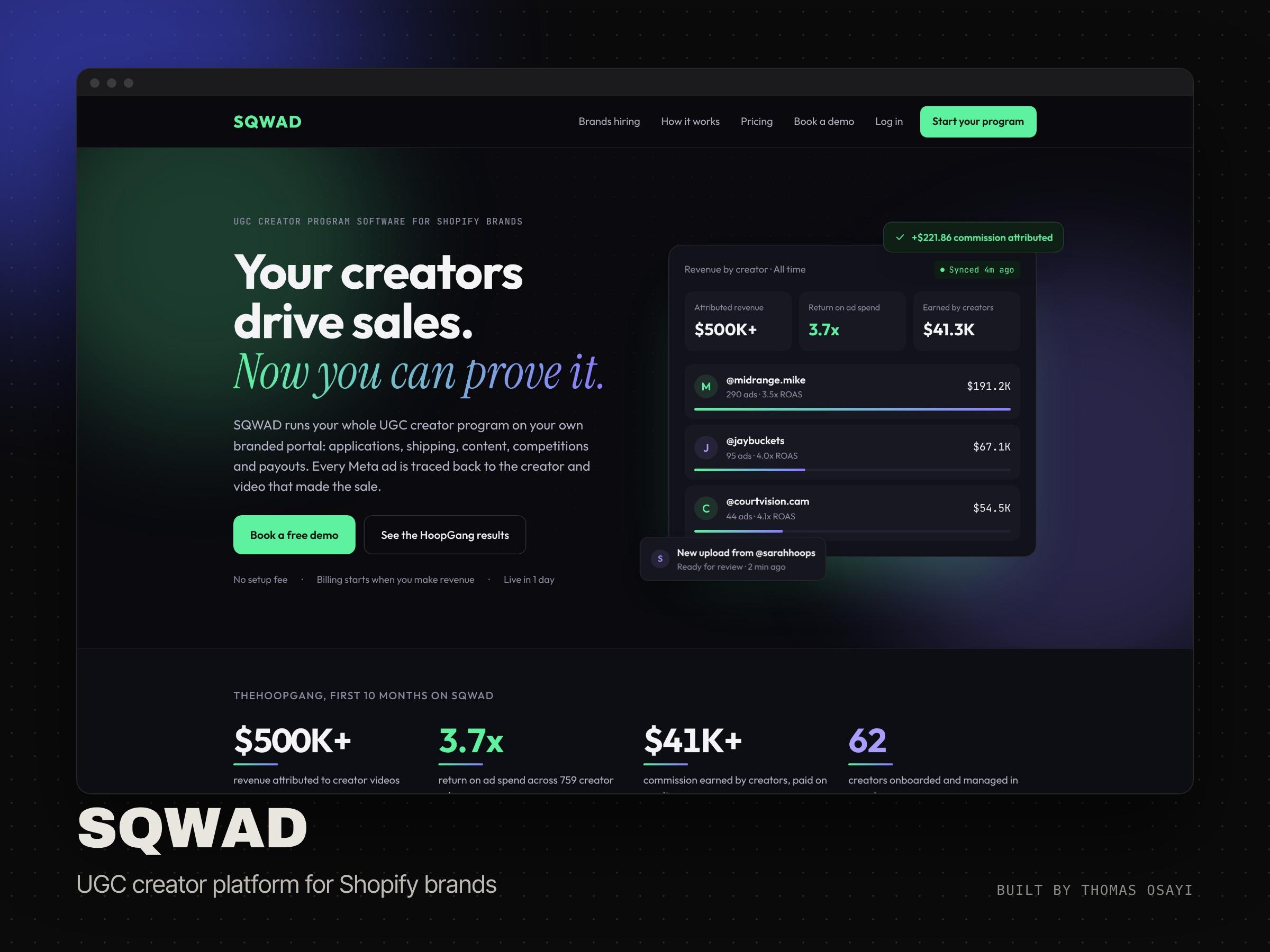
SQWAD
How I designed and built SQWAD, a SaaS platform Shopify brands use to run UGC creator programs, from applications to payouts.
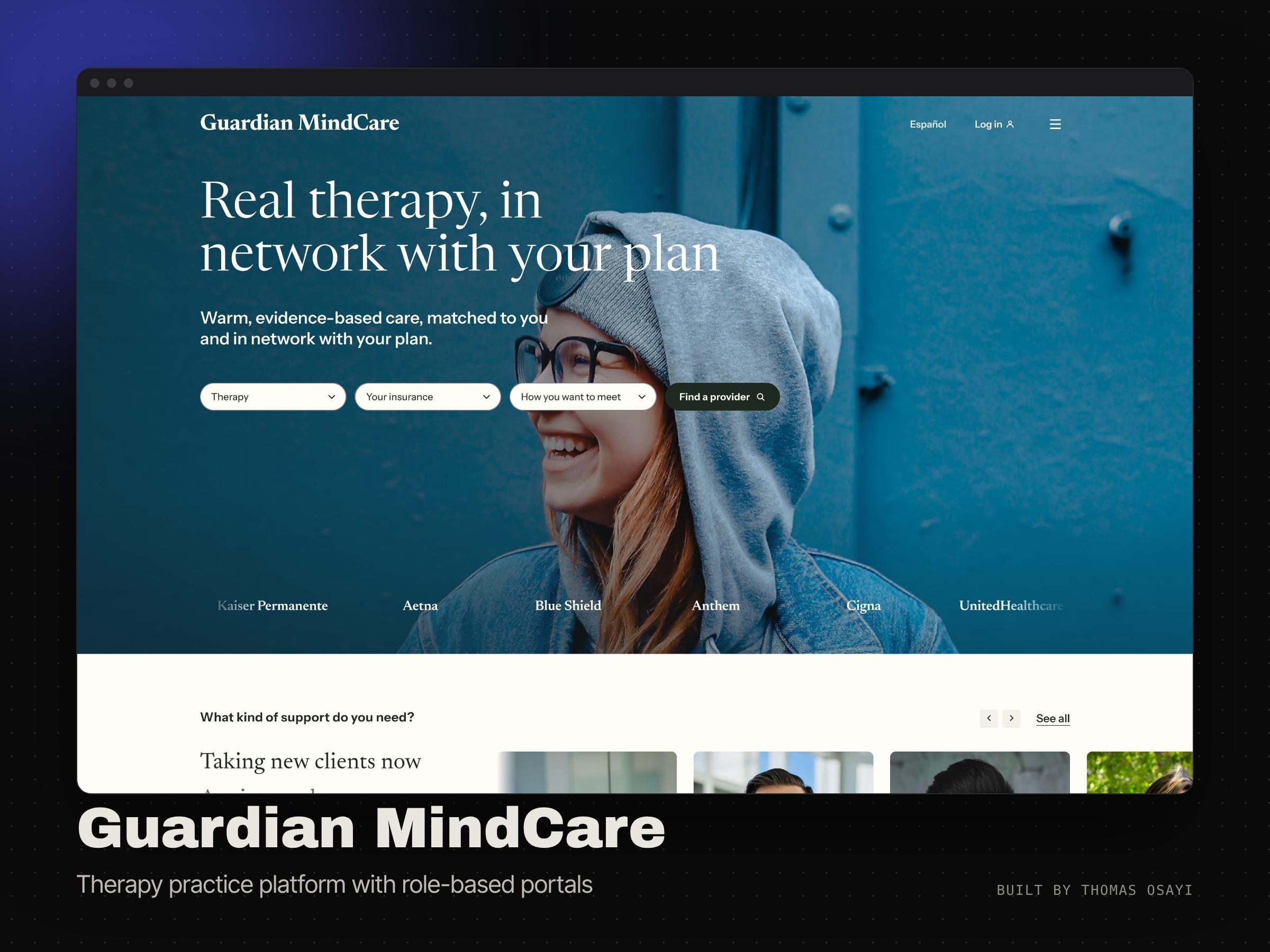
Guardian MindCare
A therapy practice platform that matches clients with in-network therapists, with role-based portals for therapists, supervisors, trainees, clients and admins.

TheHoopGang
A creator portal for a basketball streetwear brand that manages 50+ creators, tracks content and runs refundable gear gifting.
What is OpenAI Codex today?
Codex is OpenAI's software engineering agent, and it works on your own repository through several surfaces: the Codex CLI in your terminal, an IDE extension, the ChatGPT desktop app and Codex Cloud.
Locally, the CLI and IDE extension edit files and run commands inside an operating system sandbox, asking for approval depending on the mode you choose. In Codex Cloud, tasks run in isolated containers managed by OpenAI, and the result comes back as a diff you can review and turn into a pull request. At OpenAI's DevDay in late September 2026, Codex gained reusable cloud environments that work across devices, a refreshed CLI with a view for tracking several delegated tasks, code review inside the ChatGPT desktop app and automatic reviews, plus Codex Security Cloud for scanning GitHub repositories.
Unlike app builders such as Lovable or Emergent, Codex does not choose your stack or host your app. Whatever you built, Next.js, a Python API, a mobile app, it lives in a normal repository you control. That makes it easier to fix, and it also means nothing about production was set up unless someone asked for it.
Why do Codex Cloud tasks pass but the app still breaks?
Because the cloud agent usually works without the network and without your secrets, so it cannot run the parts of your app that need them.
OpenAI's documentation is specific about this. A cloud environment has a setup phase that can reach the network to install dependencies, and an agent phase that runs offline by default unless you enable internet access for that environment. Secrets configured for the environment are available only during setup and are removed before the agent phase starts.
In practice that means:
- Tests that call a real database, Stripe or an email provider cannot run, so the agent may skip them, mock them or change them until they pass.
- Code that reads an environment variable at runtime has never been executed with a real value.
- Package installs attempted during the agent phase fail, and the agent may work around a missing library in strange ways.
None of this is a flaw in Codex. It is a sensible security default. It just means a green task is not proof the feature works. I run the changes against a real local or staging setup before trusting them.
What goes wrong when you build a whole app with Codex?
Volume and inconsistency: many tasks, each locally sensible, that together produce a codebase nobody fully understands.
Parallel tasks that collide
Codex makes it easy to fire off five tasks and come back later. When several of them touch the same feature, you get three ways of fetching the current user, two date helpers and competing error handling. Each pull request looks fine on its own.
Authorization that was never specified
A task that says "let users edit their projects" gets an edit endpoint. Whether it checks that the project belongs to the signed-in user depends on whether the prompt or the project instructions said so.
Production setup left out
Environment variables on the host, database migrations, webhook endpoints, domains and error monitoring are rarely the subject of a task, so they are often missing entirely.
What should an AGENTS.md file contain?
The rules you want every Codex task to follow: how the project is laid out, how auth and data access work, how to run the build and tests, and what never to touch.
Codex reads AGENTS.md files before doing any work. It merges a global file in your home directory with project files from the repository root down to the folder it is working in, and files closer to the work take priority. That makes AGENTS.md the cheapest way to stop each task from inventing its own conventions. A useful one is short and specific:
- Where things live, for example API routes in one folder and database access only through one module.
- How every server route checks the current user and what they own.
- The exact commands for installing, building, type checking and testing.
- Rules such as never committing secrets, never editing migration files that already ran, and never weakening a test to make it pass.
I write or rewrite this file as part of a fix, because it keeps paying off long after I hand the project back.
How should I review Codex changes before merging?
Read the diff for anything outside the task, check auth and data access by hand, and run it yourself with real configuration.
My checklist for any agent change:
- Did it change files unrelated to the task? Ask why before merging.
- Does every new route verify the user and filter data by ownership?
- Are secrets read from environment variables only?
- Did tests get stronger, or did assertions disappear?
- Does the full app still build, not just the part that changed?
Codex's own review features and automatic reviews are helpful as a first pass, and Codex Security Cloud can scan a repository for issues. Treat them as a second reviewer, not the only one. My article on how to review AI-generated code has the full checklist.
What does it take to get a Codex-built app into production?
A host, real environment variables, a migrated database, working webhooks and a domain, all set up deliberately rather than by a task.
I start with a production build on a clean machine, which catches the errors the agent never saw. Then I set up the host, usually Vercel for Next.js or Cloud Run for other services, with separate preview and production environments, every secret configured on the host and none in the repository. Database changes go through migrations, payments get a verified webhook, and the domain, email sending and error monitoring get connected. My articles on environment variables being undefined on Vercel and on the Stripe test mode to live mode checklist cover two of the most common traps.
How long does it take and what does it cost?
Most Codex-built apps take two to ten days to review, fix and launch, depending on how many separate problems there are.
My fix packages:
- Quick Fix, from $60, about 2 days: one bug, found and fixed with an explanation.
- Fix Plus Features, from $200, about 5 days: up to three fixes plus one small feature, for example authorization checks, an AGENTS.md with CI, and one missing screen.
- Finish and Launch, from $600, about 10 days: for apps whose core features already work, covering review of the critical paths, security, production setup, deploy and handover.
If the core workflow still needs building, I will say so and quote from my SaaS MVP packages instead.
The bottom line
Codex can write a lot of good code quickly, but a passing cloud task ran offline and without your secrets, so it is not proof the app works. Give Codex an AGENTS.md, review every change touching auth and data, run the app with real configuration, and set up production on purpose. Add me to the repo and I will tell you what it needs to launch.
Questions
Is code written by Codex safe to ship?
Only after a person has reviewed the parts that touch auth, payments and user data. Codex is fast, but the review is still your responsibility.
Can I keep using Codex after you fix the app?
Yes. An AGENTS.md file, a working test suite and CI make Codex tasks more reliable, because the agent knows the rules and can check its own work.
Why did my Codex Cloud task skip the tests?
By default the agent phase runs without internet access and secrets are only available during setup, so tests that need either cannot run unless the environment is configured for them.
Do you need my ChatGPT account?
No. Access to the GitHub repository plus your hosting and database accounts is enough.
What does it cost to fix a Codex-built app?
Thomas Osayi fixes one bug from $60, up to three fixes plus a small feature from $200, and gets an app whose core already works launched from $600.
Reading
- Supabase auth redirect URL not working? Fix localhost, preview and production redirects
Supabase confirmation or magic links sending users to localhost:3000 or the wrong page? Fix the Site URL, the Redirect URLs allow list, wildcards and emailRedirectTo.
- Environment variables undefined on Vercel? Every cause and fix
Works locally, undefined on Vercel? Fix missing NEXT_PUBLIC_ and VITE_ prefixes, wrong Production or Preview scope, the missing redeploy and build-time vs runtime mixups.
- How to fix a CORS error on a Next.js API route
Blocked by CORS policy calling your Next.js API? Read the exact error, handle the OPTIONS preflight, set headers in route handlers or next.config, or proxy instead.
Built with something else?
Lovable · Bolt · v0 · Replit · Cursor · Windsurf · Claude Code · Base44 · ChatGPT · Firebase Studio · Google AI Studio · GitHub Copilot · Rork · Emergent · Figma Make · Kiro · Anything · Gemini CLI · Google Antigravity · Manus