SaaS platform · Founder
SQWAD
How I designed and built SQWAD, a SaaS platform Shopify brands use to run UGC creator programs, from applications to payouts.
- Next.js
- TypeScript
- Firebase
- Stripe
- Meta Ads API
- Shopify
Live: joinsqwad.com
The problem
Brands that pay creators for content rarely know which creator actually drove a sale. Programs run on spreadsheets, DMs and guesswork. A brand ships product to a group of creators, some post and some do not, a few videos get turned into ads, and at the end of the month nobody can say which creator was worth the money.
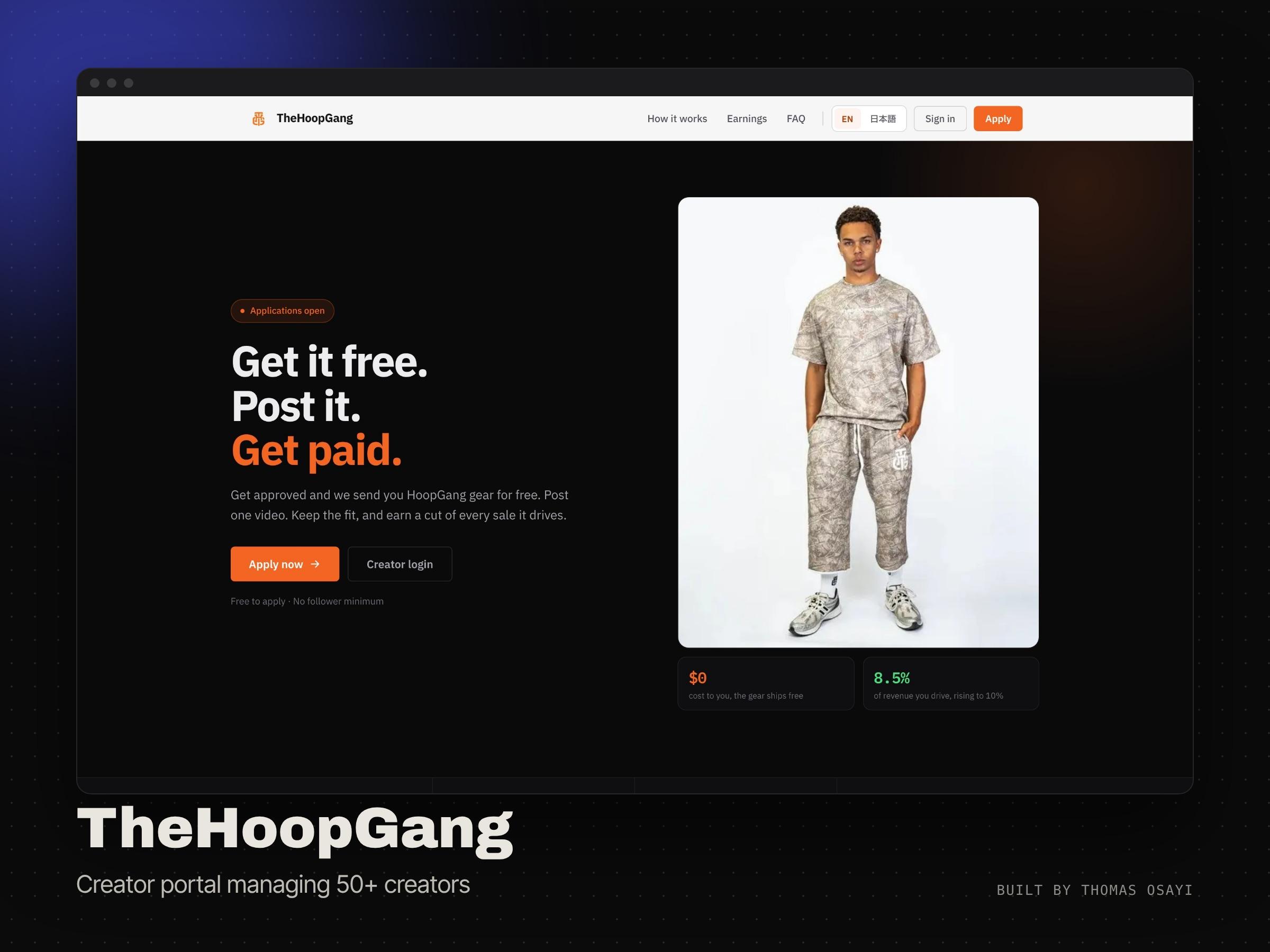
I came at this from the inside. Before SQWAD I built a custom creator portal for TheHoopGang, a basketball streetwear brand, and saw how much of a creator program is repeatable from one brand to the next: applications, shipping, content, payment. I also saw the one question a spreadsheet cannot answer, which is who made the sale.
What a brand needs from creator software
A creator program has five jobs. A tool has to cover all of them, or the brand ends up back in a spreadsheet for the one that is missing.
- Applications and approvals
- Product seeding: shipping product and tracking it
- Content submission and review
- Payouts
- Attribution: which creator's content drove which sales
The first four are operations. The fifth is the reason to run a program at all, so that is where I started.
How I approached it
The first version of SQWAD did one thing: let a brand see which creator drove a sale. Everything else came later.
That order was deliberate. Operations features are easy to describe and a brand can limp along without them. Proof of which creator's content sells is the thing a brand cannot get from a spreadsheet, so it had to work before anything else was worth adding.
The operational pieces were then added around that core, one workflow at a time.
What I built
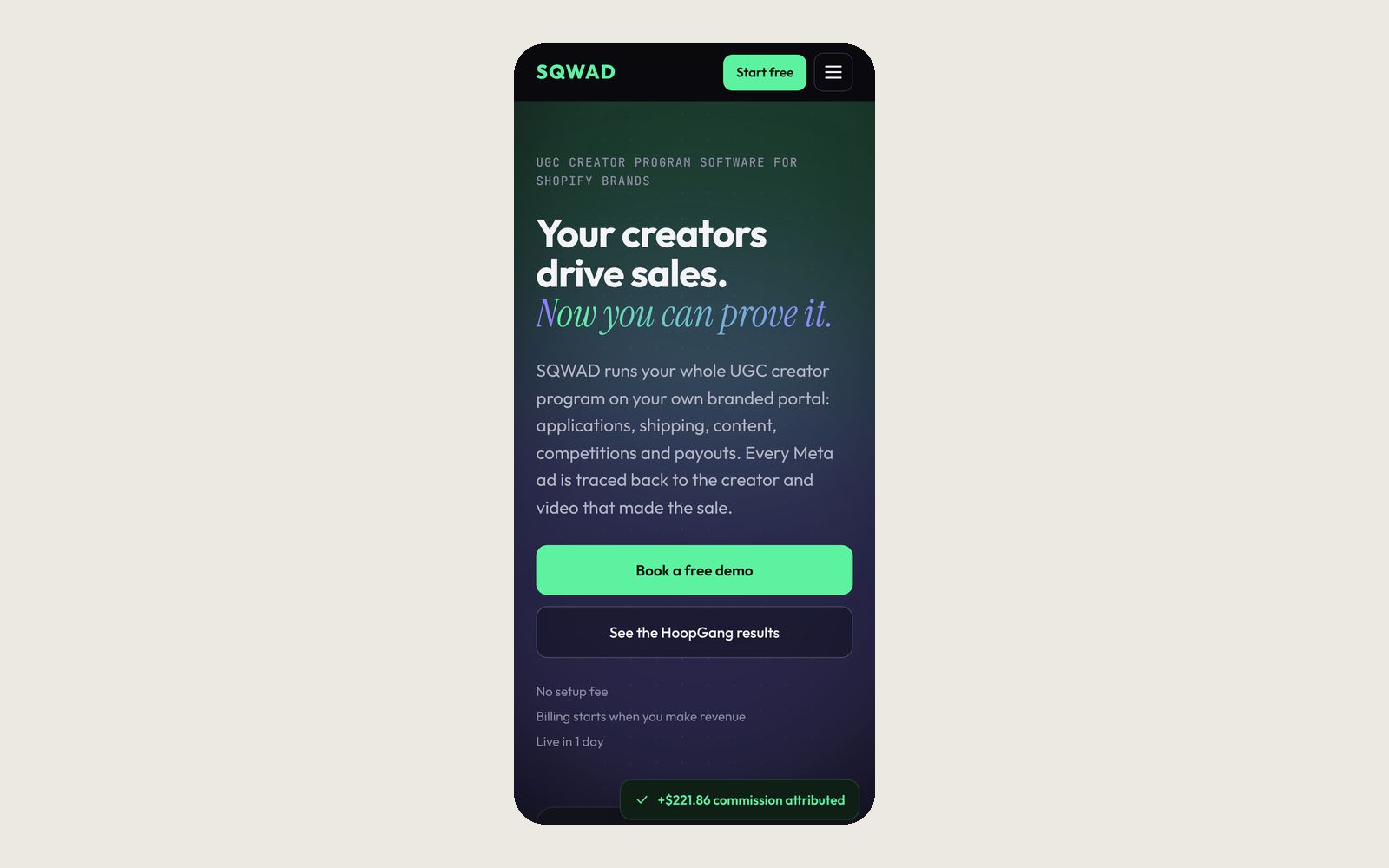
SQWAD is UGC creator program software for Shopify brands. It gives each brand a branded portal where creators apply, receive product, submit content, join competitions and get paid, with the brand's own name and colors on it.
Applications and approvals
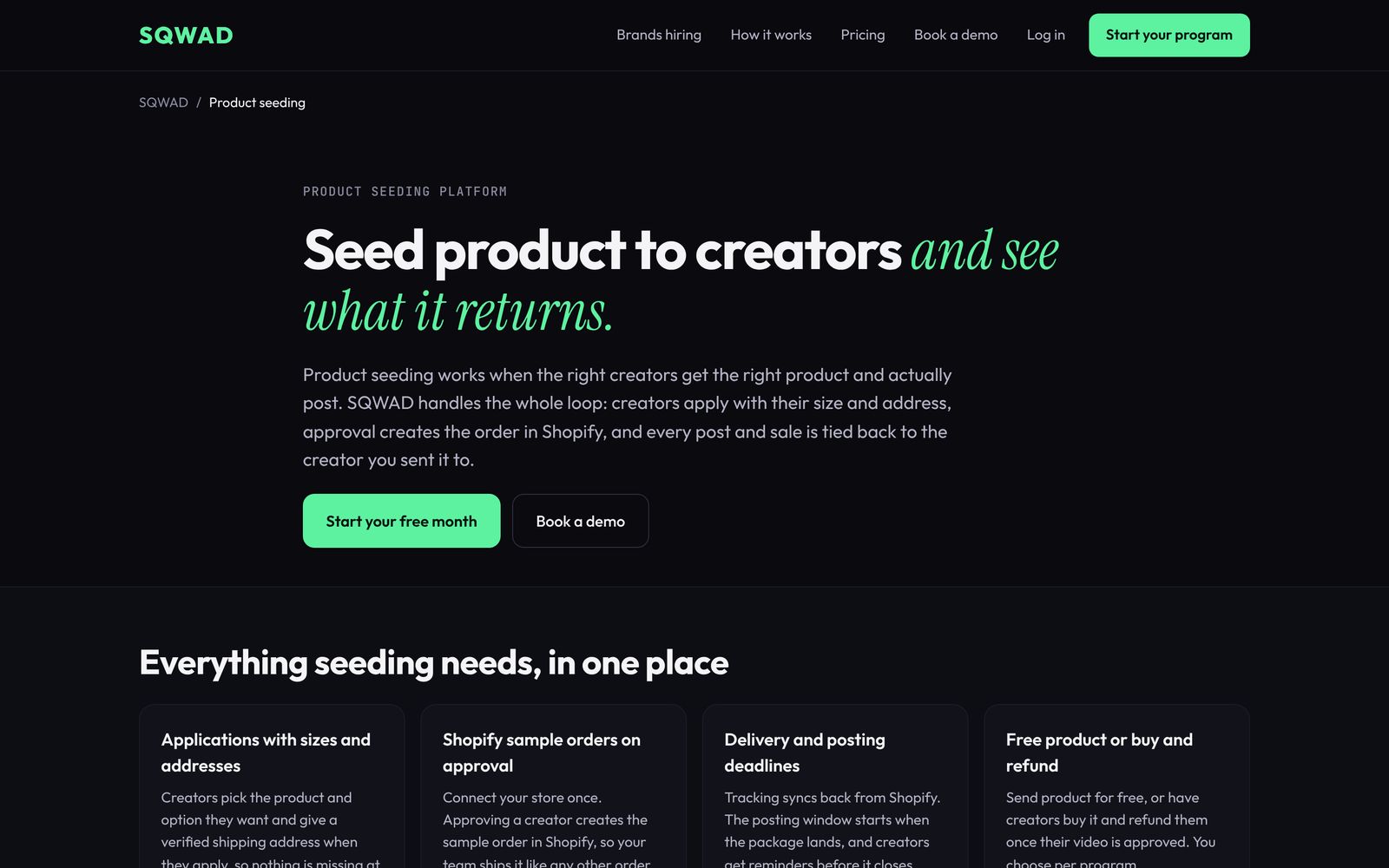
Creators apply through the brand's own portal instead of a generic form or a DM. The application collects handles, follower counts, best videos, sizes and a verified shipping address in one form, so the brand has what it needs to judge fit and to ship in the same place. Approving a creator takes one click.
Brands can also list their program in the SQWAD brand directory, where creators browse brands that send product and pay commission, and apply in a couple of minutes. Creators never pay anything. Brands pay SQWAD to run the program, and a creator keeps one login and one dashboard across every brand they work with.
Product seeding through Shopify
Once a creator is approved, product goes out and content comes back. A brand connects its Shopify store once and picks which products and variants creators can request. Approving a creator can create the sample order in Shopify with the exact variant and shipping address, plus a note linking back to the SQWAD application.
The team fulfills that order through its normal flow or its 3PL. When tracking is added, SQWAD stores the order number, moves the creator to Shipped, emails them, and starts the posting deadline on delivery. Brands choose per program whether product goes out free or creators buy it and are refunded once their video is approved.
Content review
TikToks, Reels, raw uploads and photo slideshows land in one review queue, ready to approve and run as ads. Deadlines and reminders do the chasing that used to happen in messages, so the brand can see what has shipped and what each creator has submitted without asking anyone.
Competitions, retainers and cohorts
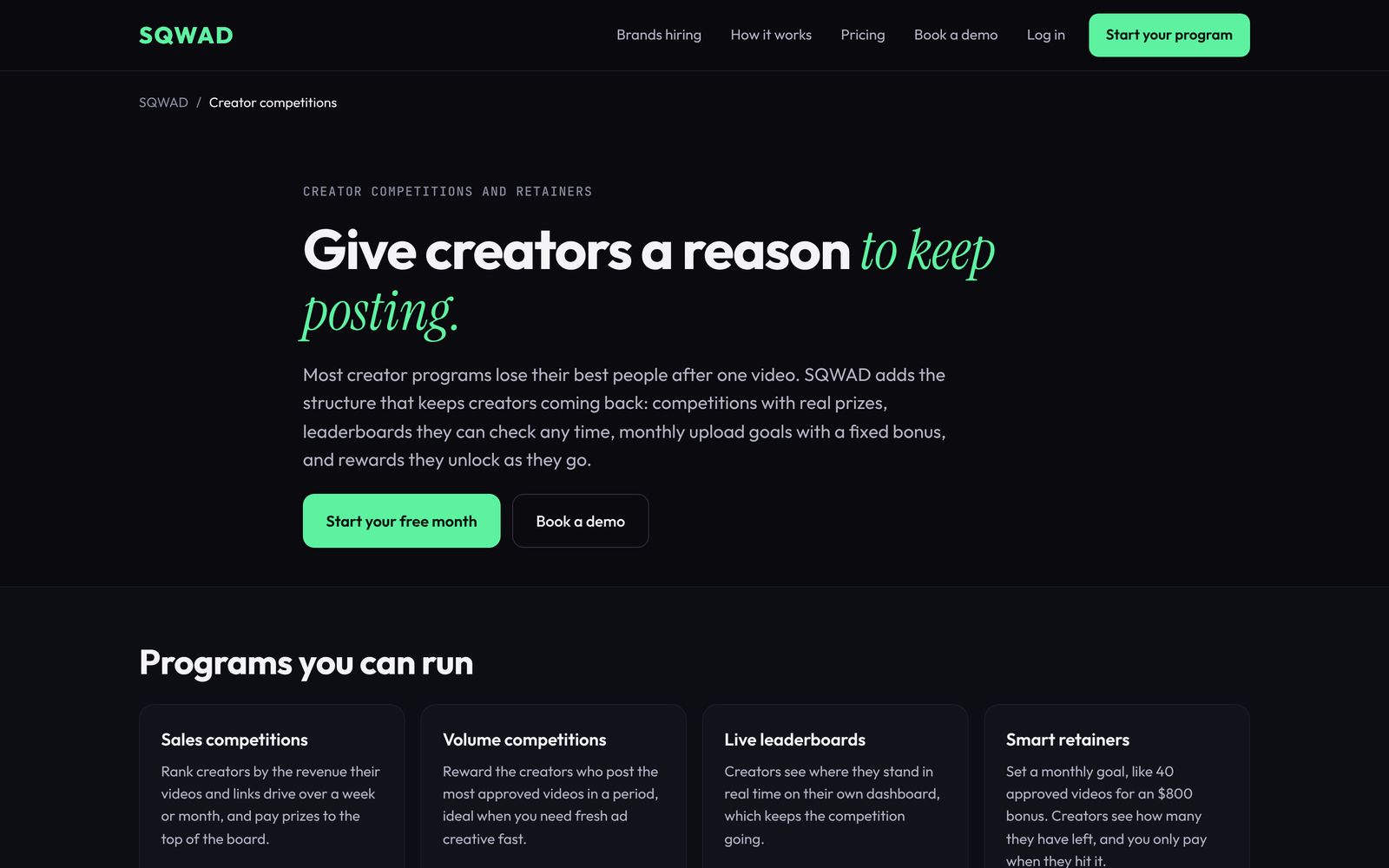
Brands can run competitions among their creators, with leaderboards showing who is ahead. In a creator program the first post is the easy one. A leaderboard gives creators a reason to keep posting after it.
There are two kinds. Sales competitions rank creators by the revenue their videos and links drive over a week or a month. Volume competitions reward the creators who post the most approved videos in a period, which suits a brand that needs fresh ad creative fast. Smart retainers set a monthly goal with a fixed bonus, for example 40 approved videos for an $800 bonus, and show the creator how many they have left. Top creators can also lead cohorts, small teams whose content they review, earning bonuses as the team grows. Prizes and bonuses land in Payouts with everything else.
Payouts and attribution reporting
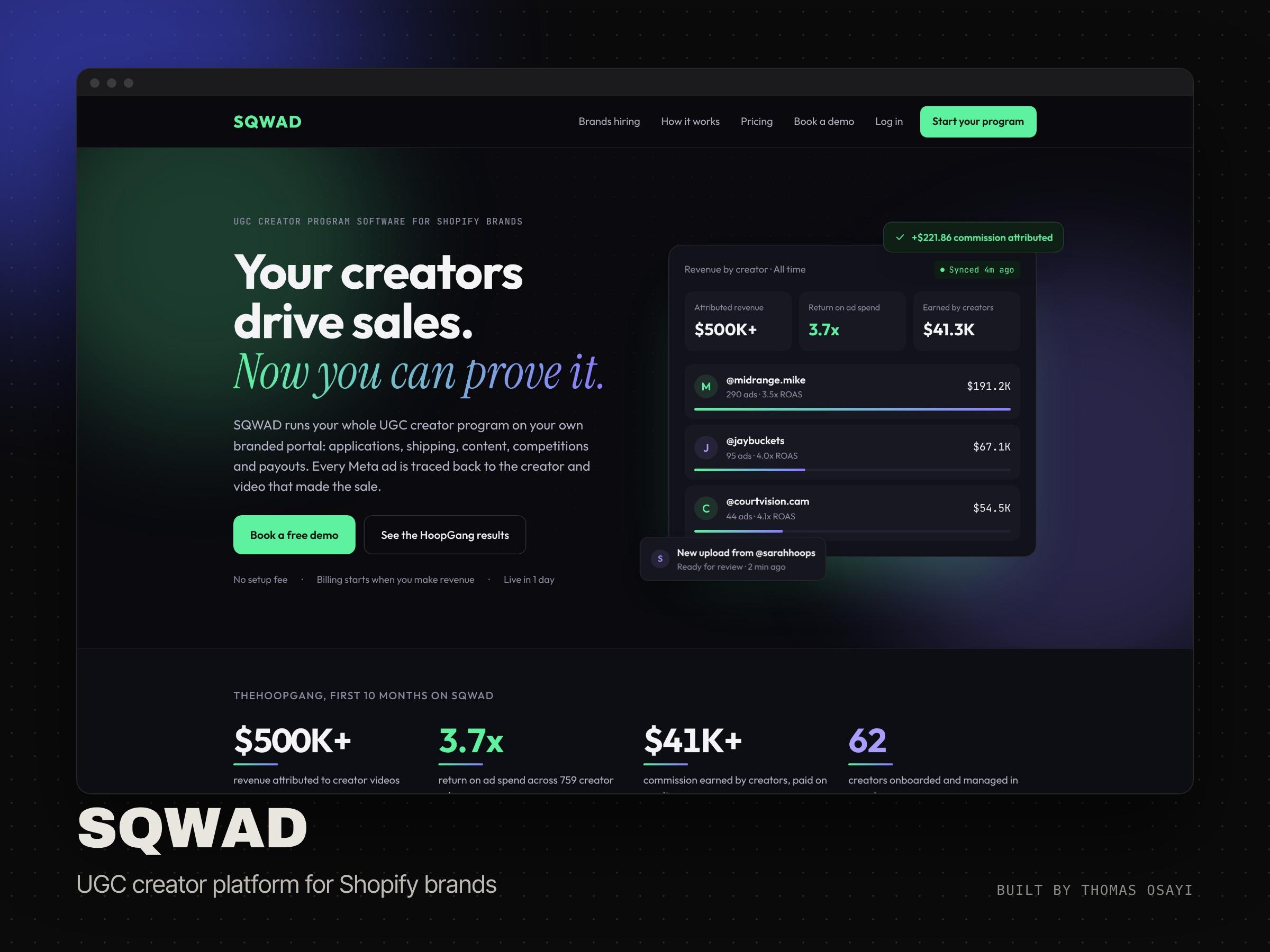
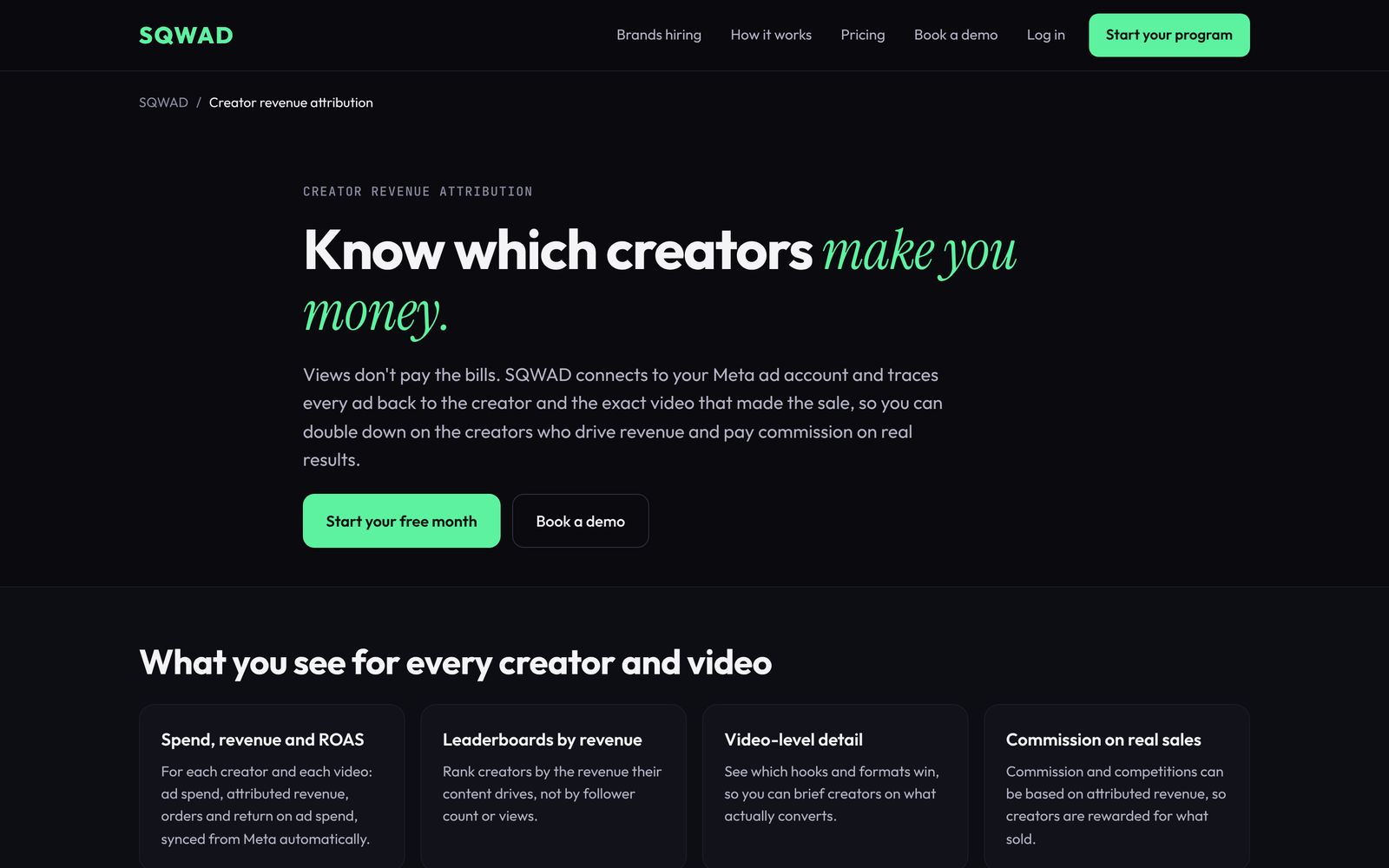
This is the core of the product. Every Meta ad is traced back to the creator whose content made the sale, and attribution reporting shows the brand what each creator's content produced. Payouts sit next to that data, so paying creators and knowing what they earned for the brand happen in the same place.
The mechanism is deliberately simple. The brand signs in with Facebook and picks its ad account, with no API keys or developer work. Each approved video gets a short ID, and that ID goes in the ad name when the brand launches the ad. SQWAD reads the ad results and matches each ad's spend and revenue back to the creator and the video behind it.
From there the brand sees ad spend, attributed revenue, orders and return on ad spend for every creator and every video, and can rank creators by the revenue they drive instead of by followers or views. Commission is calculated on attributed sales. Every creator also gets a share link of their own, and each creator has a dashboard with their revenue and earnings, which keeps the best ones motivated.
Technical decisions and why
- Next.js and TypeScript. Both sides of the product, the brand's view and the creator's portal, are web apps, and Next.js handles pages and server code in one project. Types run from the data layer to the component, which matters when the numbers on screen are money.
- Firebase. I built SQWAD on Firebase because creator portals need realtime updates. When a creator submits content or a status changes, the brand should see it without refreshing the page.
- Multi-tenant data. SQWAD separates brands, their team members and creators, with each brand's data isolated. In any multi-tenant product that isolation has to be enforced where the data lives, not only in the interface, because one customer seeing another customer's numbers is the kind of bug a product does not recover from.
- Shopify and the Meta Ads API. The brands on SQWAD sell on Shopify and advertise on Meta, so those are the two systems that have to be connected. The store knows what sold, the ad platform knows which ad ran, and SQWAD ties the ad back to the creator behind the content.
- Matching by video ID. Putting a short ID in the ad name means a brand can start without pixel changes or a developer. The trade-off is that the ID has to make it into the ad name, so every approved video gets its ID at the moment of approval, ready to use when the ad is launched.
- Stripe. Stripe is the payment layer. Holding card details or payment state myself would add risk and no value.
Pricing that follows the program
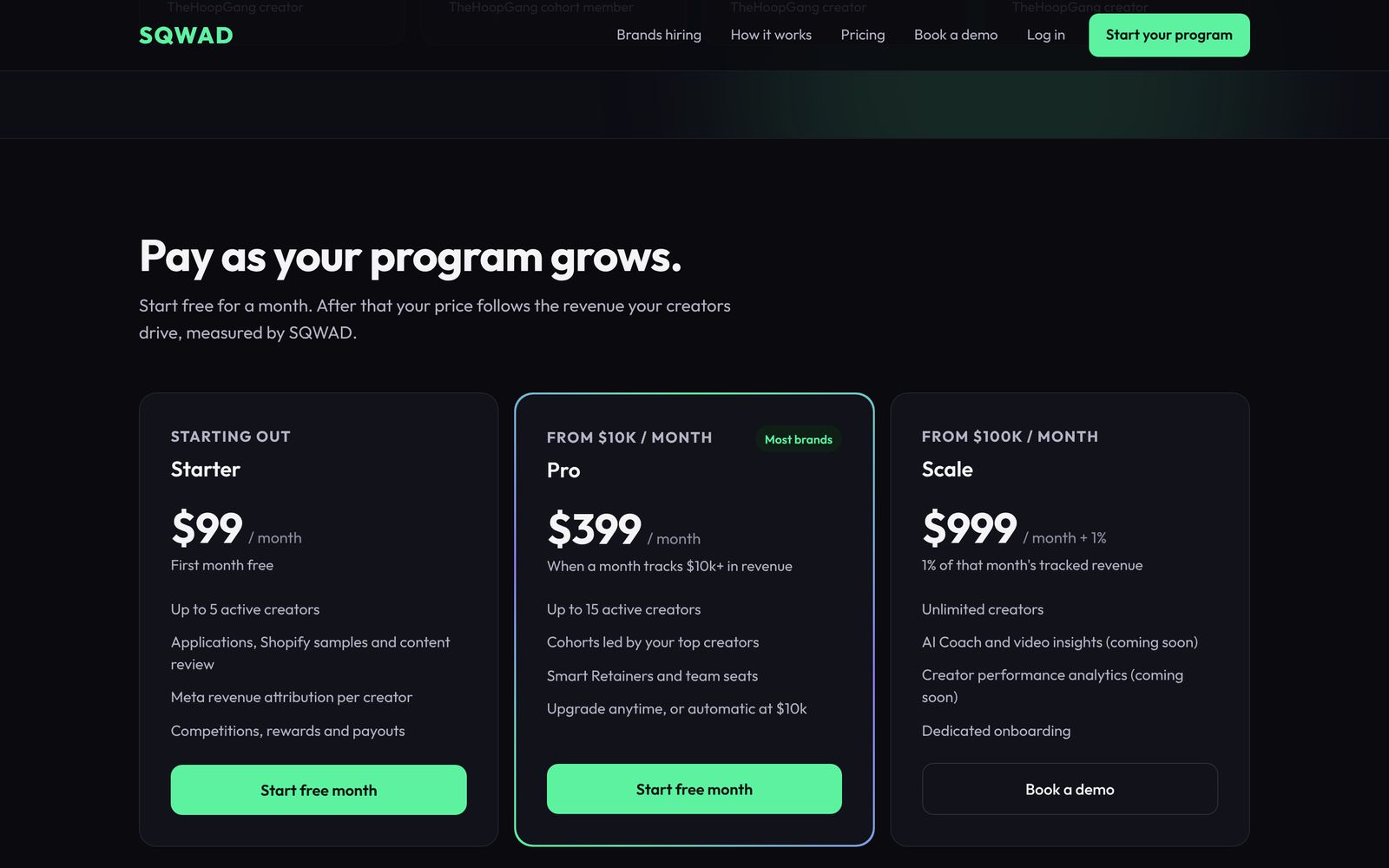
SQWAD's public pricing starts with a free first month. After that, Starter is $99 a month for up to 5 active creators, with applications, Shopify samples, content review, Meta revenue attribution, competitions and payouts. When a month tracks $10k or more in creator revenue, the next month moves to Pro at $399, with up to 15 active creators, cohorts, smart retainers and team seats. At $100k in a month it moves to Scale at $999 plus 1% of that month's tracked revenue, with unlimited creators.
A slower month moves a brand back down, a brand can upgrade whenever it wants the features, and it is always billed at the higher of the plan it picked and its revenue tier. There is no setup fee and no contract.
Result
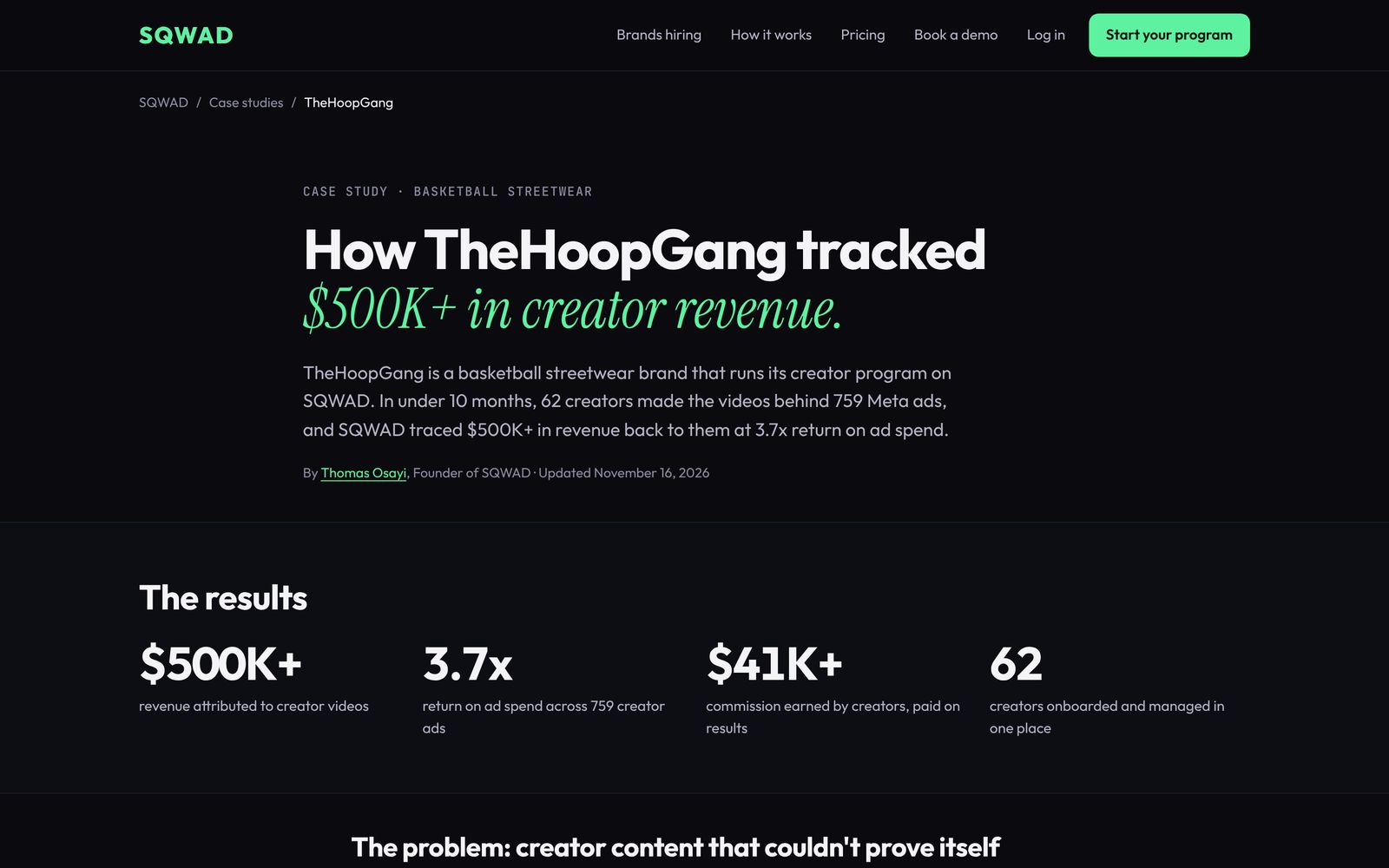
SQWAD's first live program is TheHoopGang, the brand whose portal started all of this. SQWAD's published TheHoopGang case study reports that in under 10 months, 62 creators made the videos behind 759 Meta ads, and SQWAD traced $500K+ in revenue back to them at 3.7x return on ad spend. Creators have earned $41K+ in commission, paid on results.
I still build the product myself and sign the brands that run their creator programs on it.
What I would tell someone planning a similar product
Start with the one answer your customer cannot get anywhere else. For SQWAD that was which creator drove a sale.
Put the core workflow in front of five real users before adding billing and polish.
Decide on tenant isolation on day one. It is cheap to design in and painful to add once several customers share a database.
Pick the database by the shape of your data, not by which one is trending. The need for realtime updates pointed me to Firebase here. The portal I built for TheHoopGang has relational data, and that pointed to Postgres.
If you are a brand and not a founder, the advice is different. Most brands should start with existing creator program software, because applications, product seeding, content tracking and payouts are already built. Build a custom portal only when your rewards, approvals or integrations are unusual enough that standard tools force workarounds.
Need something like this?
I build SaaS MVPs and full-stack web apps in Next.js, TypeScript and Firebase or Postgres: auth, dashboards, payments, roles and admin tools. Founder of SQWAD.
SaaS MVP and full-stack web app development