November 17, 2026 · Updated November 22, 2026 · 9 min read · Thomas Osayi
Freelance web developer vs agency: which should a small business hire?
A side-by-side look at cost, speed, communication and risk when choosing between a freelance developer and a web agency.
Both options can build a great website. The difference is in how the work is organized and what you pay for besides the code.
I am a freelance developer, so I have a side in this. I will try to earn your trust by saying plainly where an agency is the better choice, because there are projects I would send to one. What follows is how I would think it through if I were the business owner.
What is the real difference between a freelancer and an agency?
The real difference is the number of people between you and the work. A freelancer is one person who scopes, designs, builds and launches the site, and who answers your messages. An agency is a company that splits those jobs across a team: someone sells the project, someone manages it, and designers, developers and writers each do their part.
Neither structure is better in general. More people means more skills available at once and more capacity when something goes wrong. It also means more coordination, more meetings and more salaries inside the quote. The useful question is whether your project needs that structure.
A five-page site for a local business has one decision maker and maybe forty hours of work. It does not need a project manager. A rebuild of a 300-page site with a new brand, a content migration and a paid campaign launching the same week does.
Which one costs less?
A freelancer usually costs less for the same site. A freelancer's price is mostly the build itself. An agency's price also covers project managers, sales staff and office overhead. On a five-page business site, that overhead can be a large share of the quote.
Where the money goes
With a freelancer, nearly every dollar pays for hours spent on your site. With an agency, part of each dollar pays for the people who keep the agency running. That is not waste. Those people are what make it possible to run a large project on schedule. It only becomes poor value when the project is too small to need them.
What my prices look like
My packages are public, so you can use them as a reference point for freelance pricing: a one-page site from $150, a business site of up to five pages from $450, and a full custom build with features from $1,200. Agency quotes for comparable small sites tend to start in the thousands.
Compare scope, not totals
A cheaper quote is only cheaper if it covers the same work. Check both for the number of pages, who writes the text, SEO setup, revision rounds and what happens after launch.
Which one is faster, and who will you talk to?
A freelancer is usually faster on small projects because there is no handoff between people. With a freelancer you talk directly to the person building the site, so a change request can be done the same day. With an agency, requests usually pass through an account manager first. That structure helps on big projects and slows down small ones.
The direct line matters most during revisions. When you say the booking button should be more obvious, the person hearing it is the one who placed the button. Nothing gets lost in a ticket.
The limit on freelancer speed is capacity. One person can only run a few projects at once, so ask when your project would start, not only how long it takes. My timelines are about 7 days for a one-page site, 14 days for a business site and 21 days for a custom build, counted from the day I have your content.
What can an agency do that a freelancer cannot?
An agency can put several specialists on your project at the same moment. An agency can put a designer, a developer, a copywriter and an SEO specialist on your project at once. A freelancer covers fewer roles, so check that the person you hire can design as well as code if you need both.
Where that matters
- A full rebrand, with a new logo, photography and messaging alongside the site
- Ongoing marketing: ads, email campaigns and monthly content after launch
- Very large sites with a content migration and many stakeholders
- Projects where your own company needs formal process, such as procurement, contracts with service levels or several rounds of executive sign-off
- A hard launch date that needs people working in parallel
Where it does not
Most small business sites need a clear structure, a clean design, working forms and solid SEO setup. One capable person can do all of that. Many freelancers also work with a regular photographer or copywriter when a project calls for one, which gets you the specialist without the standing team.
What are the risks, and how do you protect yourself?
The main freelancer risk is that one person gets sick or busy. The main agency risk on a small project is that you are a small account and your work goes to whoever is available. Protect yourself the same way with either option: the code goes in your GitHub, the site deploys from your hosting account, and the domain is registered in your name.
The ownership checklist
- Domain: registered at a registrar account you log in to, under your email address
- Code: in a GitHub repository owned by your account, with the developer added as a collaborator
- Hosting: a Vercel, Netlify or similar account in your name, with your card on file
- Third-party tools: Stripe, the booking system, analytics and Google Business Profile all created by you, with the developer invited as a team member
- Handoff note: a short document listing every account, what it does and how to deploy a change
If those five things are true, any competent developer can pick up your site in an afternoon. That takes most of the sting out of the one-person risk, and it protects you just as well if you ever want to leave an agency.
Put the scope in writing
A written scope lists the pages, the features, the number of revision rounds, the price, the payment schedule and the dates. It protects both sides. Vague scopes are where projects of every size go wrong.
How do you vet a freelance developer?
Look at live work first, then ask a few direct questions. Ten minutes of checking tells you most of what you need.
Open the portfolio on your phone
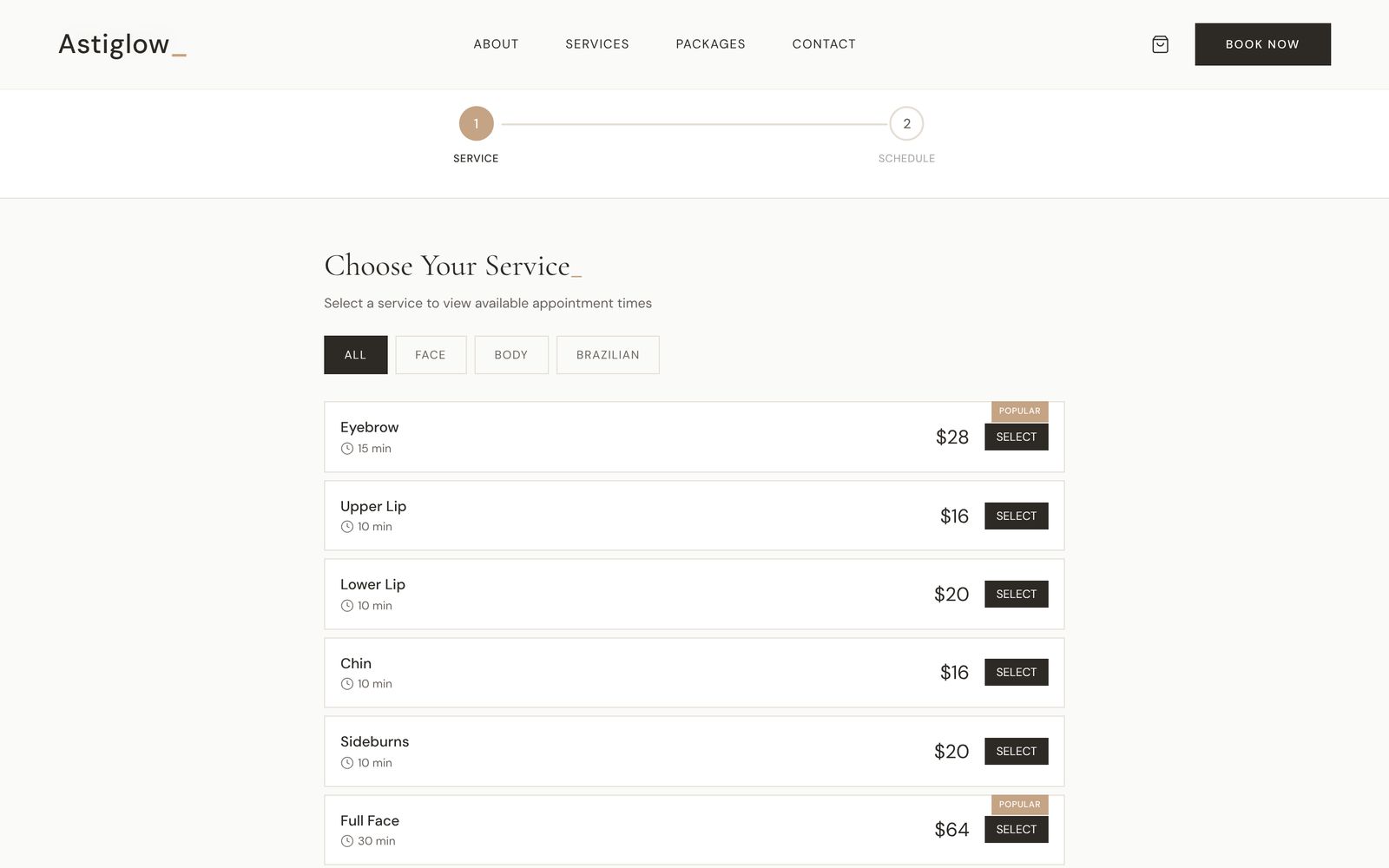
Most of your customers will see the site on a phone, so that is where to judge it. Tap through the menu. Fill in a form. See how fast the pages load on mobile data. Look for a business like yours. A developer who has already solved your kind of problem, such as online booking for an appointment-based business, will ask better questions and make fewer wrong turns.
Questions worth asking
- Did you do the design as well as the build on these sites?
- Who will own the domain, the code and the hosting account?
- What do you need from me before you can start?
- How many rounds of changes are included?
- What happens if I need an edit three months after launch?
- When can you start, and when would we launch?
Signs to slow down
Be careful with anyone who cannot show a live site, will not put the scope in writing, wants the domain registered in their own name, or quotes a price before asking what the site needs to do.
How do the two compare side by side?
Each wins on different points, and the summary below is how I would put it to a friend.
- Freelancer: best for sites up to a few dozen pages, MVPs and fixes; lower cost; direct contact; fewer roles
- Agency: best for large rebuilds and ongoing campaigns; higher cost; more process; many specialists
- Cost: a freelancer's price is mostly build hours, while an agency's includes management and overhead
- Communication: direct with a freelancer, through an account or project manager with an agency
- Capacity: one person with a freelancer, a team that can cover absences with an agency
- Continuity: depends on good handoff with a freelancer, and on staff turnover with an agency
- Ownership: the same rules apply to both, and you should hold every account
Which should you choose for your project?
Choose by the size and shape of the project, not by which sounds more professional.
A freelancer is the better fit when
- You need a one-page site, a business site of a few pages, or a custom tool such as booking, ordering or a quote form
- One person at your company makes the decisions
- You want to message the builder directly and see changes quickly
- You are building a first version of a product and need to keep the budget for marketing
- You have a broken or half-finished site that needs fixing, not a new process
An agency is the better fit when
- The site is one part of a larger launch that includes branding, content and advertising
- Several departments have to approve the work
- The project is too large for one person to finish by your date
- You want one vendor responsible for marketing results every month after launch
When you are unsure
Ask a freelancer and an agency to scope the same written brief. The conversations will tell you a lot. If the freelancer says the project is too big for one person, believe them. If the agency's proposal is mostly process for a five-page site, that tells you something too.
What do you do if your developer disappears mid-project?
You take over the accounts you already own, hand them to a new developer and pick up from the last working version. This is where the ownership checklist pays for itself, so here is the order I would work in.
- Log in to the domain registrar and confirm the domain is in your name, renews automatically and has a current card on file.
- Open the GitHub repository and check the latest commits. If the code sits in the old developer's account, ask them to transfer it to yours. GitHub's transfer setting moves the code, history and issues together, and old links redirect to the new location.
- Open the hosting account and note which deployment is live, so nothing changes by accident while you look for help.
- Remove the old developer from the registrar, hosting, Stripe, analytics and your Google Business Profile, where you can add and remove managers yourself.
- Give the new developer the handoff note, or write one now: every account, what it does and what was still unfinished.
If the code was never in your account and the developer stops replying, you may be paying for parts of the site again. That risk is the same with a small agency that closes. The fix in both cases is the one that costs nothing: put every account in your name before work starts.
The bottom line
Most small businesses get better value from a freelance developer: lower cost, faster turnaround and direct communication with the person writing the code. An agency earns its price on large projects that need several specialists at once. Whichever you hire, look at the portfolio first. A freelancer who has already built a site for a business like yours will usually beat an agency that has not, and the reverse is true as well. Keep every account in your own name and you can change your mind later without losing the site.
Questions, answered in one line
Is a freelance developer cheaper than an agency?
Usually yes, because a freelancer has no account managers or office overhead built into the price.
What is the biggest risk of hiring a freelancer?
Depending on one person; reduce it by making sure the code lives in your own GitHub and hosting accounts.
When should I choose an agency?
When you need design, development, copywriting and marketing delivered together on a large project with a fixed launch date.
How do I check a freelance developer before hiring?
Open their live client sites on your phone, ask who owns the code and accounts at the end, and get the scope, price and timeline in writing before paying a deposit.
Who owns the website when the project is finished?
You should, with either option: the domain registered in your name, the code in your own GitHub account and the site deployed from your own hosting account.
Can one freelancer handle design, development and SEO setup?
Many can for a small business site, but not all, so ask to see sites where the same person did the design and the build.
Sources
- Transferring a repository GitHub Docs
- Adding & Configuring a Custom Domain Vercel
- Get started with Google Business Profile Google Business Profile Help
Related articles
- How much does a restaurant website cost in 2026?
- How to take restaurant orders online without third-party fees
- Toast vs Squarespace vs a custom website for restaurants
- Google Business Profile vs website: do you need both?
Custom Next.js websites for businesses
Custom Next.js websites for small businesses, clinics, restaurants and startups. Fast, SEO-ready, built from scratch with booking, ordering or quote tools. Based in Los Angeles.
See the service