Creator program portal
SCOPRO Creators
A creator portal for SCOPRO coaching boards: coaches apply, buy a board, post one video, get refunded in full and earn a commission on every sale it drives.
- Next.js
- Firebase Auth
- Firestore
- Firebase Storage
- Tailwind CSS
- Vercel
Live: scoprocreatorportal.com
The problem
SCOPRO makes dual-sided, magnetic, dry-erase coaching boards for soccer, basketball, lacrosse, hockey, futsal and flag football. The people who show those boards best are coaches using them at real practices and games. The brand wanted a steady stream of those videos, and a fair way to reward the coaches who make them.
Gifting free product to anyone who asks has a known weakness: a lot of the gear never turns into a video. Paying creators a flat fee up front has a different one: the brand pays whether or not the content ever sells anything. The program SCOPRO wanted sits between those. A coach buys the board like any customer, posts one video, gets the full order refunded once the video is approved, and then earns a commission on every sale that video drives when SCOPRO runs it as an ad.
That model only works if the coach can see every step. Paying first is a leap of faith, so the portal has to make the refund feel certain and the earnings feel visible.
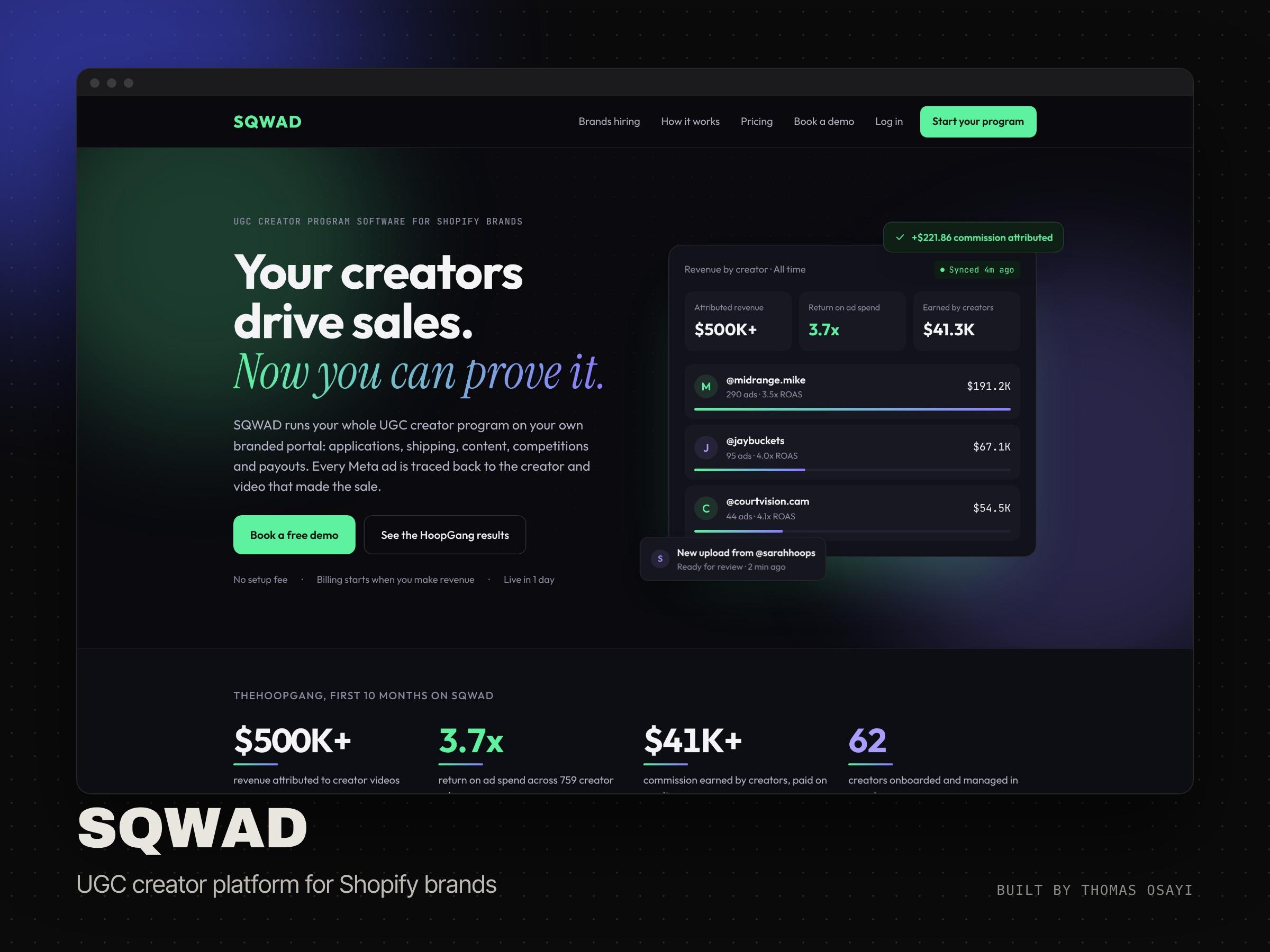
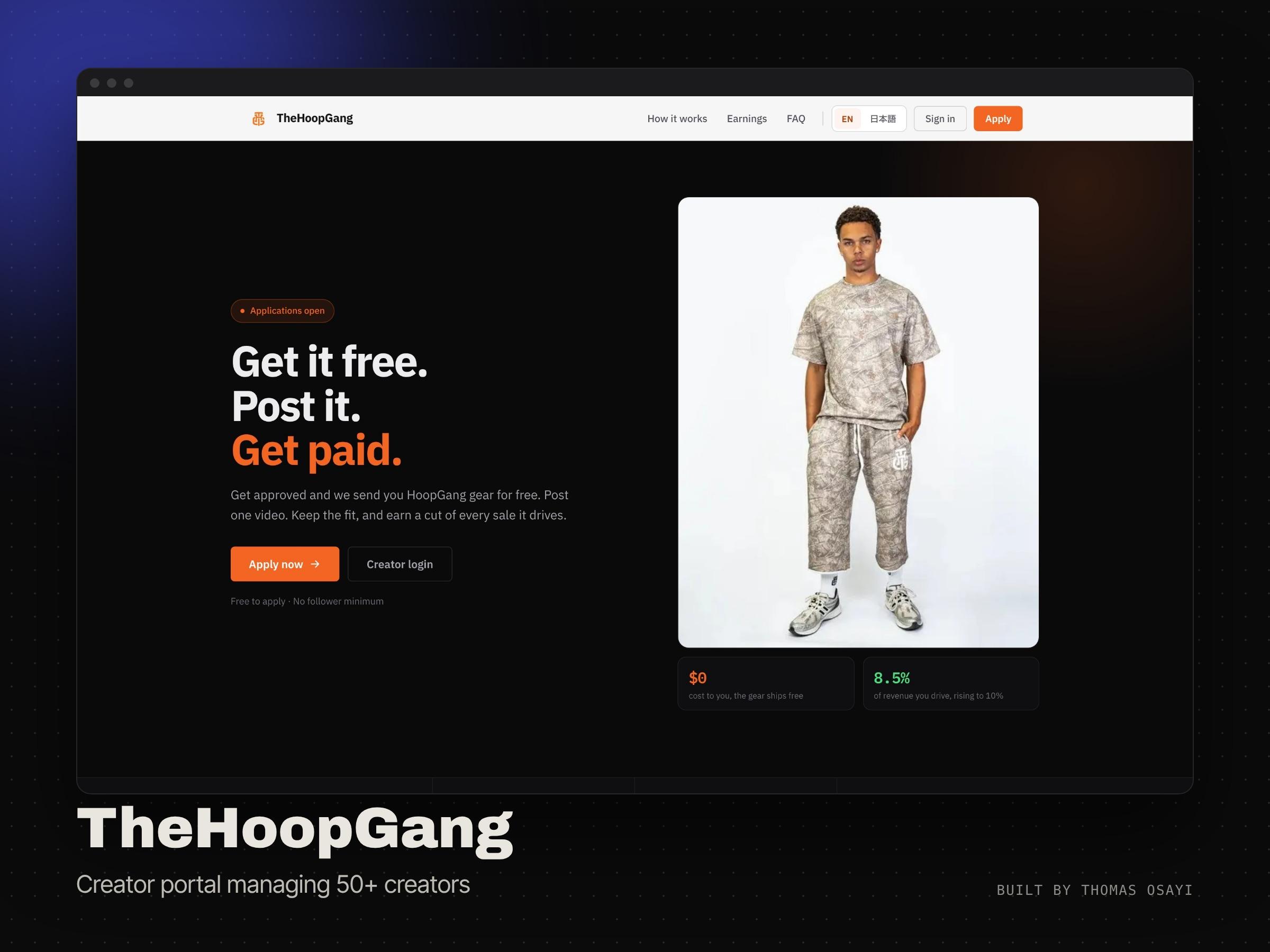
It is the same program model I worked with at TheHoopGang, where creators get gear, post a video, get refunded and earn on sales. The SCOPRO portal footer reads "Powered by SQWAD", the creator program software I build.
What I built
A public landing page that sells the program, a four-step application, a sign-in page, and a creator area behind it for earnings, payouts and video tracking.
A landing page that explains the money first
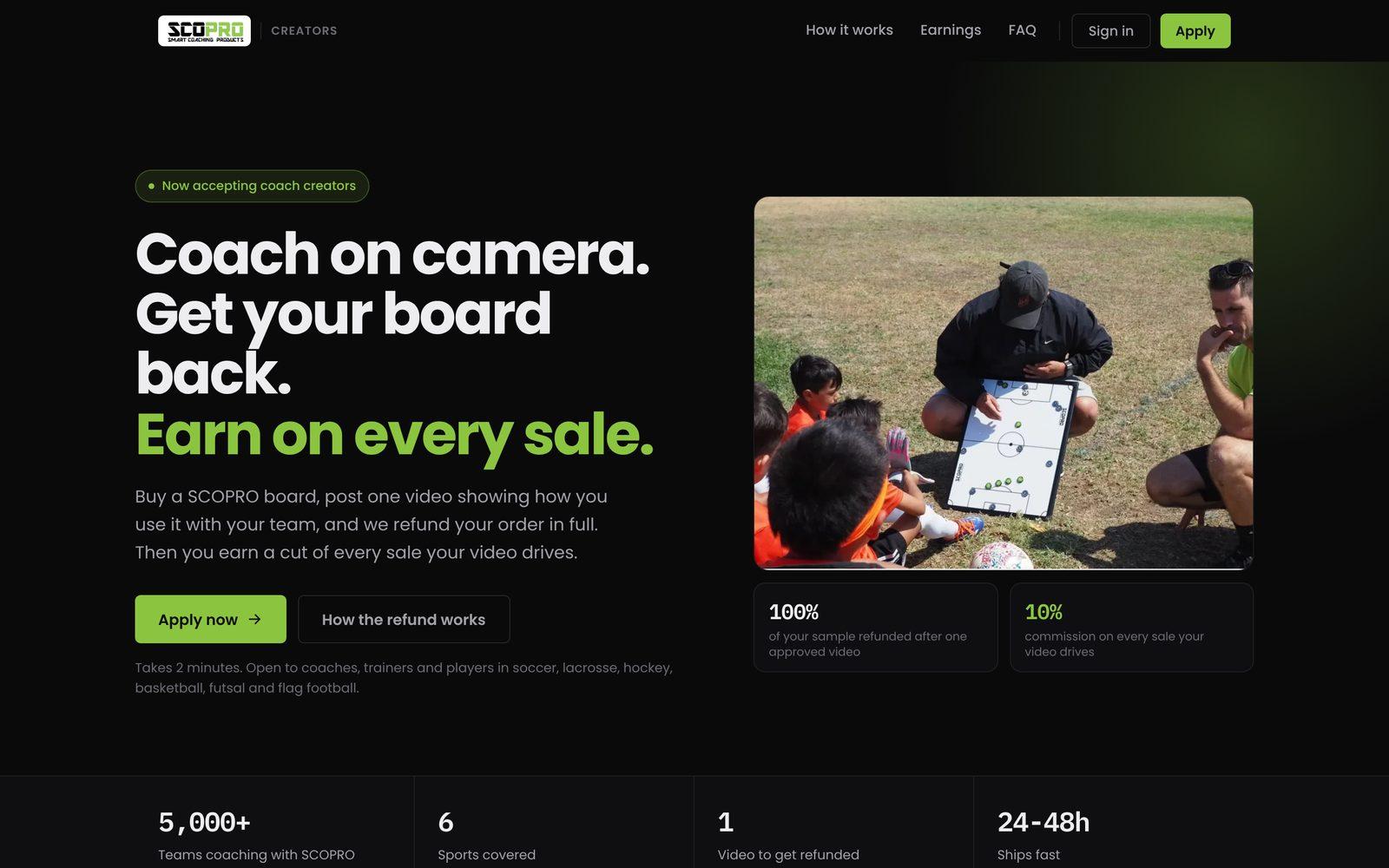
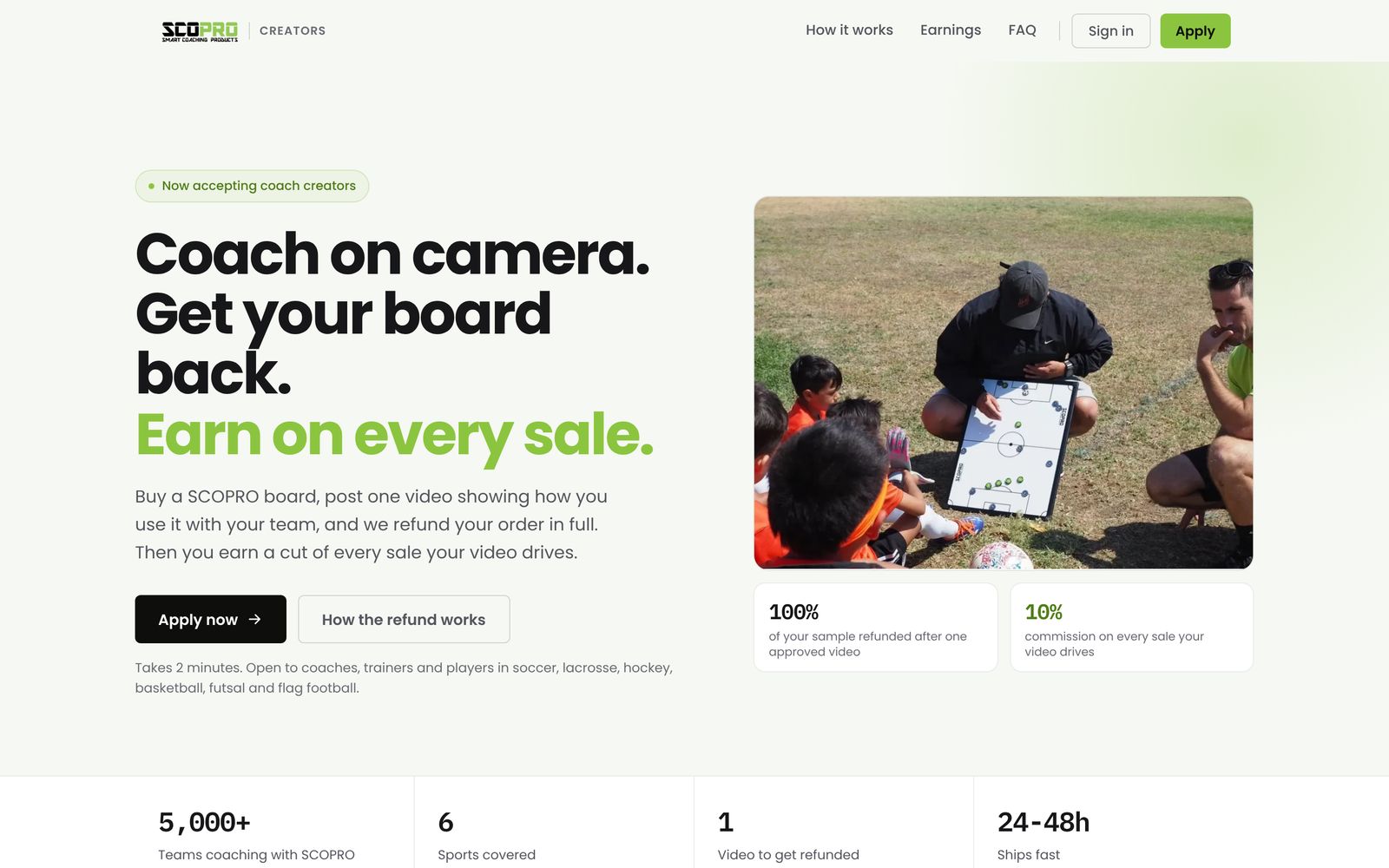
The hero says the whole deal in three lines: "Coach on camera. Get your board back. Earn on every sale." Under it, one paragraph spells out the mechanics, and two buttons offer Apply now or How the refund works. A row of numbers sits under the hero: a 100 percent sample refund after one approved video, a 10 percent commission, six sports covered, one video to get refunded and shipping in 24 to 48 hours.
I put those numbers right under the headline because they are the questions a coach has before they read anything else. How much do I get back, how much do I earn, and how much work is it.
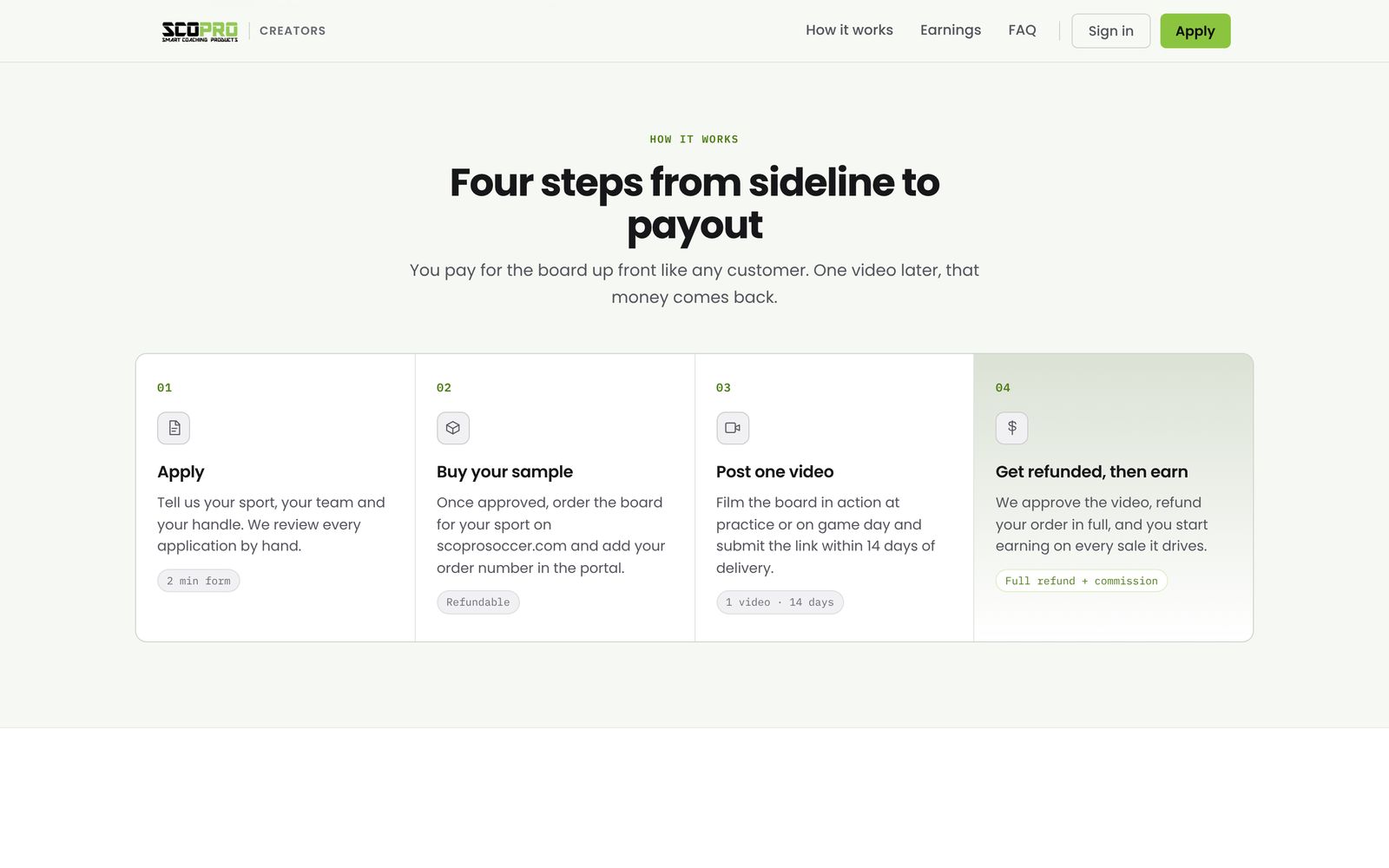
Four steps from sideline to payout
The how it works section breaks the program into four numbered cards: apply, buy your sample, post one video, get refunded and then earn. Each card carries a small tag with the commitment involved, like "2 min form" or "1 video · 14 days", so a coach can judge the effort at a glance.
Making the refund feel certain
The refundable sample section is where the design does the most work. It explains why the coach pays first (it keeps the program for people who will actually film with the board) and then walks through a sample timeline for a Basketball Bundle: the order goes out, the board is delivered, the video is submitted, the refund is issued, and the cost of the bundle ends at zero.
Next to that are the rules, stated plainly. One approved video triggers the refund, with no view count or follower minimum. The full order goes back to the original payment method within three to five business days of approval. If no video is submitted within 14 days of delivery, the order stays a normal purchase and the coach keeps the board.
Writing the failure case on the page was important to me. A program that only explains the happy path leaves people guessing about what happens if life gets in the way, and guessing is what stops someone from applying.
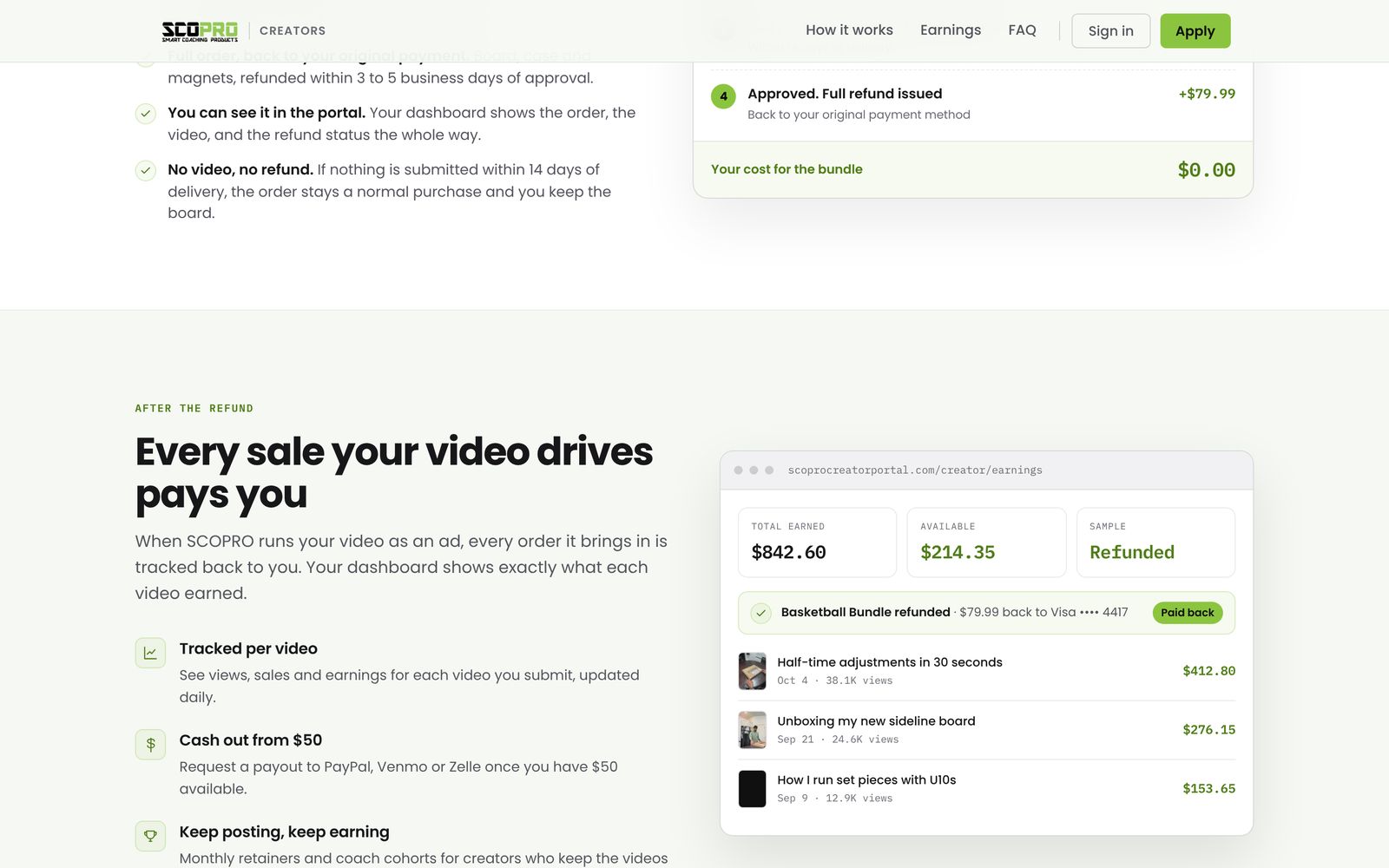
Earnings tracked per video
After the refund, the page shows what the creator area looks like: total earned, available balance, the refunded sample, and a list of videos with views and earnings for each. The figures in that preview are illustrative. Around it, the copy explains that sales are tracked back to each video, that creators can cash out to PayPal, Venmo or Zelle once they have 50 dollars available, and that monthly retainers and coach cohorts exist for creators who keep posting.
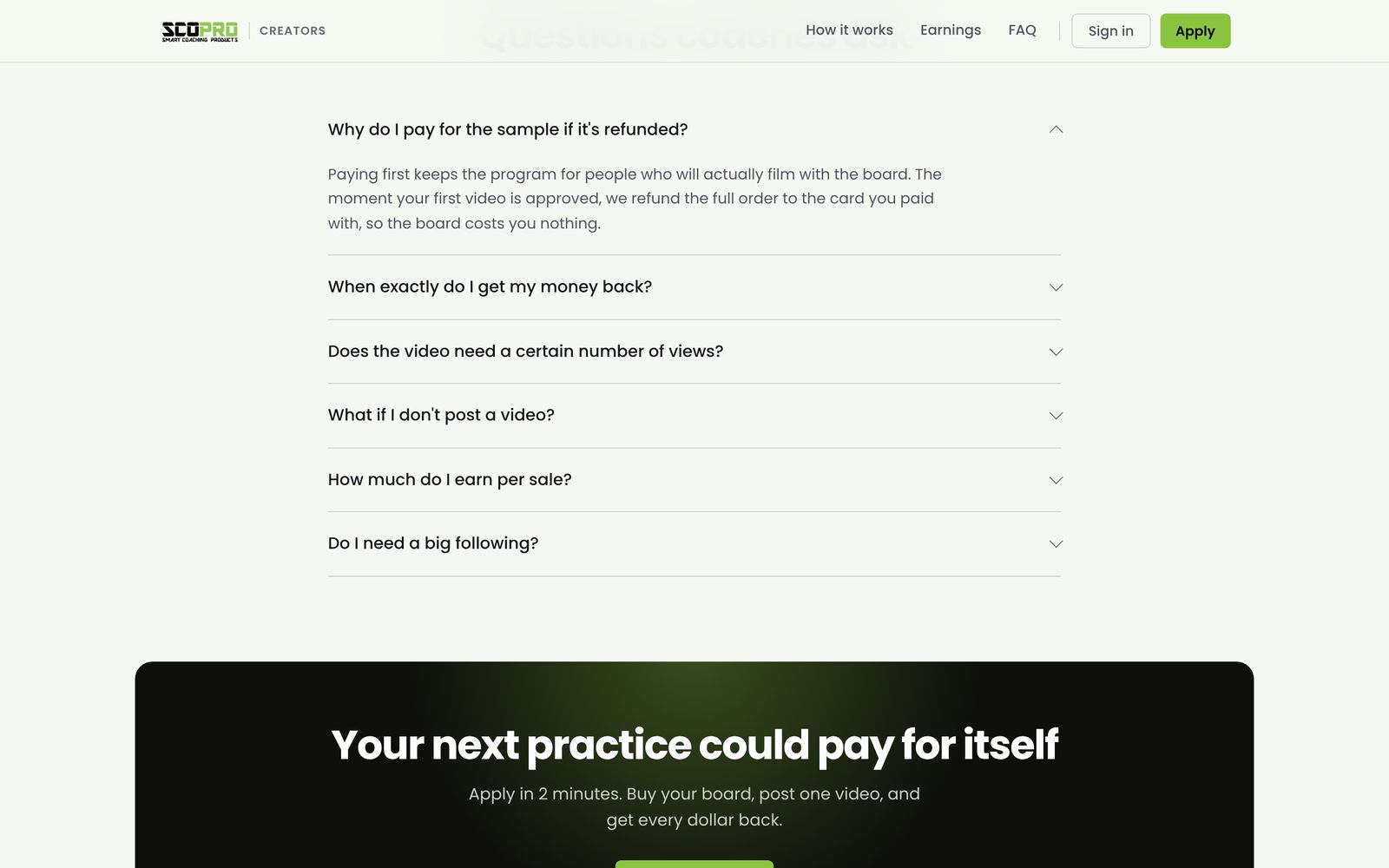
FAQ in the coach's own words
The FAQ is titled "Questions coaches ask" and covers the objections in the order they come up: why pay for a refunded sample, when the money comes back, whether views matter, what happens without a video, how much a sale pays and whether a big following is needed. Each question is a closed accordion, so the whole list fits on one screen and a coach opens only what they care about.
A four-step application with real accounts
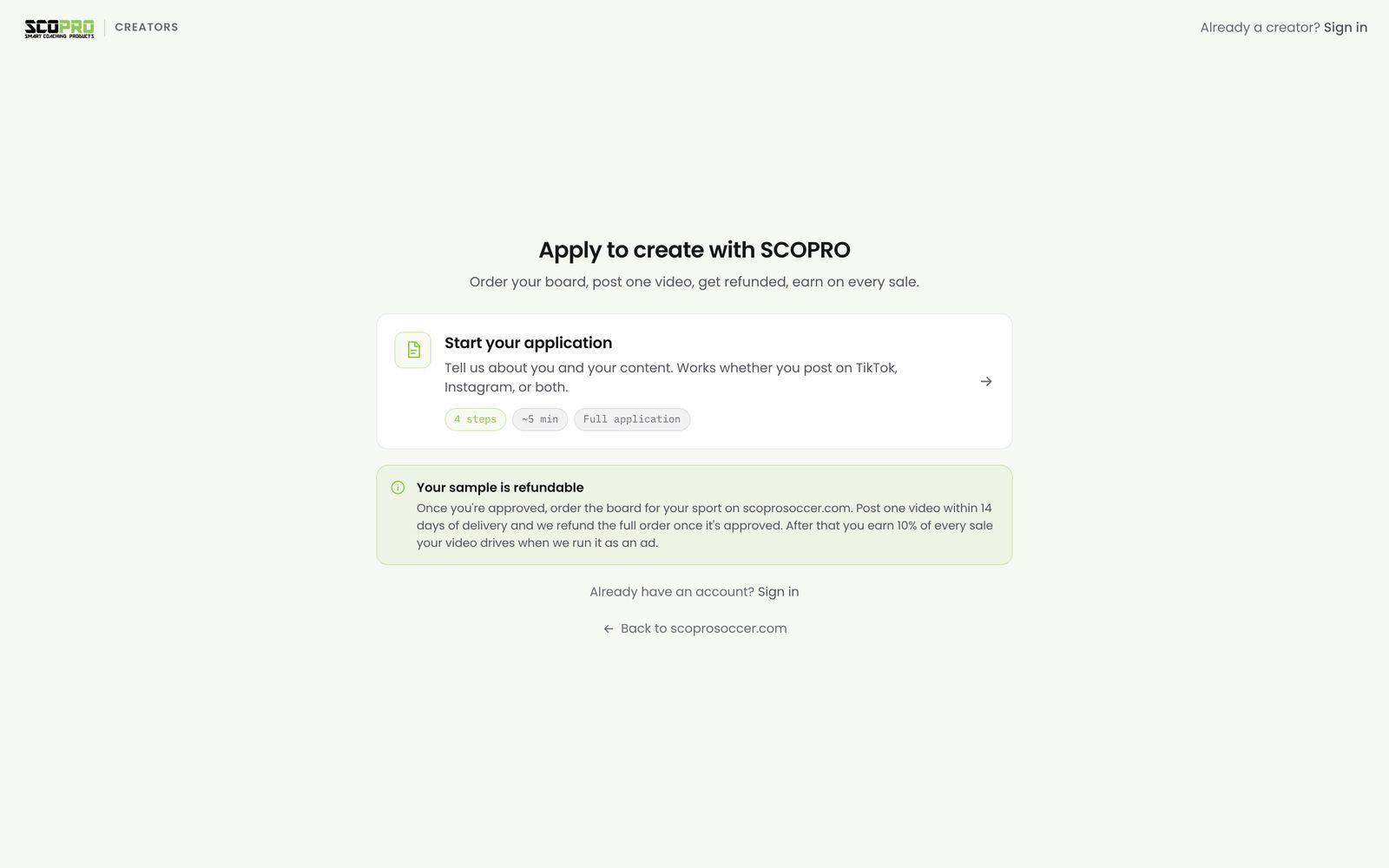
The apply page restates the deal and sets expectations: four steps, about five minutes, and it works whether a coach posts on TikTok, Instagram or both. Step one creates an account with full name, email and password, and the portal emails a link to confirm the address. Existing creators sign in with email and password on a separate login page.
Technical decisions and why
- Next.js. The public pages and the signed-in creator area run in one Next.js app, deployed on Vercel. The live site's response headers and assets confirm both. One project means the landing page and the portal share the same components and styling.
- Firebase Authentication. The public bundle connects to a dedicated Firebase project for the portal and uses Firebase sign-in. Email and password accounts with email confirmation are a good fit here: coaches are not developers, and a familiar sign-up keeps the application short.
- Firestore and Firebase Storage. The portal uses Firestore as its database and includes the Storage client for files. A creator program is mostly status that changes over time (applied, approved, ordered, delivered, video submitted, refunded), and a document database with live updates suits that shape: the creator and the brand can read the same status without anyone refreshing a page.
- Server routes for anything involving money. The bundle calls the app's own server endpoints for creator earnings, payouts, profile data and tracking, plus admin routes for analytics and insights. Keeping earnings and payouts behind server routes means balances are not trusted from the browser, because a number a creator can change in their own tab is not a number you can pay out against.
- Tailwind CSS. The landing page and the portal share one set of utility styles, which kept the marketing page and the signed-in screens visually consistent.
- Vercel Analytics. Page-level traffic is measured with Vercel's own analytics script, which needs no extra setup on a Vercel deployment.
What I would tell someone planning something similar
Write the rules before the screens. When does the refund trigger, what counts as an approved video, what happens after 14 days with nothing posted, and when can a creator cash out. Every screen in a creator program is a view of those rules.
Show the failure case. "No video, no refund, you keep the board" is one line, and it answers the question that keeps people from applying.
Make status visible to the creator. Most messages in a creator program are someone asking where things stand. A dashboard that shows the order, the video and the refund status answers them before they are sent.
Keep money calculations on the server. Commission, balances and payouts should never depend on data the browser sends.
Decide whether you need custom software at all. Applications, sample orders, video tracking and payouts are the same jobs from one brand to the next, which is why SQWAD exists. A fully custom build makes sense when your rewards or approvals are unusual. For a first working version of one workflow, the MVP Starter on my SaaS MVP page is the smallest place to begin.
Need something like this?
I build SaaS MVPs and full-stack web apps in Next.js, TypeScript and Firebase or Postgres: auth, dashboards, payments, roles and admin tools. Founder of SQWAD.
SaaS MVP and full-stack web app development