November 22, 2026 · 9 min read · Thomas Osayi
How to build a marketplace MVP: solve the chicken-and-egg problem first
How to build a marketplace MVP: pick one side and one niche, run matching by hand first, build only what both sides need, plan payments, and earn trust with real reviews.
A marketplace looks like one product and behaves like two. You need sellers before buyers will come and buyers before sellers will stay, and you need both to trust each other and you enough to hand over money. That is why so many marketplace builds stall: the founder spends months on listings, search, messaging, payouts and reviews, launches to an empty site, and discovers that the software was never the hard part.
This guide is about doing it in the opposite order. Prove that matching works with as little code as possible, then build only what real transactions showed you need. I will cover the chicken-and-egg problem, what to run manually, the smallest product worth building, payments, trust and what it costs.
What makes a marketplace MVP different from other MVPs?
A marketplace MVP has to create value for two groups at once, so its first job is liquidity, meaning buyers can find a seller and sellers get buyers, before any feature matters.
In a regular SaaS, one customer gets value the day they sign up. In a marketplace, the first seller gets nothing until a buyer shows up, and the first buyer sees an empty page. The product is the match. Software helps matches happen faster and more safely, but it cannot create them from nothing.
That changes how you scope. Instead of asking "what features do users need?", ask "what is the smallest group of sellers and buyers that could transact with each other every week?" Then build for them. Everything I wrote in "How to scope an MVP: one workflow, three lists and the cuts that matter" still applies, but the core workflow runs across two people: one lists, one finds, they agree, money moves, both are satisfied.
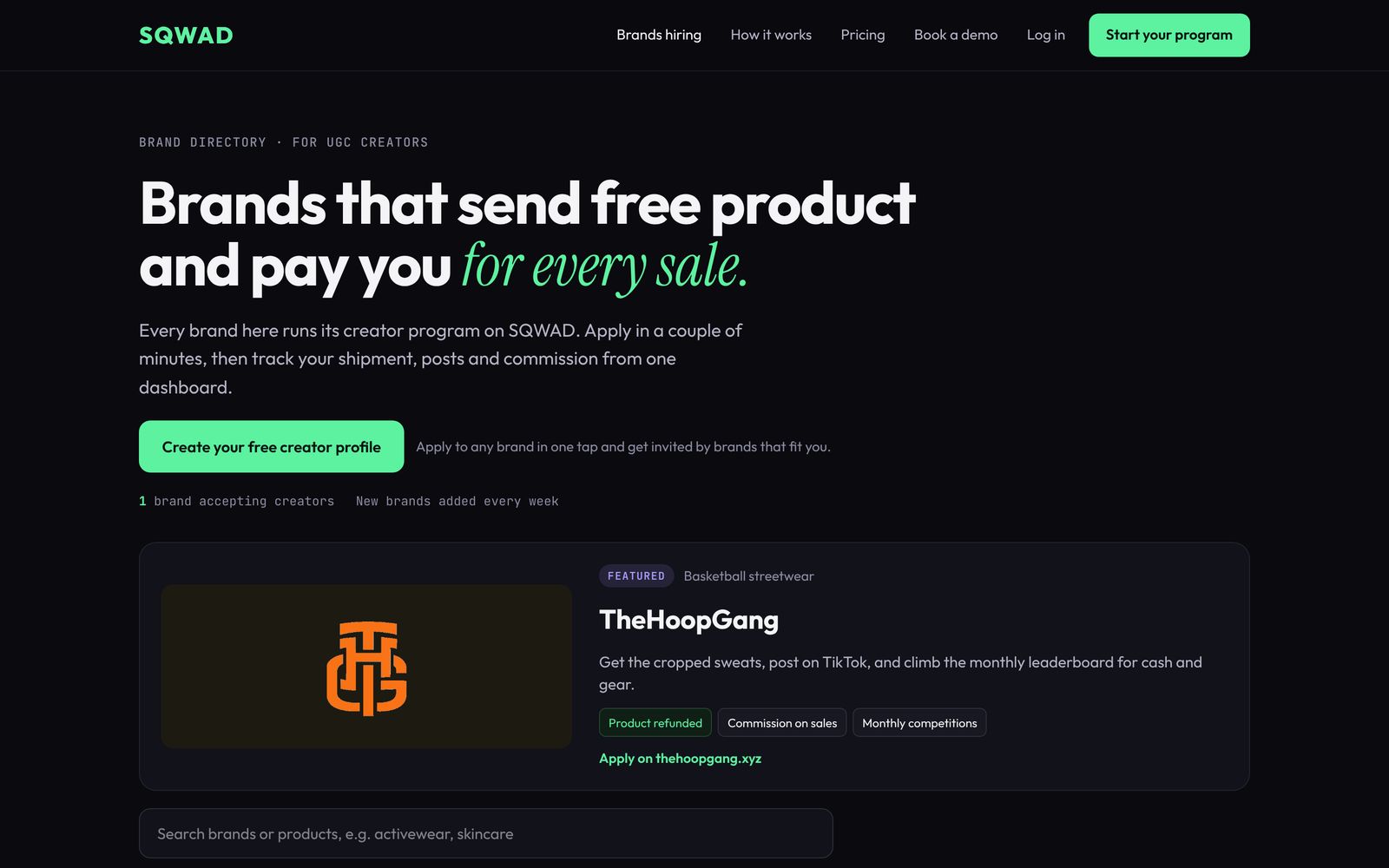
SQWAD is not a classic marketplace, but it has a two-sided piece: a brand directory where creators discover brands and apply to their programs. That directory only became worth having once there were brands, starting with TheHoopGang, whose programs creators wanted to join.
How do I solve the chicken-and-egg problem?
Narrow to one niche and one area, recruit the harder side first, and personally bring the other side to them until the market moves on its own.
- Go narrow. "Freelance services" is not a market you can fill. "Spanish tutors for high school students on LA's Westside" is. A small market fills fast, and a full small market beats an empty big one.
- Start with supply. Sellers, providers or hosts are usually harder to recruit, and their listings are what buyers come for. Sign up the first 10 to 30 by hand, by phone or in person.
- Give supply a reason to join before demand exists. A free listing page they can share, a booking calendar, a simple way to take requests. That gives them a tool to use even before you bring a single buyer.
- Bring demand yourself. In the early weeks, find buyers through communities, local groups and direct outreach, and route them to your sellers.
- Measure the match rate. Track what share of buyer requests end in a completed job. That number tells you whether to widen the niche or fix the product.
What should I run manually before writing code?
Run matching, scheduling and, if needed, payment collection by hand until you have seen the same transaction happen many times.
Manual operations are not a lack of ambition. They are the cheapest research you can do. When you match a buyer to a seller yourself, you learn which details matter (price, distance, availability, credentials), which questions buyers ask before committing, where deals fall apart, and what sellers complain about. Every one of those lessons becomes a field, a filter or a rule in the product, instead of a guess.
A typical manual setup:
- A simple landing page with a request form for buyers and an application form for sellers.
- A spreadsheet or a database table with sellers, their details and availability.
- You reading each request and introducing the buyer to one or two sellers by email or text.
- Payment by invoice, or directly between the two parties at first.
- A follow-up message after each job asking both sides how it went.
When you are matching more requests than you can handle in an hour a day, and the matches follow a pattern, it is time to build.
What is the smallest marketplace product worth building?
The smallest real marketplace product covers seller onboarding, listings, a way to request or book, notifications to both sides and an admin view for you.
Must
- Seller sign-up and profile with the fields your manual matching showed buyers care about.
- Listings or profiles buyers can browse, with one or two filters, not twelve.
- A request or booking flow, with confirmation emails to both sides.
- An admin view where you can approve sellers, see every request and step in when something goes wrong.
- Access rules so each seller sees only their own requests and buyers see only theirs. "Roles and permissions in a SaaS app: a practical guide for founders" covers how to set that up.
Later
In-app messaging (email works at first), advanced search, seller analytics, mobile apps, referral programs and dynamic pricing. Each one is real, and none of them helps you prove the first match.
How should payments work in a marketplace MVP?
Start with the simplest payment setup your market accepts, and when money needs to move through your platform to sellers, use a payments product built for platforms rather than collecting and paying out yourself.
Marketplace payments are harder than a store checkout. You take money from a buyer, keep a fee, and pay a seller, which means onboarding and verifying sellers, handling refunds and disputes, and dealing with payouts. Stripe's Connect documentation describes the typical marketplace model: the platform processes payments for its connected accounts, controls the flow of funds to them, collects a per-payment fee, and is usually the merchant of record, legally responsible for the transactions. In that model the platform is also responsible for covering connected accounts' negative balances, for example after a refund once the seller has been paid.
That is a meaningful set of obligations, which is why I treat it as a design decision rather than a feature. For an MVP the options in order of effort are: payment off platform with an invoice for your fee, the buyer paying the platform and you paying sellers manually on a schedule (fine for a handful of sellers, but check the rules that apply to holding funds), and full platform payments with automatic splits and payouts. I cover the Connect setup in detail in a separate guide. If your marketplace also sells subscriptions to sellers, "Setting up Stripe subscriptions for a SaaS MVP: what you actually need" covers that side. This is general information, not legal or financial advice, so check your obligations with a professional before you hold or move other people's money.
How do I build trust and reviews from day one?
Verify sellers before they go live, show real information about them, collect honest reviews after every completed transaction, and never fake or filter them.
Trust is what makes a stranger pay another stranger, and in an empty marketplace you have none of the usual signals. Build them deliberately:
- Approve every seller by hand at first. Check identity, licenses where relevant, and examples of their work.
- Show real details: photos of real work, response times, how long they have been on the platform.
- Ask for a review only after a completed transaction, from both sides if it helps, and let either side review without seeing the other's review first so neither retaliates.
- Have a visible way to report a problem, and answer reports quickly.
Be careful with how you seed reviews. The FTC's final rule on consumer reviews and testimonials, announced in August 2024, bans fake reviews, buying reviews conditioned on positive or negative sentiment, undisclosed reviews from company insiders, and suppressing negative reviews while implying you show all of them. Asking every real customer for an honest review is fine. Writing reviews for your first sellers is not. This is general information, not legal advice. "How to get more Google reviews (without breaking Google's rules)" covers the same honesty principles for your own business profile.
Worked example: a tutoring marketplace on the Westside
Here is an illustration with a made-up startup: TutorBlock, which connects high school students on LA's Westside with college students who tutor math and Spanish.
- Weeks 1 to 4, manual: the founder recruits 15 tutors from two campuses, builds a one-page site with a request form, and matches each request by text. Parents pay tutors directly, and TutorBlock invoices tutors a fee each month.
- What the log showed: parents cared most about subject, availability after 4pm and whether the tutor had taught a specific course before. Half of failed matches were scheduling.
- Build: tutor profiles with course history, a weekly availability grid, a booking request flow with email confirmations, double-blind reviews after each session, and an admin page to approve tutors and see every booking. Payments stay off platform for now.
- Next: once bookings repeat weekly and manual fee invoicing becomes painful, add platform payments with automatic tutor payouts.
How much does a marketplace MVP cost?
A focused marketplace MVP is usually a multi-role build, so it tends to sit between my SaaS MVP and Full SaaS Platform tiers depending on payments and admin needs.
Based on my packages: the MVP Starter from $250 over about 7 days can cover one piece, such as a seller application and admin approval flow, while you keep matching by hand. The SaaS MVP from $1,200 over about 21 days covers auth, a dashboard, the database and payments for a focused product. A full two-sided marketplace with separate buyer and seller roles, an admin panel, platform payments with payouts, and reviews usually fits the Full SaaS Platform from $3,000 over about 45 days. Payment providers also charge their own processing and platform fees, so check their current pricing pages when you plan your margins.
What mistakes kill marketplace MVPs?
The common failures are launching too broad, building before matching by hand, and spending on features that do not create matches.
- Launching in every city or category at once, so every search returns two results.
- Building search, messaging and payouts before a single manual match has happened.
- Treating supply and demand as one audience with one message.
- Skipping seller verification to grow faster, then losing buyers after one bad experience.
- Faking activity with made-up listings or reviews, which breaks trust and, for reviews, the FTC rule.
- Building payment splits by hand instead of using a platform payments product.
The bottom line
A marketplace MVP succeeds or fails on liquidity, not features. Narrow to one niche and one area, recruit the harder side first, and run matching and payments by hand until you understand what makes a good match. Then build only what both sides need to find each other, transact and trust each other: profiles, requests, notifications, admin tools and honest reviews. Bring in platform payments when transactions repeat, and treat the obligations that come with holding other people's money as seriously as the code.
Questions, answered in one line
What is the chicken-and-egg problem in a marketplace?
Buyers will not come without sellers and sellers will not come without buyers, so a new marketplace has to create value for one side before the other arrives.
Which side of a marketplace should I build for first?
Usually the supply side, because sellers or providers are harder to recruit and their listings are what bring buyers.
Do I need payments in a marketplace MVP?
Not always on day one; many marketplaces start by invoicing manually or taking payment off platform, then add platform payments once transactions repeat.
Can I seed a new marketplace with reviews?
You can ask real customers for honest reviews, but writing fake reviews or paying only for positive ones is banned under the FTC rule on consumer reviews and testimonials.
How much does a marketplace MVP cost to build?
Thomas Osayi builds launchable SaaS MVPs with auth, dashboard, database and payments from $1,200, and multi-role platforms with admin tools and integrations from $3,000.
Sources
Related articles
- How to scope an MVP: one workflow, three lists and the cuts that matter
- Multi-tenant SaaS with Firestore: data layout, security rules and custom claims
- Web app vs mobile app for your MVP: which to build first
- PWA vs native app in 2026: what a web app can do on iPhone now
SaaS MVP and full-stack web app development
I build SaaS MVPs and full-stack web apps in Next.js, TypeScript and Firebase or Postgres: auth, dashboards, payments, roles and admin tools. Founder of SQWAD.
See the service