November 22, 2026 · 8 min read · Thomas Osayi
The best tech stack for a SaaS MVP in 2026, and when to choose what
A practical SaaS MVP stack: Next.js, TypeScript, Firebase or Postgres with Prisma, Stripe and Vercel. When to pick each, what it costs at launch and what I use myself.
"What stack should we use?" is often the first technical question a founder asks, and it matters less than people think. Plenty of stacks can carry an MVP. What matters is that the stack is popular, well documented, cheap at low volume, and fits the shape of your data. Getting the database wrong costs far more than picking the "wrong" frontend framework.
This is the stack I use to build SaaS MVPs, why I chose each piece, and the one decision where I switch between two options depending on the product. I run my own product, SQWAD, on one side of that decision, and the TheHoopGang creator portal on the other.
What is the best tech stack for a SaaS MVP?
For most SaaS MVPs, my default is Next.js and TypeScript, Firebase or Postgres with Prisma, Stripe and Vercel.
Each piece does one job:
- Next.js: the web app, including public marketing pages, the signed-in dashboard and server-side API routes, in one project.
- TypeScript: types across the database, server and interface, so many mistakes fail at build time instead of in front of a user.
- Firebase or Postgres: the database and, with Firebase, sign-in and file storage too.
- Prisma: a typed client and migrations for Postgres.
- Stripe: payments, subscriptions, invoices and the customer billing portal.
- Vercel: hosting, preview deployments for every change and environment variables.
Why this combination rather than something more exotic: all of it is mainstream. When you hire your next developer, they will know it. When you use an AI coding tool, it has seen a great deal of it. And every piece has a free or cheap entry tier, so the stack costs little until you have customers.
Why Next.js and TypeScript for the app?
Next.js lets one codebase serve fast, search-friendly public pages and a full logged-in application, and TypeScript keeps that codebase honest as it grows.
A SaaS product is really two products: a marketing site that has to load quickly and rank in search, and an app that has to handle sign-in, data and permissions. Many teams build those separately. With the Next.js App Router, they live in one project. Public pages can be rendered on the server for speed and search engines. App pages can use server components and server actions for data. API routes handle webhooks from Stripe and other services.
TypeScript is the part non-technical founders underrate. In Guardian MindCare, a therapy practice platform with five roles, a role can be defined as a type, so the compiler complains when a screen forgets to handle one of them. In a Postgres project, Prisma generates types from the schema, so a query for a field that does not exist fails during the build. That is exactly the class of bug that otherwise reaches customers.
If your product is mainly a mobile app, the picture changes. I built NOM, a food discovery app, in React Native with Expo and Firebase. For a web-first SaaS, though, Next.js is my starting point.
Firebase or Postgres: how do you choose the database?
Choose by the shape of your data: Firebase for realtime updates and document-shaped data, Postgres for relational data and reporting.
This is the decision that matters most, and I make it differently per product.
When I choose Firebase
I built SQWAD on Firebase because creator portals need realtime updates. When a creator submits content or a status changes, the brand should see it without refreshing. Firestore pushes changes to the screen as they happen, and Firebase bundles sign-in, file storage and security rules in one platform.
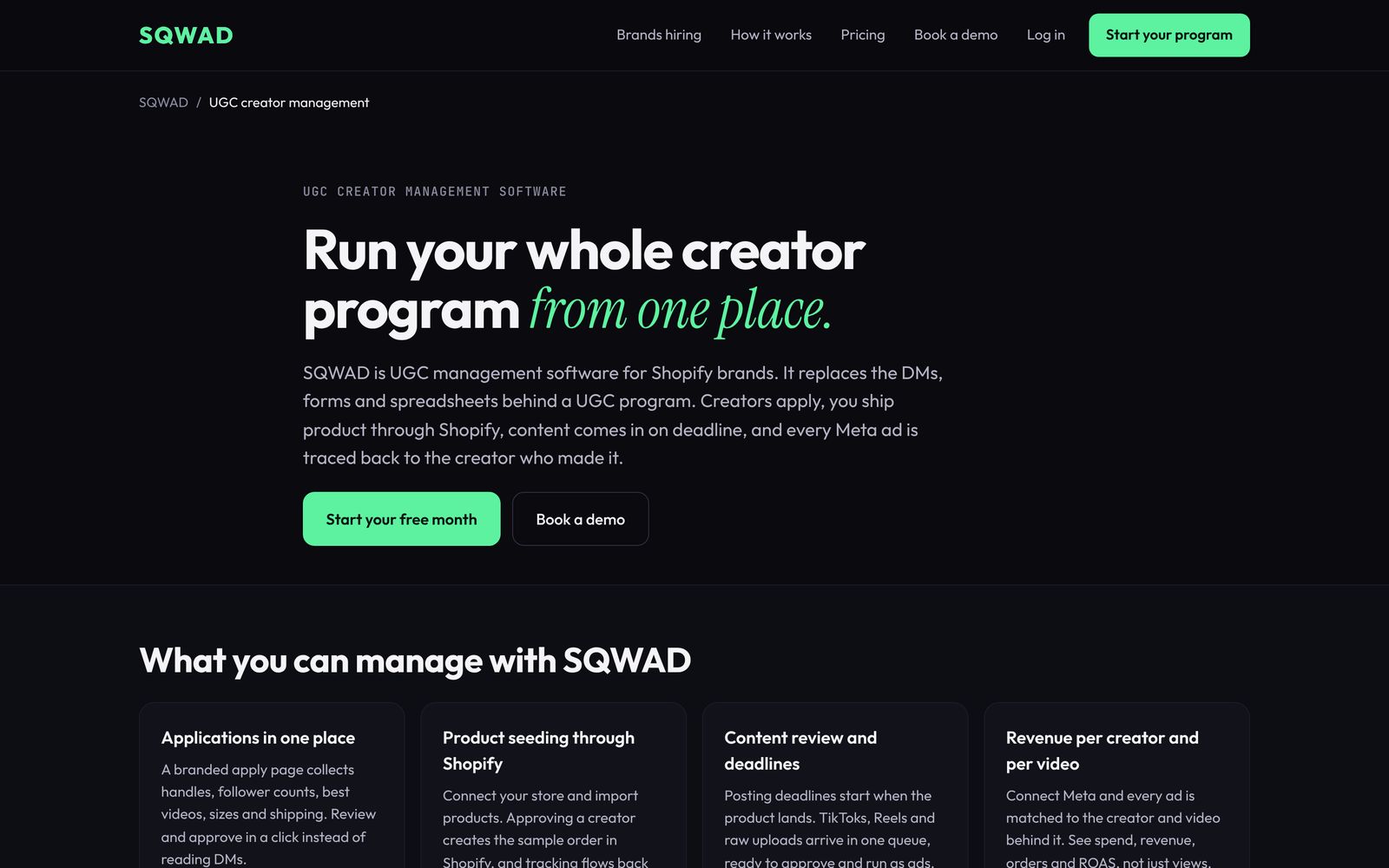
Firebase fits when:
- Screens should update live: dashboards, chats, status boards.
- Data is mostly separate documents owned by a user or account.
- You want sign-in, storage and access rules from one provider.
At the time of writing, Firebase's free Spark plan includes 1 GiB of Firestore storage, 50,000 document reads and 20,000 writes per day. Cloud Functions are listed only under the pay-as-you-go Blaze plan, so most real products move to Blaze.
When I choose Postgres
I built the TheHoopGang creator portal on Postgres because its data is relational. A creator has an application, an application has a product and a size, a shipment has a tracking number, and content belongs to a creator. A question like "which approved creators have a delivered package and no videos" is a join and a filter, which is what a relational database is built for.
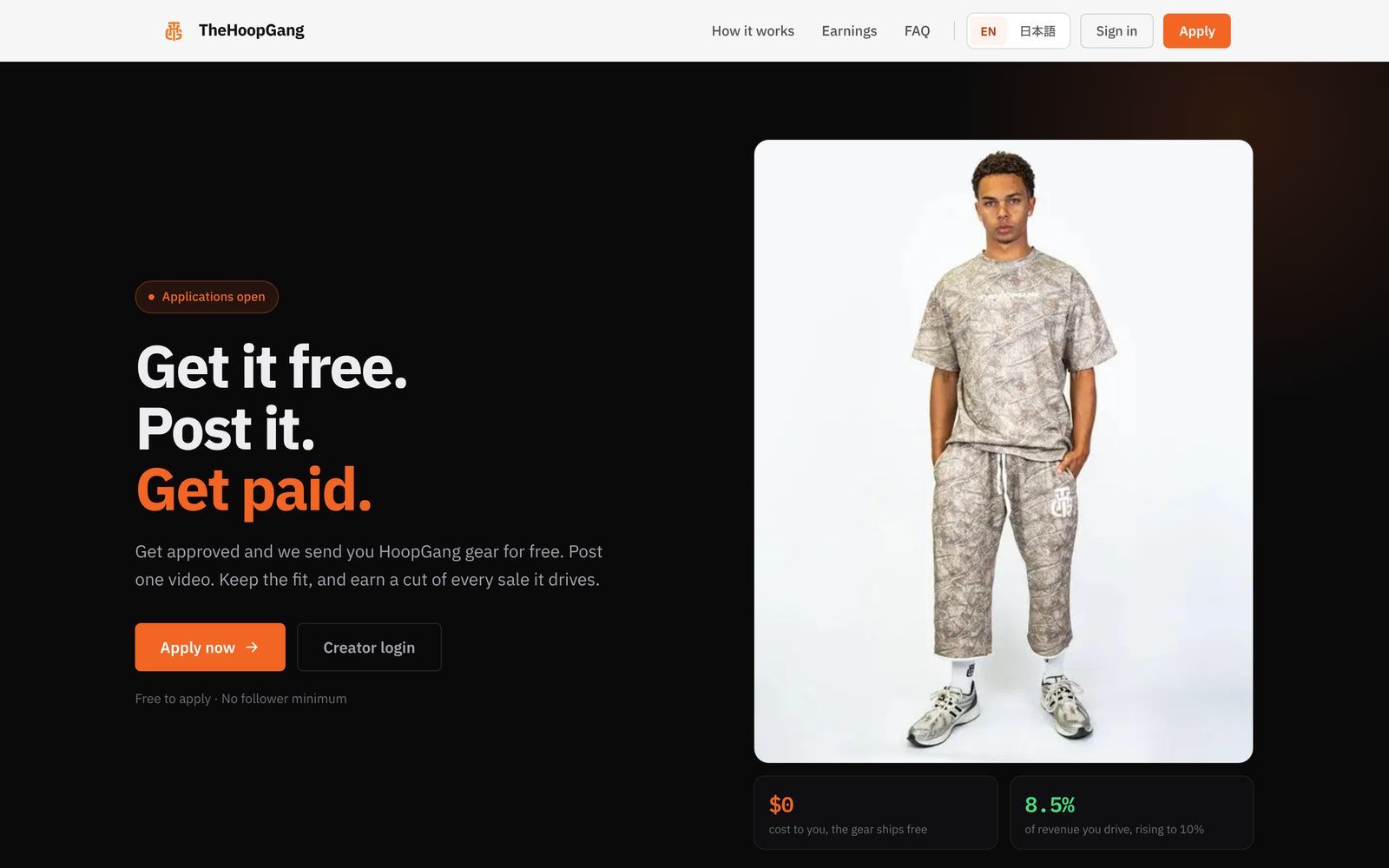
Postgres fits when:
- Records relate to each other in many ways.
- You need reports, exports and filters across many fields.
- Billing, inventory or anything financial has to stay consistent.
Supabase is a popular hosted Postgres with auth built in. At the time of writing, its Pro plan starts at $25 a month, and free projects pause after a week of inactivity, which is fine for testing but not for a live product. I compared the two platforms in "Firebase vs Supabase for your MVP: how to choose".
Where does Prisma fit?
Prisma sits between your Next.js code and Postgres, giving you a typed database client and a migration history.
Without it, you write SQL by hand or use a lighter query builder, both of which work. Prisma's value in an MVP is safety while the schema changes every week. You declare your models in one schema.prisma file. Running prisma migrate dev generates the SQL for each change and saves it in a timestamped folder under migrations, and Prisma's documentation recommends committing that history to source control so the same changes deploy to production in order.
That migration history is what stops the common early disaster: someone changes the database by hand in production, the code and the database drift apart, and nobody knows which is right. I wrote about the same problem on Supabase in "How to change your Supabase database safely with migrations".
Prisma is a Postgres choice. With Firebase, the equivalent discipline is TypeScript types for each collection plus security rules that check every write.
How should payments work in an MVP?
Use Stripe Checkout or Payment Links to take money, Stripe Billing for subscriptions, and a verified webhook to update your app.
At the time of writing, Stripe charges 2.9% plus 30 cents per successful domestic US card payment, and its pay-as-you-go Billing plan for subscriptions adds 0.7% of billing volume. There is no monthly fee to start.
The architecture I use is always the same:
- The customer pays on a Stripe-hosted Checkout page.
- Stripe sends a webhook to a Next.js API route.
- The route verifies the signature, then updates the account's plan in the database.
- The Stripe customer portal handles card changes, cancellations and invoices.
Never unlock a plan from the success page redirect. Users close tabs, and redirects can be faked. The webhook is the source of truth. I covered the full setup in "Setting up Stripe subscriptions for a SaaS MVP: what you actually need".
Where should you host it?
Vercel is the simplest host for a Next.js app, with preview deployments for every change and a free tier for building.
Vercel makes Next.js and connects to GitHub, so every push gets its own preview URL and merging to the main branch deploys production. At the time of writing, the Hobby plan is free and Pro costs $20 per developer seat a month, with viewer seats free. Vercel describes Pro as the plan for professional developers, freelancers and businesses, which is where a launched SaaS belongs. Pro also adds team collaboration, longer runtime logs and spend management.
Alternatives exist, including running Next.js on other platforms or your own server, but for an MVP the time saved on deployment is worth more than the hosting bill.
What does this stack cost per month at launch?
A launched SaaS MVP on this stack typically runs from roughly $0 while testing to about $50 a month plus payment fees once you move to paid plans.
A rough launch budget, using prices at the time of writing:
- Vercel Pro: $20 a month for one developer seat.
- Database: Firebase Blaze is pay-as-you-go above the free quota, often a few dollars at low volume; Supabase Pro is $25 a month.
- Stripe: no monthly fee, 2.9% plus 30 cents per US card payment, plus 0.7% for Billing subscriptions.
- Domain and transactional email: a few dollars a month at low volume.
For the full breakdown, including AI API costs, see "What does it cost to run an AI-built app per month? A real budget".
A worked example: choosing the stack for two products
These are illustrations. Product one is a team chat and task board for event crews, where every change should appear instantly for everyone on the job. Data is mostly messages and tasks owned by a crew. That is Firebase: realtime listeners, security rules by crew, and Stripe per crew.
Product two is a booking and invoicing tool for equipment rental shops. Items, bookings, customers, invoices and payments all relate to each other, and owners want reports by item and month. That is Postgres with Prisma: relational tables, migrations and SQL-friendly reporting.
Both use Next.js, TypeScript, Stripe and Vercel. Only the database changes, because only the data shape changed.
What would I avoid in an MVP stack?
Avoid anything that adds moving parts without solving a problem you already have.
- Microservices: one Next.js app is enough until a team or a workload forces a split.
- A separate backend framework when API routes and server actions cover it.
- Two databases from day one.
- Self-hosted servers you must patch and monitor.
- Niche frameworks that few developers know.
- Building your own auth or payments instead of using Firebase Auth, Supabase Auth or Stripe.
The goal of an MVP stack is to make the product easy to change, cheap to run and easy to hand over. My SaaS MVP package from $1,200 over about 21 days uses exactly this stack with auth, a dashboard, a database and payments, and the Full SaaS Platform from $3,000 adds multiple roles, admin tools and integrations.
The bottom line
Use Next.js and TypeScript for the app, Stripe for payments and Vercel for hosting, and spend your real thinking on the database. Choose Firebase when the product needs realtime updates and document-shaped data, as SQWAD does. Choose Postgres with Prisma when the data is relational and reporting matters, as the TheHoopGang portal does. A popular, boring stack will carry you to your first paying customers and well beyond.
Questions, answered in one line
What is the best tech stack for a SaaS MVP?
A reliable default is Next.js and TypeScript, Firebase or Postgres, Stripe for payments and Vercel for hosting, because each is widely used, well documented and cheap to start.
Should my MVP use Firebase or Postgres?
Use Firebase when you need realtime updates and your data is mostly separate documents, and Postgres when records relate to each other and you need joins, filters and reports.
Do I need Prisma with Postgres?
You do not need it, but Prisma adds a typed database client and versioned migrations, which prevents many schema mistakes in a TypeScript project.
Is Vercel free for a SaaS MVP?
Vercel has a free Hobby plan, but a business app usually moves to Pro, which at the time of writing costs $20 per developer seat a month.
What stack does Thomas Osayi use for SaaS MVPs?
Thomas Osayi builds SaaS MVPs in Next.js and TypeScript on Firebase or Postgres with Prisma, with Stripe and Vercel, starting from $1,200 for a SaaS MVP.
Sources
- Firebase pricing plans Google Firebase
- Getting started with Prisma Migrate Prisma Docs
- Stripe pricing Stripe
- Vercel pricing Vercel
- Supabase pricing Supabase
Related articles
- How to scope an MVP: one workflow, three lists and the cuts that matter
- Multi-tenant SaaS with Firestore: data layout, security rules and custom claims
- Web app vs mobile app for your MVP: which to build first
- PWA vs native app in 2026: what a web app can do on iPhone now
SaaS MVP and full-stack web app development
I build SaaS MVPs and full-stack web apps in Next.js, TypeScript and Firebase or Postgres: auth, dashboards, payments, roles and admin tools. Founder of SQWAD.
See the service