November 22, 2026 · 9 min read · Thomas Osayi
Is Lovable bad for SEO? What it outputs now and how to fix it
Older Lovable apps are client-rendered Vite SPAs, newer ones use TanStack Start with SSR. What that means for Google, meta tags, prerendering and moving pages to Next.js.
Founders ask me this after their Lovable site has been live for a month and Google Search Console shows almost nothing. Sometimes the cause is the rendering setup. More often it is generic titles, a missing sitemap and pages with very little text. The answer has also changed this year, because Lovable changed what it builds.
Here is what Lovable outputs now, what that means for search engines, and the fixes that matter, in the order I would do them.
Is Lovable bad for SEO?
No, not by itself, but older Lovable projects are client-rendered single-page apps, and that setup makes SEO harder unless prerendering and page metadata are handled well.
For most of its history, a Lovable project was a React app built with Vite. The server sends a nearly empty HTML file with a script tag, and the browser builds the page with JavaScript. That is called client-side rendering. Humans never notice. Crawlers that do not run JavaScript see an empty page, and crawlers that do run it, like Google, have to render the page first, which adds delay and room for failure.
According to Lovable's documentation at the time of writing, that changed in 2026. New apps created from May 13, 2026 (June 22, 2026 on Enterprise plans) use TanStack Start with server-side rendering, so every request returns fully rendered HTML. Older React and Vite apps still serve the single-page app to visitors, and Lovable prerenders pages for verified crawlers such as search engines and AI search bots.
So the first step is to know which kind of project you have. If you created it before mid-May 2026 and never upgraded, assume it is the Vite kind.
What does Lovable output today?
A new Lovable project is a TanStack Start app that renders on the server, and an older one is a React and Vite single-page app with crawler prerendering on Lovable hosting.
New projects: TanStack Start
TanStack Start runs the React tree on the server and returns full HTML on the first request. Lovable's announcement says rendering can be set per route: server-rendered, prerendered at deploy time, or client-rendered. For SEO, this is the setup you want. A crawler receives your headings, text and links without running anything.
Older projects: React and Vite SPA
These still work as before. Visitors get the JavaScript app. Verified crawlers get a prerendered snapshot generated on request. Lovable's docs note a limitation worth taking seriously: content that loads late may be missing from the prerendered HTML. If your page fetches its text from Supabase after a delay, the crawler may capture the loading spinner.
Lovable also says existing Vite projects can be upgraded to TanStack Start, and the published site stays unchanged until you publish again.
How do I check what Google actually sees?
Use the URL Inspection tool in Google Search Console, run a live test, and read the rendered HTML and screenshot.
That one check settles most arguments. If the rendered HTML contains your headline, paragraphs and links, rendering is not your problem. If it shows an empty root div, a spinner or a generic title, it is.
Two more quick checks:
- View the page source in your browser (not the inspector, the raw source). On an SSR page you will see your text. On a Vite SPA you will see a near empty body, which is expected for humans and is why crawler prerendering matters.
- Paste the URL into a social preview debugger, such as the ones LinkedIn and Facebook offer. If the preview shows the wrong title or no image, your Open Graph tags are not in the HTML that platform reads.
Google's own JavaScript SEO guide explains that it renders pages in a separate step after crawling. It works, but every step is a chance for a timeout or a blocked resource to leave the page half indexed.
Why are meta tags the most common Lovable SEO problem?
Because every new project starts with generic metadata, and single-page apps often show the same title and description on every route.
Lovable's docs say this directly: every new project starts with generic metadata and you should review it. In an SPA, the title and description live in one index.html file. Unless each route updates them, Google sees thirty pages with the same title, which looks like duplicate content.
What each public page needs:
- A unique title of roughly 50 to 60 characters with the main phrase near the front.
- A unique meta description that says what the page offers and who it is for.
- A canonical URL pointing to the custom domain version of that page.
- Open Graph title, description and image. Lovable's docs recommend share images at 1200 by 630 pixels and a few hundred kilobytes.
- Structured data where it fits, such as LocalBusiness for a local service.
Social platforms mostly do not run JavaScript, so tags set in the browser after load do not count for them. On a TanStack Start project, set them per route on the server. On a Vite project, the prerendered crawler snapshot should carry them, which is another reason to check with a preview debugger.
Do I need a sitemap and robots.txt?
Yes: Lovable creates a robots.txt for new projects, but a sitemap is not always generated, and both need checking after you add a custom domain.
Lovable's SEO review flags a missing sitemap, invalid XML, placeholder or relative URLs, and URLs pointing to another host. That last one bites people who moved from a lovable.app subdomain to their own domain: the sitemap still lists the old host. A robots.txt that blocks crawlers on a live site is the worst version of this mistake, and it happens when a staging rule survives into production.
Checklist:
- Open yourdomain.com/robots.txt. Make sure it does not disallow everything, and that its Sitemap line points to your real domain.
- Open the sitemap. Every URL should be absolute, on your custom domain, and return a 200 status.
- Submit the sitemap in Google Search Console after publishing, since Google reads it from the live site.
- Only publicly published apps appear in search. Restricted access sites and workspace preview URLs will not.
If you recently moved domains, "How to move from Wix or Squarespace without losing your Google rankings" covers redirects and Search Console steps that apply to any domain move.
What happens to SEO if I move my Lovable app to Vercel?
A TanStack Start app keeps its server rendering if the new host supports it, but a Vite SPA moved off Lovable loses the crawler prerendering, because that is part of Lovable hosting.
This is the trap I most want founders to know about. Lovable's docs say Lovable handles prerendering for React and Vite apps, so no external service is needed. That is true while Lovable hosts the site. Export the same Vite build to Vercel or Netlify as static files, and crawlers get the empty HTML shell again.
Your options after a move:
- Upgrade to TanStack Start first, then deploy to a host that runs it.
- Add a prerendering step at build time for your public routes, so each route ships as real HTML.
- Use a prerendering service in front of the SPA.
- Move only the public marketing pages to a server-rendered framework and leave the app as an SPA behind login.
The steps for the move itself are in "How to move a Lovable app to Vercel and your own domain." Decide on the SEO approach before you switch DNS, not after rankings drop.
When should I move marketing pages to Next.js?
Move them when search traffic is a main growth channel and you need many content pages, local landing pages or a blog that you will keep adding to.
The logged-in part of an app does not need SEO. Nobody searches for your dashboard. The pages that need it are the homepage, service or feature pages, pricing, location pages and articles. Those are content pages, and Next.js handles them well: each page is rendered on the server or at build time, metadata is set per page, and a sitemap can be generated from the same data.
The split I recommend often looks like this:
- yourdomain.com: a Next.js marketing site with the homepage, features, pricing and blog.
- app.yourdomain.com: the Lovable app, unchanged, behind sign-in.
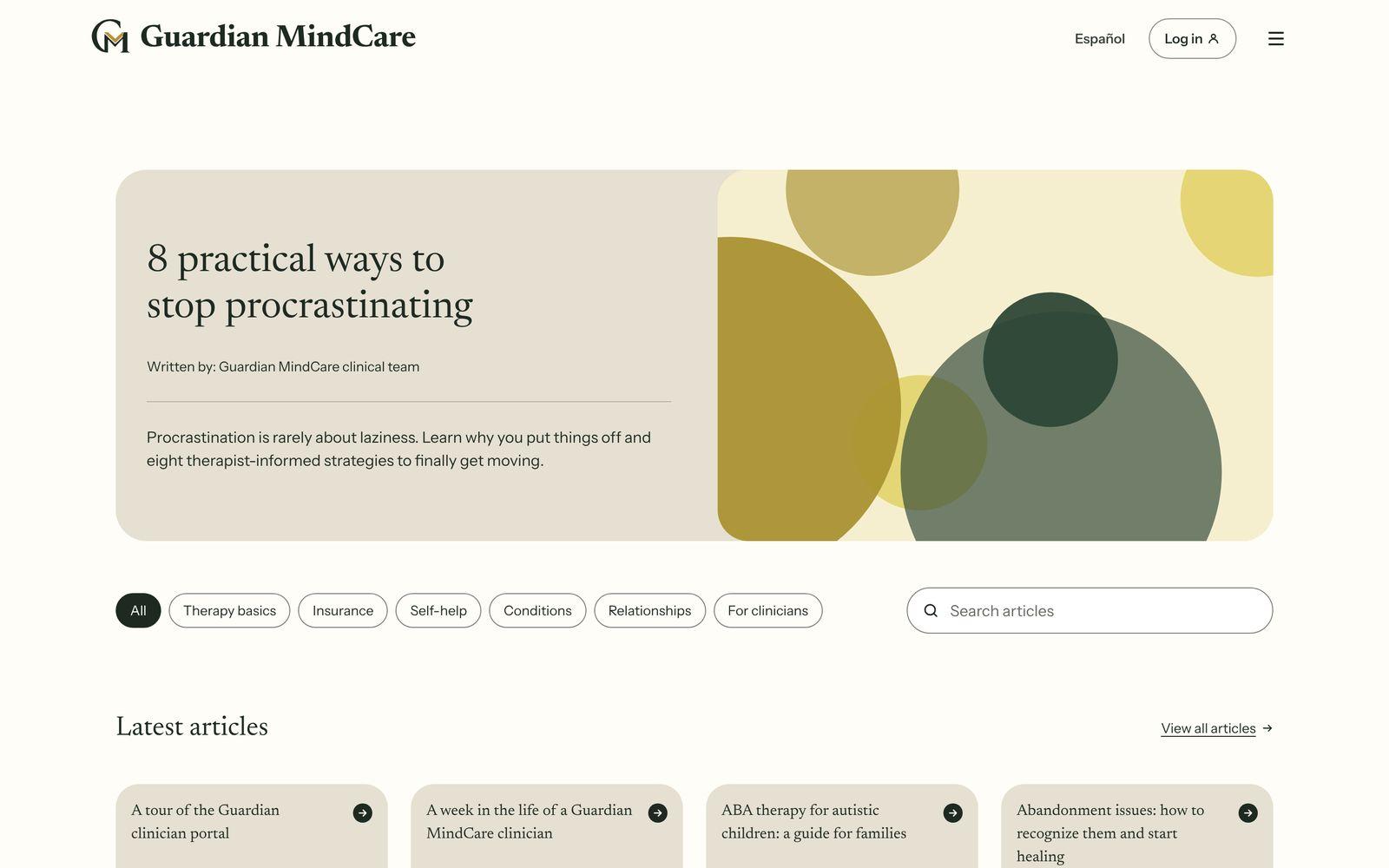
Guardian MindCare, a therapy practice platform I built, is a Next.js project for exactly this reason: its public pages have to load fast and be readable by search engines, because search is how new clients arrive, while the role-based portals sit in the same project as a real application.
A Next.js marketing site with up to five pages and local SEO starts at $450 with my Business Site package, and a larger content site with a CMS starts at $1,200. If your app itself is new and on TanStack Start, you may not need this split at all.
What else affects how a Lovable site ranks?
Content, internal links and page speed matter more than any rendering setting once the basics are in place.
Lovable's own docs are honest here: its SEO review does not assess content quality, search intent, backlinks or competition, and it no longer runs Lighthouse, so they point to Google PageSpeed Insights for speed. A perfectly rendered page with 80 words of text will still struggle.
What I look at next:
- Words on the page. Each important page should answer the question a searcher has, in real sentences.
- Headings. One clear H1 per page, with H2s that match what people ask.
- Internal links. Real anchor links between pages, not buttons that navigate with JavaScript only.
- Images. Compressed, with descriptive alt text.
- Speed. Large bundles slow first paint on phones. "Core Web Vitals explained for small business owners" covers what to measure.
- Local signals. For a local business, a Google Business Profile and consistent name, address and phone.
For AI answers specifically, "How to get your business mentioned in ChatGPT, Perplexity and Google AI answers" goes further.
The bottom line
Lovable is not bad for SEO, but you have to know which Lovable you have. New projects use TanStack Start with server rendering and are in good shape once their metadata is fixed. Older Vite projects depend on Lovable's crawler prerendering, which works on Lovable hosting and disappears when you move the static build elsewhere. In both cases, unique titles, descriptions, Open Graph tags, a clean sitemap and real content do most of the work.
If your pages are not getting indexed, my Quick Fix starts at $60 for one problem, such as broken metadata or a robots.txt blocking crawlers. If search is your main channel, a Next.js marketing site in front of your Lovable app is often the most durable fix.
Questions, answered in one line
Does Lovable use server-side rendering?
Lovable says new apps created from May 13, 2026 (June 22, 2026 on Enterprise) use TanStack Start with server-side rendering, while older React and Vite apps are single-page apps.
Can Google index a client-rendered React app?
Google can render JavaScript, but it is slower and less reliable than reading HTML directly, and many other crawlers and social previews do not run JavaScript at all.
How do I check what Google sees on my Lovable site?
Use the URL Inspection tool in Google Search Console and view the rendered HTML and screenshot for the page.
Should I upgrade my old Lovable project to TanStack Start?
Lovable offers an upgrade for existing React and Vite projects, but test every route and flow on a copy first, since a framework change touches routing and data loading.
Who can move my Lovable marketing pages to Next.js?
Thomas Osayi builds Next.js marketing sites from $450 for up to five pages with local SEO, and fixes Lovable app issues from $60.
Sources
- SEO and AI search Lovable Docs
- Building apps using TanStack Start Lovable
- Understand JavaScript SEO basics Google Search Central
Related articles
- Supabase auth redirect URL not working? Fix localhost, preview and production redirects
- Environment variables undefined on Vercel? Every cause and fix
- How to fix a CORS error on a Next.js API route
- Firestore "Missing or insufficient permissions": what triggers it and how to fix it
Fix, finish and launch your AI-built app
Built your app with Lovable, Bolt, v0, Replit or Cursor and got stuck? I fix the bugs, connect auth and payments, clean up the code and deploy it to production.
See the service